
How can Dungeons and Dragons Help Your Child Learn Empathy?

How do you help your child learn empathy by rolling dice? We’re here to explain the psychology of Dungeons & Dragons.
Many kids struggle with taking another’s perspective, understanding their emotions, and responding with compassion – in another word, empathy. This struggle was only exacerbated by the lack of social interactions during the pandemic. Many parents are searching for a fun, accessible way for kids to work on their empathy. Some have turned to roleplaying games like Dungeons & Dragons. But can these actually help your kids learn empathy? We’re a group of educators and therapists who have run hundreds of Dungeons & Dragons games, and we can say for certain that D&D absolutely does help kids learn empathy. We have seen children take leaps in their ability to see things from another’s perspective, understand what others are feeling, and know how to act to make others feel better. But how does this actually work?
How Do Children Learn Empathy?

When considering how to help a child develop empathy, look at the research to better understand how children naturally learn empathy.
Let's begin by taking a look at how empathy is learned. Humans learn empathy as we grow by developing what psychologists call “theory of mind.” This is essentially the capacity to understand that others have different perspectives, feelings, wants, and needs - minds and lives as unique as our own. Developing this skill is a complex process with many steps, trials, and errors. The great child psychologist Jean Piaget discovered through his “three mountain task” that until they’ve developed theory of mind, children simply cannot imagine things from another’s perspective (for an interesting video showing this see here). It is not until kids are around 7 or 8 that they start being able to understand that others see things differently from them. To get to this point, they develop theory of mind through play, reading, observation, and social interaction, so a stimulating environment is essential to develop empathy in a child.
As children’s mental capacity increases with age and maturity, they are already poised to develop empathy. But completing this developmental path takes some work. To make the leap from theory of mind to empathy, kids need to process their own emotions, view models of empathy, and practice utilizing their empathy to help others. While these skills can develop throughout the course of life, some studies suggest that our modern world is not conducive to developing a sense of empathy – many experts recommend that kids be guided through this process with structured support. We’ve found that Dungeons & Dragons works perfectly as this structured support, helping children develop empathy for those around them.
Why Does Dungeons & Dragons Help Children Develop Empathy?
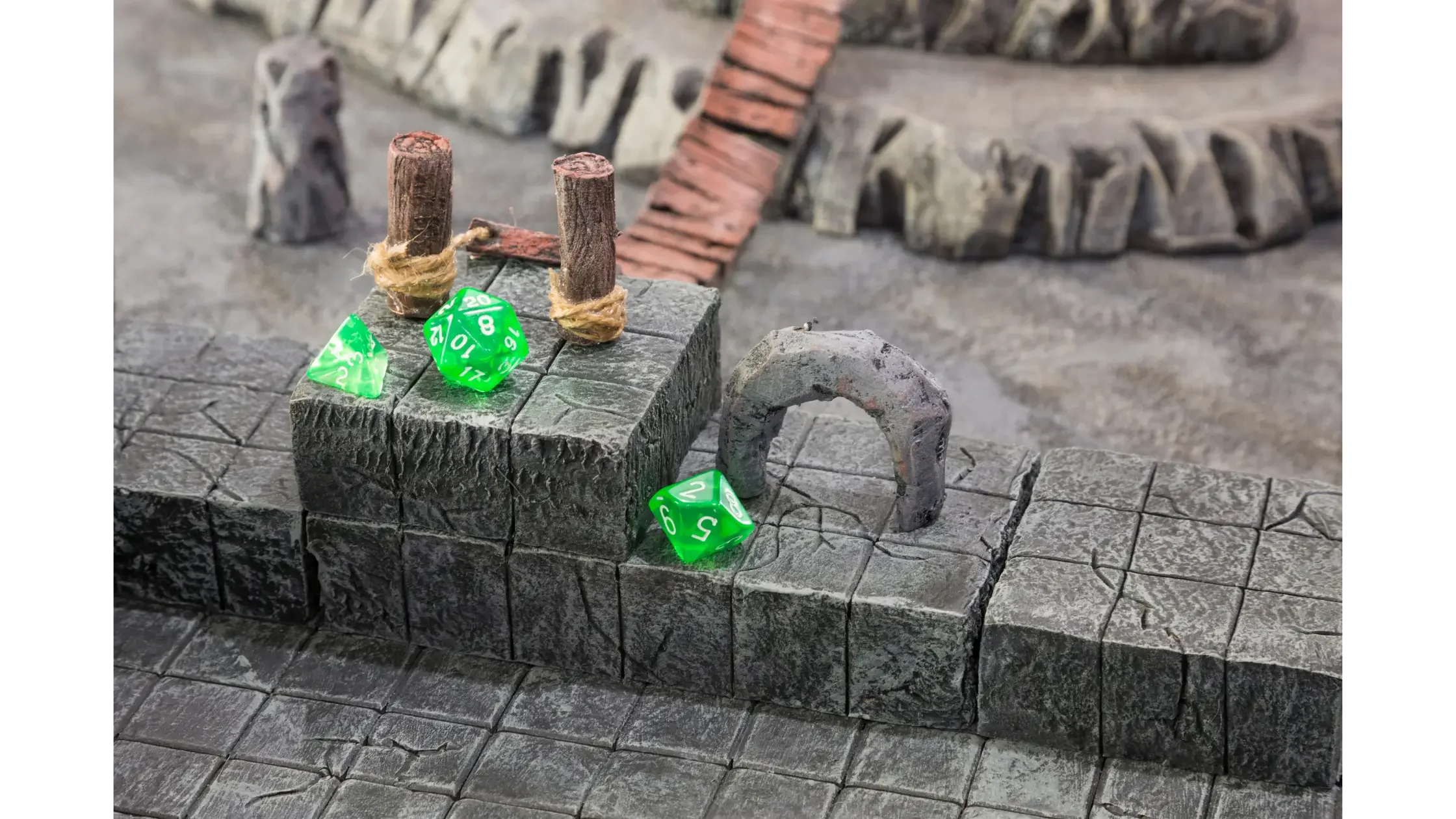
Engaging activities work much better than rote lectures to instill empathy in children.
The first reason why the game works to teach kids empathy is simply because it's fun. It’s a challenge to get children to listen to long lectures on empathy and sensitivity – they find them not only awkward, but boring. Kids don’t learn through sitting quietly and listening or reading like adults do – they learn through playing! When they are having fun, kids remain open and flexible, letting them absorb information and practice important skills without even knowing it. Strong engagement is essential to help a child develop empathy, and this engagement can only come from activities that the child enjoys. Dungeons & Dragons is just storytelling in game form, and it’s customizable to fit children’s interests, which means no matter what a child enjoys, a skilled facilitator can shape a D&D game into a fun experience for them.
D&D’s Emotional Elements Instill Empathy In Children

How to improve a child’s empathy? Get them accustomed to a range of human emotions.
An important step to understanding others’ emotions is understanding our own, so it is important that kids are given an opportunity to safely feel a range of emotions. Because of their busy lives, many kids do not have a dedicated time to really feel their emotions. In class, they must pay attention; in sports, they must remain disciplined, and at home, they are consumed by entertainment. Dungeons & Dragons gives kids a place to be absorbed in the entire range of human emotions: a place full of love, heartbreak, loss, fear, and everything in between. The dramatic storylines and rich worlds ensure that every possible human experience can be explored in D&D. But it allows kids a chance to experience and process the complex spectrum of emotions in a safe environment of a fictional story. The ability to both remain strongly engaged in the emotions with the safety of returning to the real world gives kids an opportunity to practice feeling emotions and step away should they feel overwhelmed.
Help A Child Build Empathy With Collaborative Activities

Children can improve empathy in one another by working on a team.
Dungeons & Dragons is inherently collaborative; players solve puzzles, battle enemies, and complete quests as a team (or “party”). Because they are working together with their peers, kids teach each other how to take another’s perspective. They show each other how to step into their own character and take the perspective of the players around them. There is substantial research suggesting that kids learn better when the behavior is being modelled from a peer, rather than receiving information from an adult. In D&D, children show one another how to act to benefit each other as they work toward a common goal and thus learn empathy quicker and more deeply than they could with a parent or teacher. Kids teach each other how to work together and in turn are rewarded in-game, which shows them the power of positively working with others.
Let Children Practice Empathy To Build Compassion

Teach empathy to kids by giving them experiences, not explanations.
The most important benefit that D&D has over other teaching methods is that it is experiential. In other words, kids actually practice using empathy while playing instead of just talking about it. In D&D, everybody plays a character. This is massively helpful in developing empathy, because it forces you to step in someone’s shoes and literally become them for a time. It is hard to get children to understand something as high-concept as taking someone else’s perspective by simply explaining it to them – D&D lets them practice and understand it for themselves. Playing a character lets kids practice stepping into someone else’s shoes and forces them to act based on that information. They’re motivated to practice this by tangible consequences: empathy is important to keep their character safe from countless dangers: when their character takes damage, they can think about what they need in response. This aids in their ability to transfer these ideas into the real world with practical solutions, giving them a template for how to empathize their interactions with peers and others.
Our Groups Can Help Develop Empathy In Your Child
We run tabletop roleplaying games to help children develop empathy and compassion.
At Young Dragonslayers, we host groups playing collaborative tabletop roleplaying games led by skilled adult facilitators. We run sessions with the goal of guiding social interactions and discussions to build friendships and develop social-emotional skills through gaming. Because of our backgrounds in therapy and education, we’re dedicated to making sure every player finds the group that’s a perfect fit for them; we’ll assess their support needs, social skills, age, and gameplay preferences (some kids need to follow every rule, while others just want to blow up the dragon!) and create small groups matched with professional, experienced adults who are equipped to fit the needs of the group. Every child is placed in a group that can maximize their potential to grow in a safe and supportive environment. If you’d like to meet with us to discuss participating in these groups, sign up for our waitlist and we’ll connect with you!