
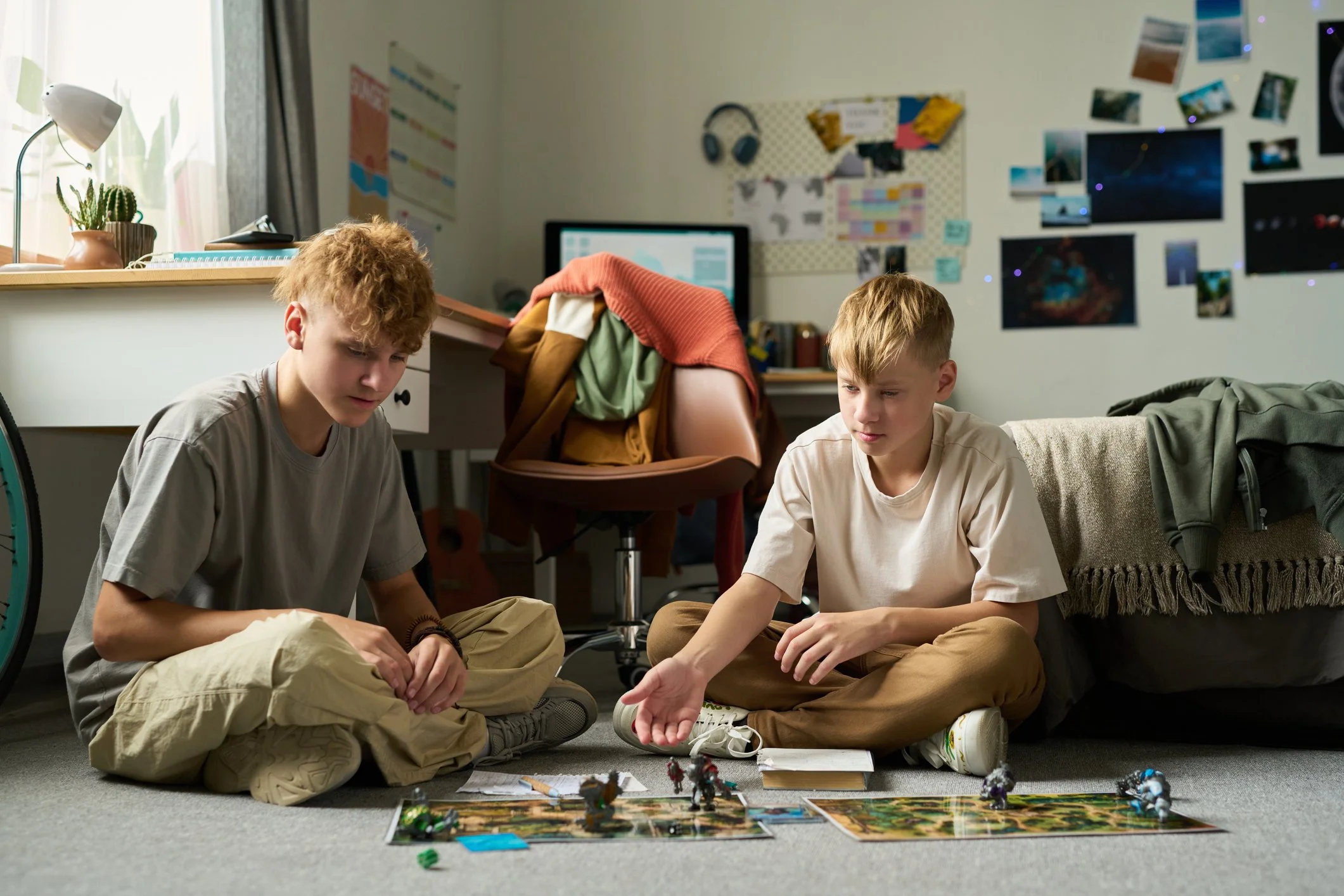
D&D Games for Beginners: A Guide for Parents
Has your child been asking to play Dungeons & Dragons? Getting started can feel intimidating, but it doesn’t have to be! Learn the basics of the game, and how to get started with a beginner-friendly group in our guide for parents of aspiring players.
What is Dungeons & Dragons?
If your child is new to the world of Dungeons & Dragons, the rules can seem overwhelming. What’s a Variant Human Artificer? Why are there so many spells to choose from? Why do you need seven different dice?! The truth is, the rules are a little complicated, and it can take time and practice to learn them all. But the premise of the game is simple, and that’s all your child really needs to understand to get started.
Dungeons & Dragons, also called D&D, is a group storytelling game. Players create characters and take them on fantasy adventures, while a Dungeon Master guides the story and plays the supporting characters. Players decide what their characters do, and their choices affect what happens next.
So, How Does D&D Actually Work?
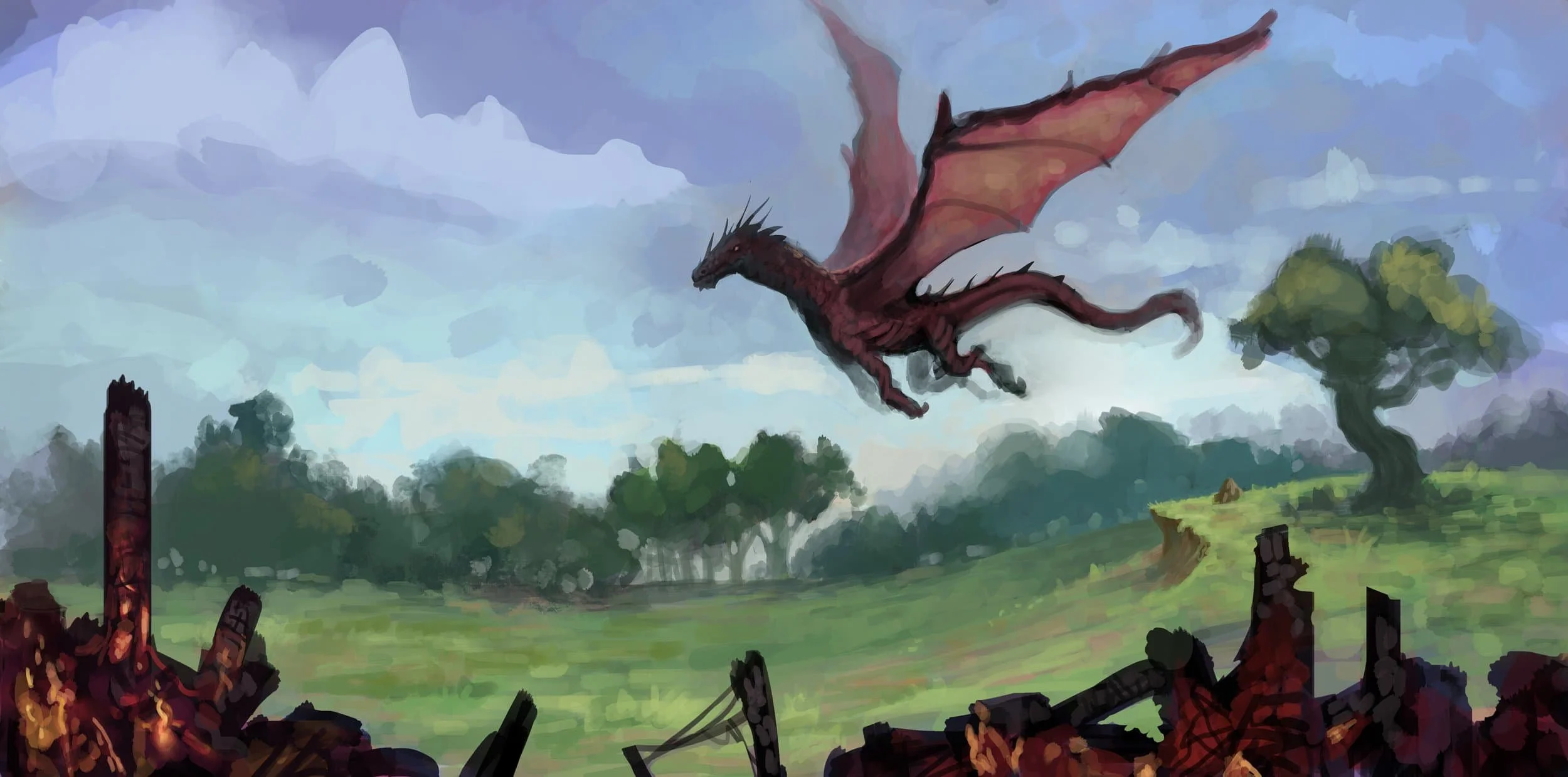
First, the Dungeon Master sets the stage:
Your adventuring party is traveling through dark, mysterious woods when they encounter a cave. There’s an eerie light shining from within, and you can hear the faraway sound of music playing.
Next, the characters decide how to respond:
Do they check to see if anyone has set a trap or cast a magical spell? Do they try to communicate with whatever is inside the cave? Do they rush in, weapons in hand, ready for action?
Finally, players roll a special twenty-sided die to see how well their plan has worked:
The higher the number, the more successful the outcome. If they roll a low number...things may get interesting.
Want to learn how to play? Learn the nuts and bolts of D&D in our text and video guide, How to Start Playing D&D, created specifically for kids and teens.
There’s lots more to the game, like casting spells, fighting enemies, and acquiring special items and abilities.
But if you understand the basic formula (DM sets the stage, characters take actions, players roll dice), you’re nearly ready to begin your first adventure.
Is it Hard to Play D&D?
D&D is not the easiest game of its kind. The rules are complex, there are tons of different dice, and many character options to pick from. However, you don’t have to know all of this stuff in order to play. You don’t need to be an expert on every aspect of the game. You just need to understand what your own character can do.
There are roleplaying games that are similar to D&D, but easier to learn. Kids on Bikes, for example, has far fewer rules and a simpler way to create characters. If you’re looking for a gentler start into gaming (or a setting that doesn’t include orcs and elves) you have options.
In our opinion, though, D&D has one big advantage over these easier games: it’s the most popular one out there. This means it’s much easier to find other people to play with, whether you’re looking in person or online.
In our experience, the best way to learn the game is by playing it. Beginners often pick up the basics within their first session or two, after a couple hours of play. And once you know the rules, you can use the game to meet new people or assemble your own adventuring party.
What Do You Need to Play D&D?
There is no shortage of D&D gear available on the internet: books (both official and unofficial), dice trays, miniature figurines, Dungeon Master screens, playmats, journals…the list goes on and on.
And listen: if it would bring you or your child joy to become the proud owner of a set of D&D dice made out of caribou antlers or a $39,000 custom-built ebony gaming table, go for it. We won’t stop you! But if those items aren’t in the budget right now, rest assured you can start playing D&D as a beginner with minimal investment and very little gear.
In fact, you could technically get away with starting for free, using the free official rules and character sheet, free digital dice, and a free downloadable adventure (like ours). But in reality, if you are a kid or teen just starting out, you’ll probably want a little more support.
Here’s what you’ll actually need:
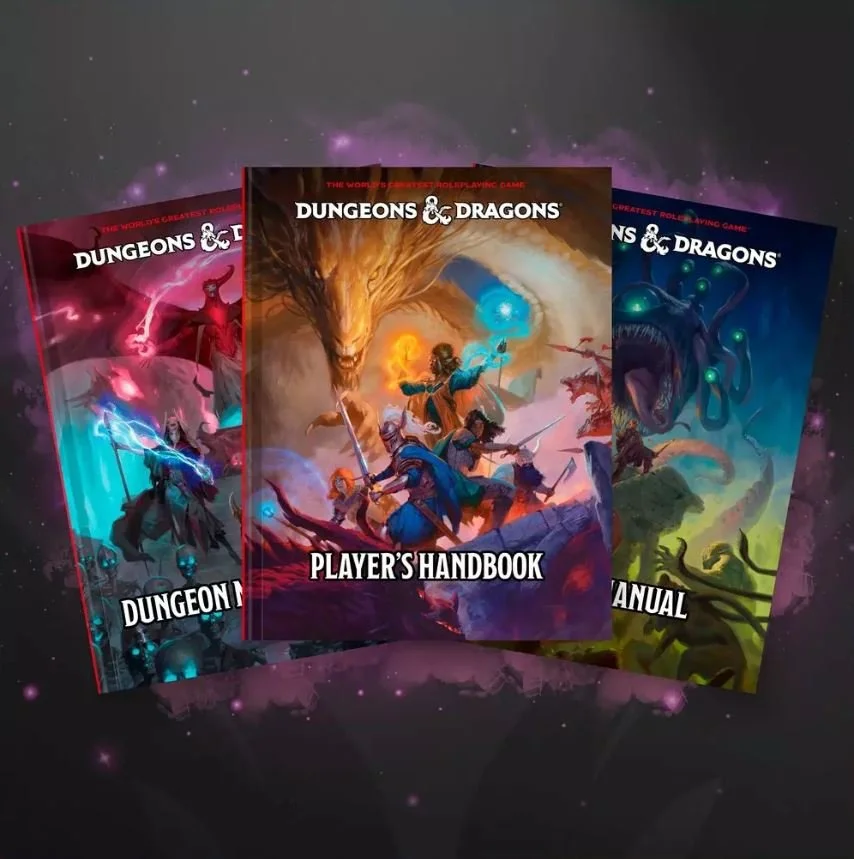
A Player’s Handbook
If you’re going to buy your D&D-loving child one book, let it be this one. It contains all the basic information needed to start playing your first D&D campaign. Inside, you’ll find:
The basic rules
How to create a character
The most commonly-played types of characters and what they can do
Spells, equipment, weapons, and armor you can use in the game
You can buy a hard copy of this book, or purchase a digital copy online through DNDBeyond, the official D&D website. To learn more about the PHB and other beginner-friendly D&D books, check out our blog post on the most recent editions.
A Character Sheet
A character sheet is where players keep track of information about their character, including their health, skills, equipment, and ability scores. Every D&D character has a unique set of strengths and weaknesses, which affect how likely they are to succeed at different tasks. For more information on how ability scores work, check out our blog post.
Traditionally, character sheets were created with pencil and paper. You can still do things the old-fashioned way with this free downloadable character sheet. However, we’ve found that virtual character sheets work much better for kids and teens, whether you’re playing in-person or online.
DNDBeyond’s character sheet is also free, easy to use, and allows you to click on any spell or action to get a definition of how it works. You can even roll virtual dice just by clicking on the action you want to take!
A Set of Polyhedral Dice (Real or Virtual)
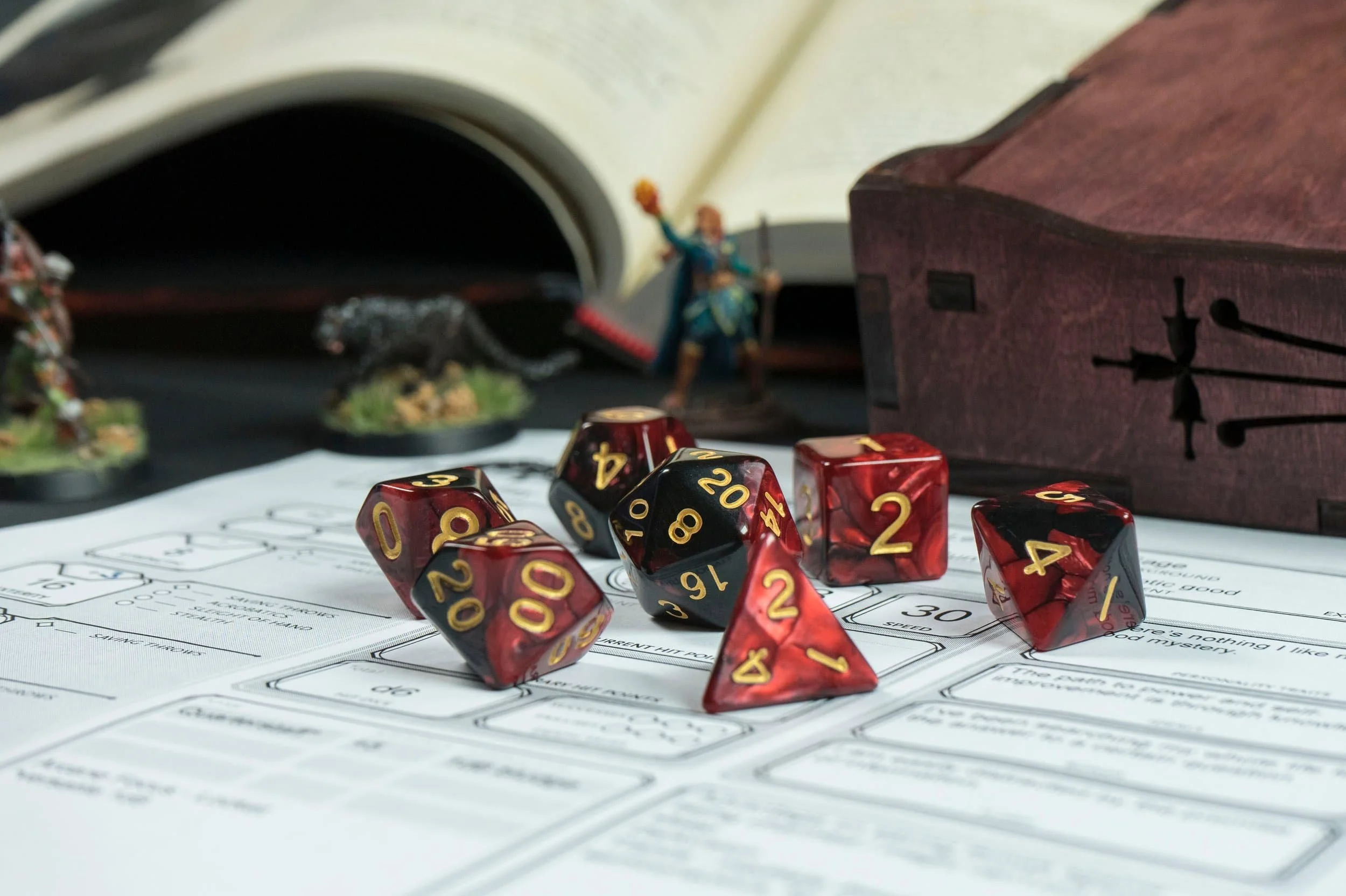
You’ll need 6 dice to play D&D, and they’re different from the familiar cube-shaped dice used in most other games. Instead, you’ll need a set of polyhedral dice, which is a fancy way of saying “dice with different numbers of sides.”
You’ll need a full set of these to play, but the most important (and iconic) is the twenty-sided die, called a d20. Virtual dice work just fine for online play, like the ones included in DNDBeyond or this free website.
A quick Google or Amazon search for “polyhedral dice” will bring up plenty of inexpensive options. Some players really enjoy collecting dice. For these “dice goblins,” many cool options exist, which you can check out in our blog on the best places to buy D&D dice.
An Adventure
The Player’s Handbook, mentioned above, will tell you how to play D&D, but you’ll also need a written adventure for your characters to go on. You’ll often see these referred to as campaigns (for longer-running adventures) or modules (for shorter ones).
Wizards of the Coast, the company that owns D&D, has plenty of their own official adventures to choose from. Plenty of indie creators have also written their own adventures for D&D players.
We’ve rounded up a list of our favorite D&D campaigns for beginners for you to check out.
Looking for something simpler? Check out The Orb of Targero, our own free adventure for new players, which requires no prep and no Dungeon Master.
A Dungeon Master
Speaking of Dungeon Masters, you’ll need one to run your adventure! The Dungeon Master, or DM, is the person who guides the story. They describe the world around the characters, decide what happens as a result of players’ choices, and voice the people, monsters, and other creatures the characters encounter along their journey.
The DM also acts as a rules expert and referee, helping players understand what their characters can do and resolving any disagreements between players. However, this does not mean the DM has to have every rule memorized! Even seasoned Dungeon Masters have to look up a rule every now and then.
If your child is brand new to D&D, having a DM who is experienced working with both kids and beginners is a huge help. The best DMs for beginners offer their players both structure and flexibility. They might offer a menu of choices, for example: “Do you want to fight the monster, distract them, or try to befriend them?” At the same time, they’re not so rigid about the rules that the game stops being fun.
So, now you know what you need to play: some basic rules, a character, a few dice, an adventure, and someone to run the game. But where do you actually find a D&D group to play with? You may have more options than you think.
If you’re an adult who wants to get into D&D, you can typically walk into your Friendly Local Game Store and see who’s playing. Or, you could search your local Facebook group, Reddit, or Discord to find groups looking for new players, either in-person or online.
These options don’t always work well for kids. Even if your 13-year-old can play D&D as well as an adult can, they may not feel comfortable at a gaming table surrounded by 40-year-olds. Socializing is half the fun of the game, and that’s a socially awkward situation!
Social media groups can be iffy as well. Reddit and Discord are largely unmoderated, making it difficult to confirm identities or prevent strangers from private messaging your child. There are ways to make Discord safer for kids, but they require adult involvement and adjusted safety settings.
So, what’s an aspiring young adventurer to do? You have several options to consider:
Recruit Family or Friends
Many D&D-loving kids struggle to find peers who are equally passionate about the game. It can be a big time commitment! Imagine agreeing to play a game with your buddies, and then discovering that the game could take months or even years to complete.
Parents, grandparents, siblings, and other family members can also make worthy adventuring partners. However, everyone at the table needs to feel comfortable tolerating failure and resolving disagreements, which can sometimes be a challenge for siblings.
If you’d like to put together a game for family or friends, consider starting with a one-shot. These are games intended to be played in one sitting, which for D&D can mean anywhere from 1-4 hours.
We love our DM Jaclyn’s Delicious in Dungeon-themed one-shot which can be played in about 90 minutes. For something shorter, try Grant Howitt’s infamous Crash Pandas or our own Orb of Targero.
Where to Find D&D Games for Beginners (Especially Kids)
Join (or Start) a School D&D Club
As D&D has entered the mainstream, more and more schools have recognized the games educational and social benefits. While an after-school D&D club would have been virtually unheard of ten years ago, they’re increasingly common today. It’s worth at least checking the school extracurricular roster.
If D&D club isn’t currently offered, your aspiring player could offer to start one. We have a step-by-step guide that walks kids through the process of pitching their own club, from gathering interested members to finding a teacher to sponsor, and even deciding what gaming system to use.

Check Out Your Local Libraries
A surprising number of libraries now offer Dungeons & Dragons games for kids, alongside lots of other excellent programming that may not be well-advertised. It’s worth asking around, not just at your local library but other branches in the area. You might find a game happening just a few miles from home!
Libraries can be a fantastic way to try out the game without spending a dime. These games are often designed as drop-in events open to the community. This means there may be broader age ranges, fluctuating group sizes, and different kids showing up each session. Librarians note that this can be both a benefit and a challenge: beginners or novelty-seeking kids might love this environment. But if your child is looking for a consistent friend group or ongoing story, libraries might not provide the same experience as an ongoing campaign.

Ask Your Local Game Store
Kids will likely have fewer D&D options at their local game store than adults do, but finding a game there is not impossible. Many stores now offer at least one group a week intended specifically for children. If your store offers one, this is a much better option than sidling up to to the adult table!
Game stores tend to be a hub for all things geeky in the local community. If the store isn’t offering kids’ game groups, they might know who is. Just make sure you understand who is running the game and what the age range is before you join.
Find a Kid-Friendly Online D&D Game for Beginners
If you can’t find a local group nearby, the internet opens up a world of possibilities. Online D&D allows kids to play with other young people who share their age, interests, and experience level, even if they live across the country instead of down the street.
But wait! This doesn’t mean you should just release your kid or teen into the unsupervised wilds of Roll20, Discord, or a “Find a DM” website. For younger players, you want to thoroughly vet any online group before joining. Who is running the game? Who else will be playing? What ages are the other players? What kind of content is allowed, and what safeguards are in place to protect young players?
We recommend seeking out a purpose-built youth program (like ours) or a virtual class or club that is similarly designed with kids in mind. The right online group can give your child all the social and creative benefits of D&D without requiring you to assemble a handful of kids who are equally enthusiastic about the game.
How Young Dragonslayers Welcomes Beginners

Young Dragonslayers is an online community for kids and teens who want to find their people through D&D. Founded in 2020 by a children’s therapist, we’ve run over 3,000 games for kids ages 8-18.
We meet every interested child before they join our program, so that we can personally match them with the right peer group based on their experience level, age, and interests.
Before they join, beginners can participate in a trial game: a one-time D&D session designed to help absolute beginners feel confident playing online. During this session, players will learn to:
Roll dice in D&D
Follow basic rules of combat
Play on an online platform
Work together with other players
Succeed on an adventure 🙂
Most importantly, they get to see what playing D&D is actually like before committing to our ongoing weekly games.
How Our Trial Games Work
Kids don’t need to know all the rules or prepare anything in advance to attend our trial games. They’ll learn by playing the game! We know many players joining us will be brand new to D&D, so we adjust the games accordingly. Just show up, and we’ll take care of the rest.
Everyone who joins a trial game has met with a member of our team for prescreening first, so we know exactly who will be attending the game. When players arrive, the Dungeon Master (one of our team members) will help them choose a premade character.
Players will go on an fast-paced, low-stakes adventure with lots of guidance from their Dungeon Master along the way. We welcome silly choices, out-of-the-box thinking, and giving something a try even if it doesn’t quite make sense with D&D rules. In fact, some of the best D&D moments happen this way.
If your child enjoys their trial game, we can help match them with a new group of friends who meet to play D&D online every week.
Join a Child or Teen D&D Group for Beginners

We’d love to introduce your child to their new favorite hobby. Our small, close-knit groups are hand-matched to ensure that beginning players are welcomed into a likeminded group of new friends.
Our games run on a quarterly basis in Spring, Summer, Fall, and Winter. Each full term includes 10 weekly, 90-minute online sessions with your kid’s group.
We meet on weekday evenings or weekend afternoons, and we’ll use your availability to help find the right fit.
You can pre-register for our next term by by clicking here.
Frequently Asked Questions
-
Most kids are ready to start playing Dungeons & Dragons around ages 10-12, although a child’s developmental stage matters more than their actual age. Kids need to be ready to collaborate with peers in a small group, take turns, cope with minor setbacks, and have a long enough attention span to remain focused on the game. Although accommodations can be made, being able to read independently and do basic math help a lot if a child wants to play in a general setting.
At Young Dragonslayers, our games are designed for players ages 10 and up. We limit sessions to 90 minutes to help younger players stay engaged, keep group sizes small, and match players with peers close in age. We can also modify or simplify rules to help beginner players succeed.
-
For a first official D&D adventure, we like the classics: Phandelver and Below: The Shattered Obelisk and the Dragons of Stormwreck Isle starter set, which comes with dice, character sheets, and a simplified rulebook.
For more ideas, check out our guide to the best D&D campaigns for beginners.For an online D&D group designed specifically for kids, we like ours at Young Dragonslayers!
-
Ideally, you need at least four people: one person to DM and three people to play the characters in your adventuring party. In a pinch, you can get away with a party of two, and there are even games like D&D you can play by yourself.
Our games typically include 4-6 players. Any more than that, and things get a little disorganized.
-
You don’t need to have a ready-made group of friends to play D&D! School and library clubs, local game stores, and online programs can all help your child find a group. The key is finding other players who are a good fit for their age and experience level.
-
Online D&D can be a great way for kids to be creative and make friends, but safety should be a priority in any online activity. Games are safest when they’re supervised by trusted adults on a private platform.
At Young Dragonslayers, we get to know every player before they join and ensure our Game Masters are background checked and experienced working with kids. Our campaigns take place in a private, password-protected environment where players (and parents) know who they’ll be adventuring with each week.
-
Yes! Many of our players are neurodivergent. Our team has experience adapting games for kids with autism, ADHD, anxiety, and learning differences. We'll ask about your child's support needs during our initial call, and we'll be honest if we don't think we're the right fit for them.
-
Players will need a quiet place to play, a computer with a webcam and microphone, a stable internet connection, and the latest version of Zoom. Laptops and desktop computers work better than phones. No dice, books, or other gear are needed: we can take care of all that online!
-
Sessions are 90 minutes long and groups meet once a week. We’ve found that 90 minutes is the sweet spot for kids and teens: long enough to make meaningful progress in the story, but short enough to keep players engaged throughout the session. Our campaigns run in quarterly terms, with each term including ten sessions of gameplay (except summer, which includes five sessions).
Ready to Find Your Child’s Group?
Here’s how to join the party.
We’re excited you’d like to join Young Dragonslayers! Getting started is simple:
Tell us about your child by completing our enrollment form.
Meet with our team so we can learn about your child’s interests, experience, and play style.
We’ll help your child find the right adventuring party and get ready for their first session.