

Dungeons and Dragons for Kids:
The Quest Begins!
Looking for an activity that helps your child make friends, build self-esteem, and enjoy meaningful, social screen time? Joining a D&D group may be exactly the adventure you’re looking for.
What is D&D? Part Storytelling, Part Online Game, All Fun.
Dungeons & Dragons, also called D&D, is different than most games kids play: it isn’t a traditional board game, and it’s not a video game, either. Instead, it’s like a choose-your-own-adventure story brought to life.
Players create characters and help them navigate a fantasy world, making choices that shape what happens next in the story. A facilitator, called a Dungeon Master, sets the scene and guides the story, but it is ultimately up to the players to decide how to defeat enemies, solve puzzles, and save the day.
Thanks to the popularity of TV shows like Stranger Things and podcasts like Dimension 20, a new generation of young fans has discovered this tabletop roleplaying game. What used to be a hobby reserved for nerdy dads is now open to people of all ages and genders.
At Young Dragonslayers, we have run over 2,500 D&D sessions for kids and teens since 2020. We’ve seen firsthand how great Dungeons & Dragons can be for kids’ social lives, self-confidence, and creativity.
Children are a natural fit for D&D. Our D&D newbies often get the hang of it right away, because making up stories is just what kids do. The game offers just enough structure to help children channel their natural creativity into a collaborative, rewarding group activity.
The Benefits of Dungeons and Dragons for Kids:
Real-Life Social Skills from Imaginative Play
Many kids gravitate toward D&D because they’re looking for a chance to have fun with a close-knit group of fellow adventurers. But the benefits of D&D extend beyond fun and friendship: it teaches kids valuable, real-life skills.
Social skills like turn-taking, empathy, collaboration, and negotiation occur naturally as part of the game. Even though stories are set in a fantasy world, these skills can carry over into daily life, helping kids navigate social situations with more confidence thanks to their practice in-game.

When kids play D&D, they are also practicing:
Impulse control: managing interruptions, waiting for turns, and delayed gratification
Empathy: understanding and appreciating other people’s feelings, perspectives, and differences
Conflict resolution: resolving disputes, both with characters in the game and your fellow players
Teamwork: negotiating, speaking assertively, and finding compromises that work for everyone
Creative problem-solving: coming up with unexpected solutions to challenges
Frustration tolerance: coping with failure, cultivating a growth mindset, and embracing imperfection
Self-esteem: celebrating each person’s unique strengths and contributions to the team
As a therapist-founded company, we know how important social-emotional skills can be.
In D&D, this learning occurs naturally through play, so it doesn’t feel like work to learn. Plus, there’s something really satisfying about mastering new skills in D&D. Getting a handle on the rules of the game, acquiring new items, leveling up…it feels good, and helps kids feel proud of their accomplishments.
Kid-Friendly D&D Designed for Ages 10 and Up
Whether they’re looking to make new friends, emulate their favorite anime character, or simply design the tricked-out battle dwarf of their dreams, there’s no denying that more and more young players are excited to try D&D.
But if you’re a young fan, it can be hard to find spaces to play that feel like they’re made for you.
While people of all ages enjoy D&D, many traditional gaming spaces were designed with adults in mind. They may not be as safe as kids need, and can include plot points that are either uninteresting or inappropriate for younger players. Plus, rolling up to a table of adult players when you’re 11 just feels a little awkward.
Young Dragonslayers was created specifically to meet the needs of younger players: we run tween games for kids ages 10-12 and teen games for kids ages 13-18. We design our groups to set kids up for success, whether they’ve played for years or are brand new to the hobby.
Many of our younger players are looking for a place where they truly feel they belong. We handpick our groups to match players we think will get along, and create small, consistent groups where friendships can grow…while also ensuring each player gets their own heroic moment in the spotlight.
Since our storylines are custom-built for young audiences, you’ll find plenty of elves and dragons…but you are just as likely to encounter Luffy from One Piece or a pantheon of Greek Gods.
Online D&D for Kids Turns Screen Time Into Social Time
One of the hardest parts about growing up is finding your people: the kids who love the same things you do, whether that’s fantasy worlds, Pokémon, anime, or dragons. For many kids, these interests run deep, and it can be hard to find nearby peers who share their enthusiasm.
Online D&D allows us to gather like-minded kids together, whether they live across town or across the country. These kids may come from different backgrounds and walks of life, but their common interests make them an ideal adventuring party.
Compared to other online games like Minecraft and Roblox, Dungeons & Dragons has some unique advantages when it comes to socializing. Rather than moving avatars around a screen, players interact face-to-face.
Adults moderate every group to make sure the game remains fun and safe. And because the same kids show up week after week, kids learn to work through disagreements, make compromises, and create more lasting friendships than you might on an anonymous game server.
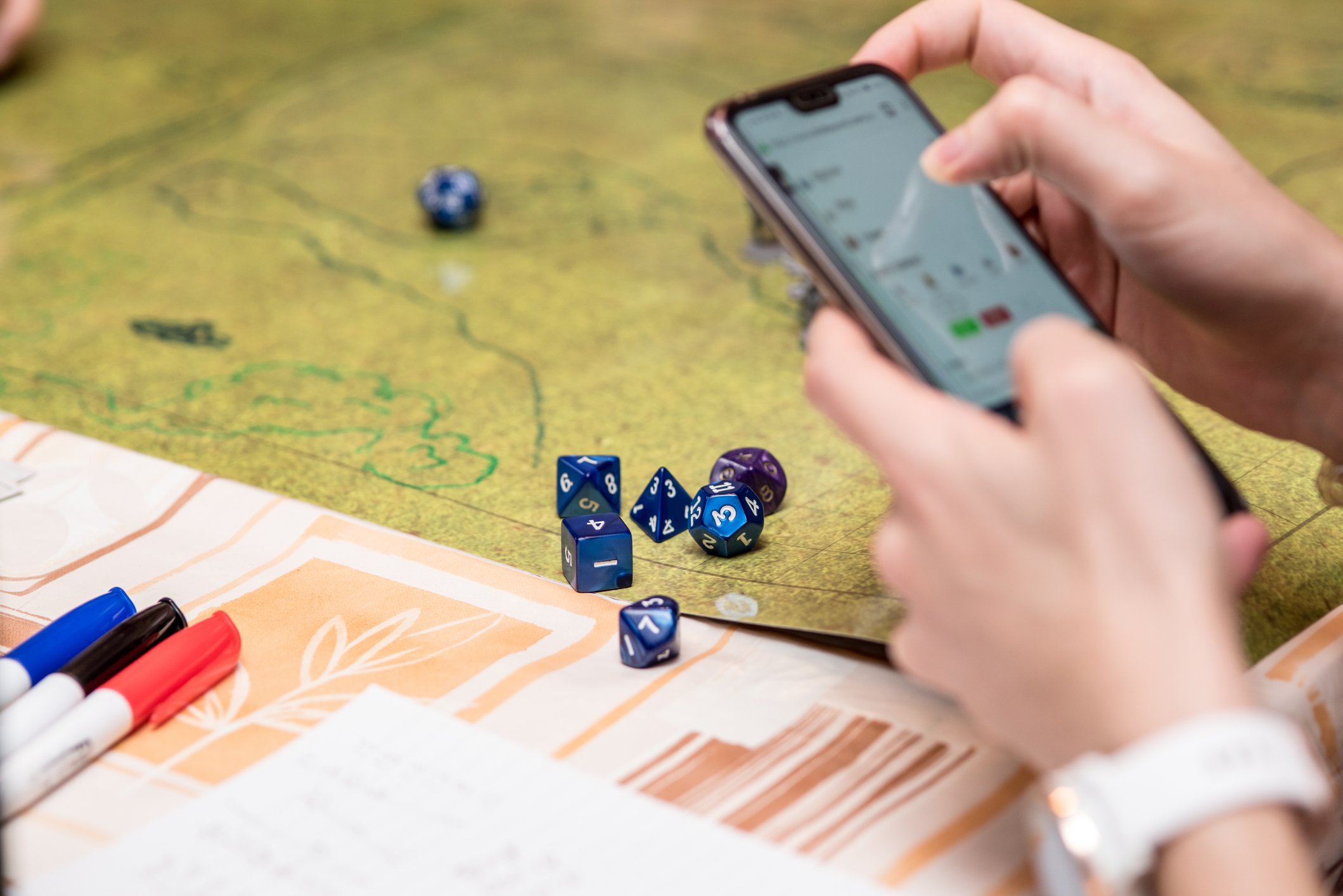
Dungeons and Dragons happens to work beautifully online. Virtual tabletop platforms make gameplay easier by handling some of the more complicated parts of the game, like tracking hit points and calculating dice rolls. A lot of the more finicky stuff is done automatically, so kids spend less time worrying about the details and more time enjoying the game.
Is Online D&D Safe and Appropriate for Kids?
It’s a fair question. Between the word “Dungeon” in the title and the idea of sending your child to play a game with a group of internet strangers, many parents wonder if online D&D is a safe fit for children.
The good news is that when groups are thoughtfully set up and well-supervised, D&D can be a creative, social, and age-appropriate activity for kids. In fact, it can be downright wholesome. One of our groups spent several sessions formulating a plan to convince two rival kingdoms to make peace with each other, culminating with a heartwarming speech. Countless groups have befriended enemy creatures, rather than fight them. It’s not all orcs, goblins, and doom!
Here are the top three questions parents ask us about safety in online Dungeons & Dragons for kids:
-
We begin by vetting every parent and child interested in joining our program. We want to make sure that there’s a real human child out there who wants to join our games, and that their parent is aware of the plan.
Next, we use private, invite-only platforms to run our sessions: you only get access to the links through our password-protected portal after registering for our games. Finally, there is an adult facilitator present at all times: no kids running D&D for each other in an unsupervised space.
-
Learning how to collaborate is a part of playing D&D. Minor disagreements happen in any group activity, and our Game Masters are trained to help players resolve conflicts, redirect challenging moments, and ensure everyone feels heard.
We do not tolerate bullying, harassment, or repeated disrespectful behavior. Our code of conduct outlines our program values, which include being an inclusive, affirming space for everyone.
At the beginning of each term, facilitators review group expectations with players so everyone understands how we work together to create a fun and welcoming table.
-
Every Young Dragonslayers game is led by a trained adult facilitator called a Game Master: someone who is knowledgeable about both D&D and working with children.
All of our Game Masters complete a screening process that includes a background check, a face-to-face interview, and facilitator onboarding before leading games, plus ongoing support once the adventure starts.
Our team comes from a variety of backgrounds, including education, counseling, parenting, and professional gaming. What they all share is a commitment to creating welcoming, inclusive spaces for kids.
Want to know more about the adults leading your child's adventure? Here's what sets our team apart.
Who Runs Our Games at Young Dragonslayers?
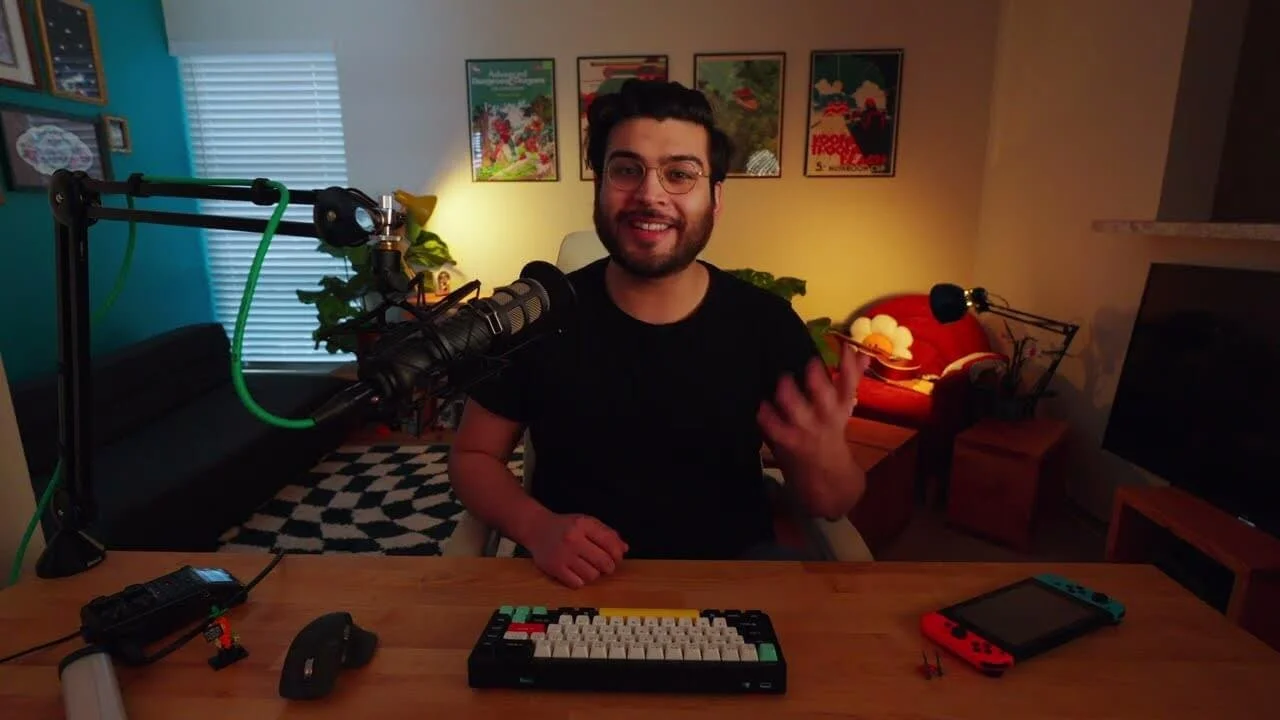
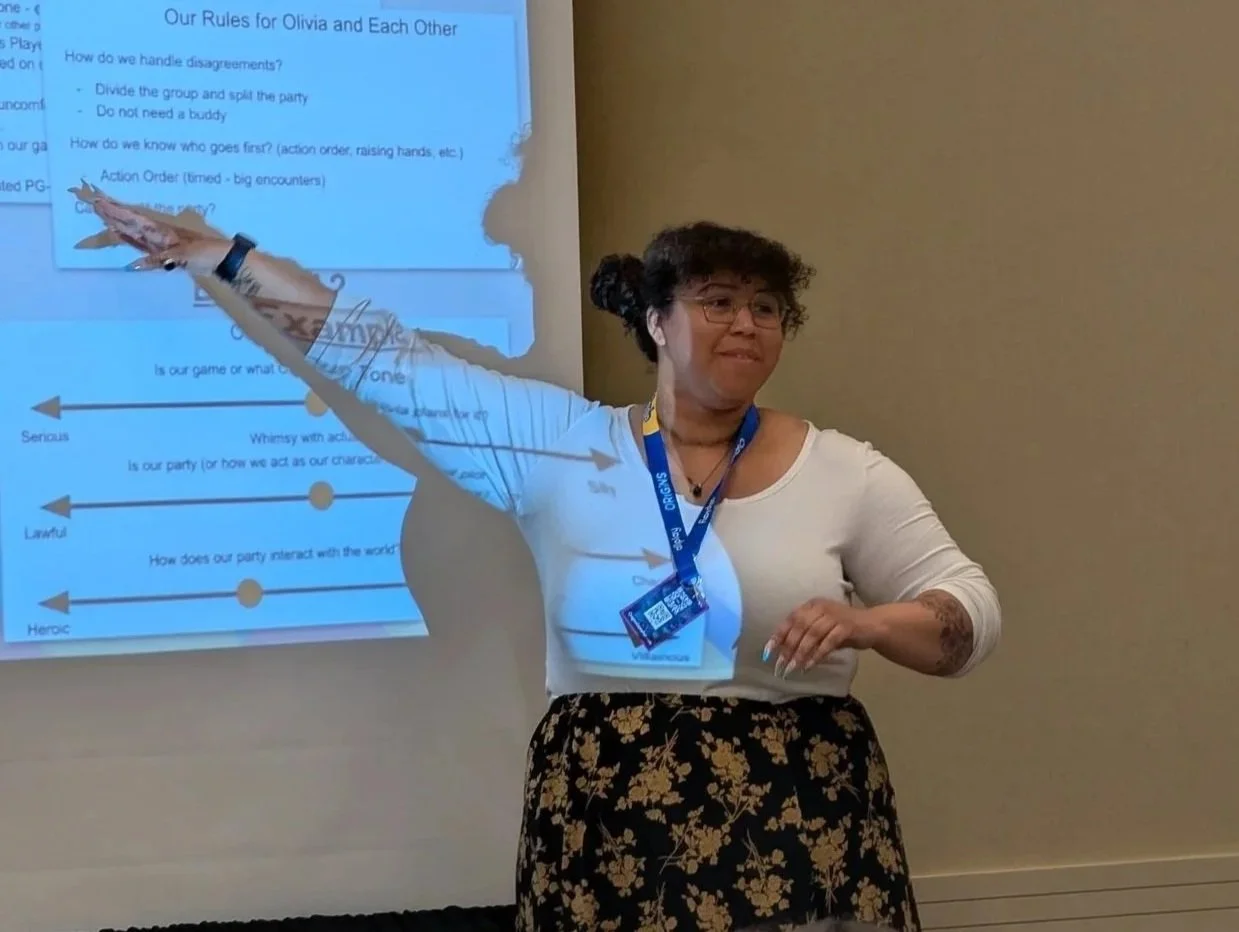
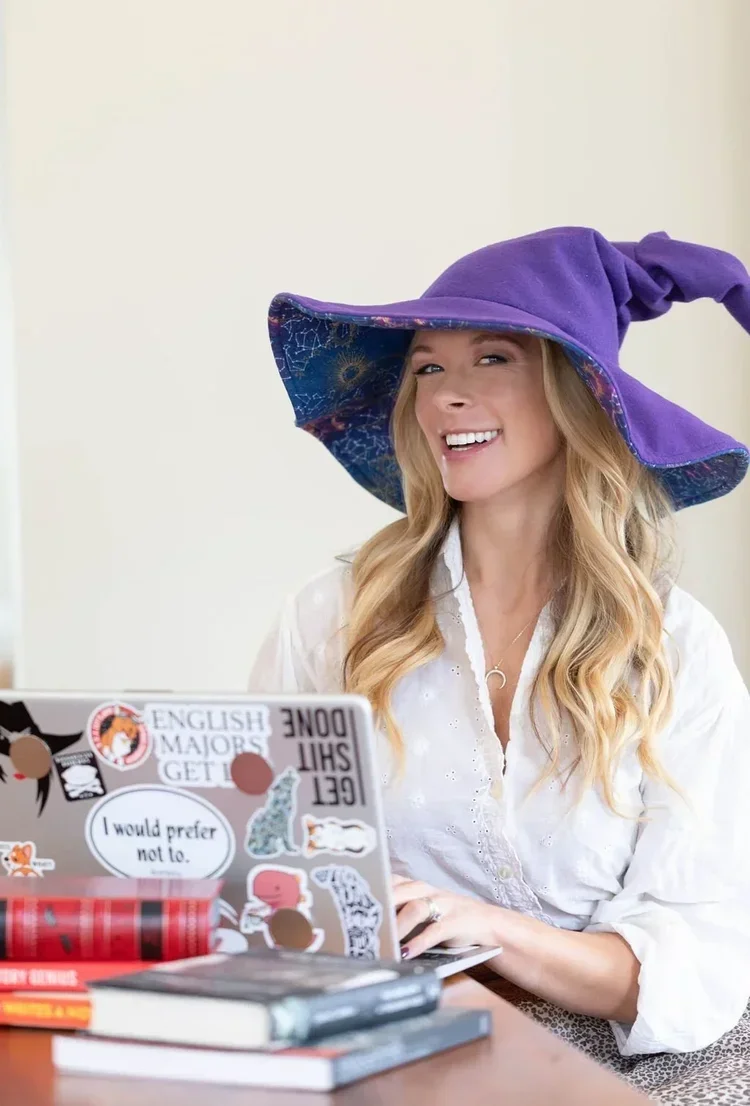
Young Dragonslayers was founded in 2020 by Katie Lear, a licensed clinical mental health counselor, drama therapist, and play therapist.
Katie works with kids and teens, and during the pandemic she saw many of her clients struggling with being cut off from friends and peers. She started an online D&D group for kids as an antidote for pandemic loneliness…and never stopped playing.
What began as one small group has grown into a thriving community, with some of our very first players still joining us years later.
Today, our Game Masters come from a variety of backgrounds, including education, counseling, healthcare, professional acting, gaming, and youth development. They have true geek bona fides, plus a passion for working with kids.
Every Game Master completes our screening process, including background checks and interviews. They receive onboarding training and ongoing support, and love to nerd out together about the shenanigans our players get up to every week.
New to Dungeons & Dragons? No Experience Required

If you’re familiar with D&D, you know it can be a rules-heavy game. There are a lot of dice to keep track of, modifiers to add up, and about 8 million spells to learn. It’s okay if your child has never heard of any of this stuff! Our groups are designed to be friendly to beginning players.
Whether your child has memorized the Player’s Handbook cover-to-cover or is just starting out, they’ll fit right in. We set up adventures that gradually build on each player’s existing skills, so nobody is thrown into the deep end on day one.
We also abide by something called the "rule of cool." That means we value telling a good story, building confidence, and having fun over getting every rule exactly right. If a player comes up with an amazing idea that works with the story, we’re not going to shut it down! Our Game Masters are here to keep track of the rules, so your newbie doesn’t have to.
Before joining an ongoing group, all beginners are invited to a trial game to learn the basics of gameplay. They’ll practice navigating our online platform, create their first character, and learn how to roll their dice. It’s a great way to get comfortable with the game before the adventure begins.
What Kids and Parents Say About Young Dragonslayers
Frequently Asked Questions
-
Most kids are ready to start playing Dungeons & Dragons around ages 10-12, although a child’s developmental stage matters more than their actual age. Kids need to be ready to collaborate with peers in a small group, take turns, cope with minor setbacks, and have a long enough attention span to remain focused on the game. Although accommodations can be made, being able to read independently and do basic math help a lot if a child wants to play in a general setting.
At Young Dragonslayers, our games are designed for players ages 10 and up. We limit sessions to 90 minutes to help younger players stay engaged, keep group sizes small, and match players with peers close in age. We can also modify or simplify rules to help beginner players succeed.
-
While there is no official product called “D&D Junior”, some publishers offer simplified versions of D&D geared toward younger players. Typically, these games have easier rules and gentler, age-appropriate storylines. They’re a great option for families who want to play together at home.
Our online games use standard Dungeons & Dragons rules, but adjust the pacing, difficulty level, and content to be appropriate for kids and teens. That way, kids learn the official rules and will be able to play with others out in the real world. -
Joining a Young Dragonslayers group is simple! Start by completing our enrollment form and telling us about your child’s interests, experience, and play style. Our team will get to know your child and help match them with a group that’s a great fit.
-
Online D&D can be a great way for kids to be creative and make friends, but safety should be a priority in any online activity. Games are safest when they’re supervised by trusted adults on a private platform.
At Young Dragonslayers, we get to know every player before they join and ensure our Game Masters are background checked and experienced working with kids. Our campaigns take place in a private, password-protected environment where players (and parents) know who they’ll be adventuring with each week.
-
That is the case for many of our players! It can be hard to find opportunities to play in person, so many players arrive with some general knowledge but little experience. Our games are built for beginners, and players aren’t expected to have every rule memorized in advance. The best way to learn is to get started!
-
First, we meet with each child and a parent or caregiver so we can get to know them and answer any questions they have. Next, players have the option to participate in a Trial Game to see what online D&D is like. Finally, we use our magical sorting hat (okay, just our brains) to pick the best group for each player based on their age, experience level, interests, and schedule.
-
Yes! Many of our players are neurodivergent. Our team has experience adapting games for kids with autism, ADHD, anxiety, and learning differences. We'll ask about your child's support needs during our initial call, and we'll be honest if we don't think we're the right fit for them.
-
Players will need a quiet place to play, a computer with a webcam and microphone, a stable internet connection, and the latest version of Zoom. Laptops and desktop computers work better than phones. No dice, books, or other gear are needed: we can take care of all that online!
-
Sessions are 90 minutes long and groups meet once a week. We’ve found that 90 minutes is the sweet spot for kids and teens: long enough to make meaningful progress in the story, but short enough to keep players engaged throughout the session. Our campaigns run in quarterly terms, with each term including ten sessions of gameplay (except summer, which includes five sessions).
Ready to Start Playing?
Here’s how to join the party.
We’re excited you’d like to join Young Dragonslayers! Getting started is simple:
Tell us about your child by completing our enrollment form.
Meet with our team so we can learn about your child’s interests, experience, and play style.
We’ll help your child find the right adventuring party and get ready for their first session.