Meet the Dragons: GM Liv
Welcome to the latest in a new series here at Young Dragonslayers called Meet the Dragons! Here, we take you behind the screen to meet the Game Masters behind our games. Today, we’re featuring Liv Larbi, a former middle-school teacher, a graduate student, a clinical researcher, and an escape-room enthusiasm. Liv is a pro at turning groups of excited, high-energy kids into cohesive adventuring parties. Her campaigns run the gamut from mild-mannered to gloriously chaotic, but they’re all warm, inclusive, and welcoming to players of all stripes. Game Master Jaclyn got to talk with them about the project-management of being a Dungeon Master, the community built over a campaign, and their love of telling stories through rolling dice.
Education, Research, Life, and Games
Jaclyn: Hello, everybody. This is Jaclyn with Young Dragonslayers, and I'm here today interviewing Liv. They are one of our lovely Game Masters — and they're also someone I know IRL. I have a couple of things that I'm really excited to talk about with you guys, and to just share some of our cool games and the stuff that we do. As a start, just tell us about what kinds of things you do outside of the realm of Young Dragonslayers. We know you are a Game Master, and we know you run our chaotic, beautiful stories. But you do other things in your life. What are they?
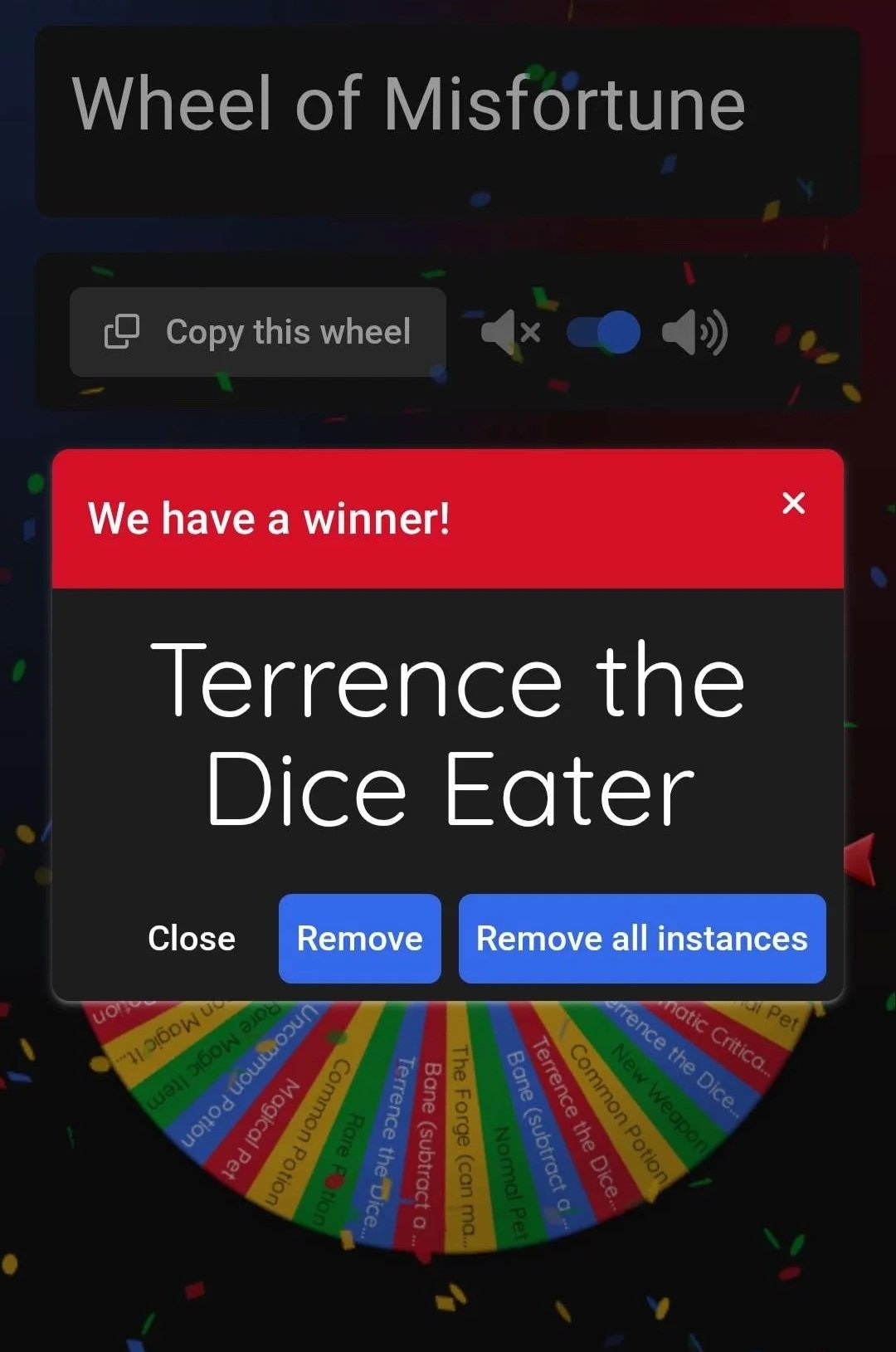
Liv’s dog, Terrence, once ate dice and has become a legend in her groups. A D&D version of him can be summoned if a player gets lucky on the “Wheel of Misfortune".”
Liv: Yeah, I do, quite a bit outside Young Dragonslayers. So my day job, which is a lot less fun than running games for kids and all the chaos we have there: I am an educator. I was originally a teacher; I taught middle school math, and I just transitioned out of the classroom a few years ago, and now I am still an educator. I do education on research, helping researchers keep participants safe when they are conducting clinical research at hospitals and institutions and such. Other than that, I also, I'm getting my master's in public health at George Washington virtually. And so on the nights I don't do Young Dragonslayers, that's what I'm doing, studying and reading up on how to improve health, both mental and physical, for the people of our beautiful country.
On top of that, I enjoy painting. I do a lot of Dungeons & Dragons and RPGs outside of Young Dragonslayers: playing with friends, local community groups. And I also have a dog. His name is Terrence Barker, which all my players know very well and have seen many times, and we like to go on hikes and walks together.
Jaclyn: We love Terrence here. How did you get into the medium of tabletop roleplaying games [TTRPGs]? You said you play them outside of Young Dragonslayers, but how did you get into them? What got its hooks in you once you started playing?
Liv: I was about like 2017, 2018. I had seen some things on Instagram, Facebook – this is pre-TikTok-era. And I wasn't a “gaming kid” growing up. I was a very studious kid. I didn't really know a lot about gaming in general then. So I saw TTRPGs and Dungeons and Dragons 5th edition, and I was kind of interested in the storytelling aspect, building characters. I always loved fantasy books growing up. So I remember, I had met a friend of a friend at a party, and he was like, “I'm looking for a group to run Dungeons and Dragons for.” And I was like, “I have people who would love to play Dungeons and Dragons with you. We just literally have no idea how to do it.” And so we started with him. We played like once a week in our college dorm, and it was really fun. My first D&D character was a little half orc named Cefrey. She was a barbarian far from home. She was kind of like the little sister of the party. And I watched that develop with all my other friends’ characters and the story built together. And it was really, really cool. And I thought to myself, you know, I love playing Cefrey. I love playing with this group, but what more can I do with this? What other stories can I tell with people?
Getting Into the World of TTRPGs
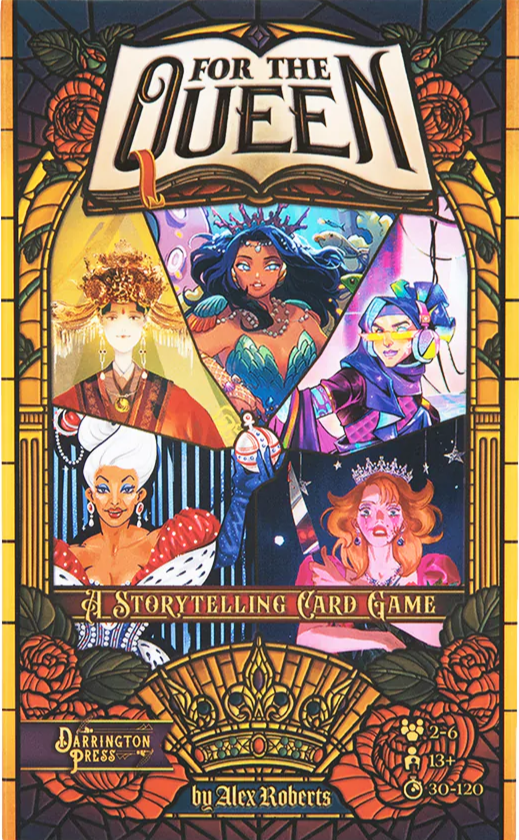
Liv’s most recently-played tabletop roleplaying game is For the Queen by Alex Roberts.
Jaclyn: It's awesome that the character-building is the thing that really drew you in, because I think that's something that a lot of young people are drawn to as well. Now that you're fully in the world of tabletop RPGs, what kinds of different activities are you involved in? What games do you play? Who do you play with? Do you watch streams or design games or anything in the game-adjacent world?
Liv: I run biweekly games every two weeks at a local game cafe called Tabletop here in Cleveland. They're really fun. It's a community-based game, and so I run a level 5 to 8 group in D&D there. And anyone can join, whether it's your first time playing D&D or you’re an expert. I love that space. It's kind of very similar to kids; I get to, like, teach them this love of D&D – especially for anyone who's coming in brand new to the game.
I also do, like I said before, a lot of TTRPGs with my friends. Last night I played For The Queen with some friends, which is a roleplaying game. It has no dice, but just cards. And you build a story about – your queen is under attack. How did she get there? And what are you doing to defend her, if anything? That's by Alex Roberts; it's so fun. I've played Call of Cthulhu with friends; I'm about to run a Dungeon World campaign for friends. I'm actually going to run a Dungeon World one shot for our coworker and her kids this afternoon. And so I like to find ways to bring it in as much as I can. And actually, one of my New Year's Resolutions this year was to write more like modules for Dungeons & Dragons-based things for TTRPGs. So I'm trying to learn new systems and then write games and them that I might one day play, I might give to friends to play. We'll kind of see what we do. I just kind of love putting them together.
Jaclyn: What kinds of modules would you want to write?
Liv: I'm thinking like one-shot modules in different settings. Obviously with the work that we do, we do a lot of fantasy work, because I think that's what kids come into Young Dragonslayers to do. They hear “Lord of the Rings” and so they want to do something similar. But I want to kind of expand, and I want to do some sci-fi things. I'd love to do something, especially with all the things going on right now in the sci-fi space. I had a group that did a sci-fi fantasy western a year ago, and I would love to expand upon that, because I think that's a really cool intersect of genres. And so I think that's what I'd like to do, is building one shots in different systems for different settings and kind of just getting a feel for how TTRPGs are built.
Making Pets For D&D
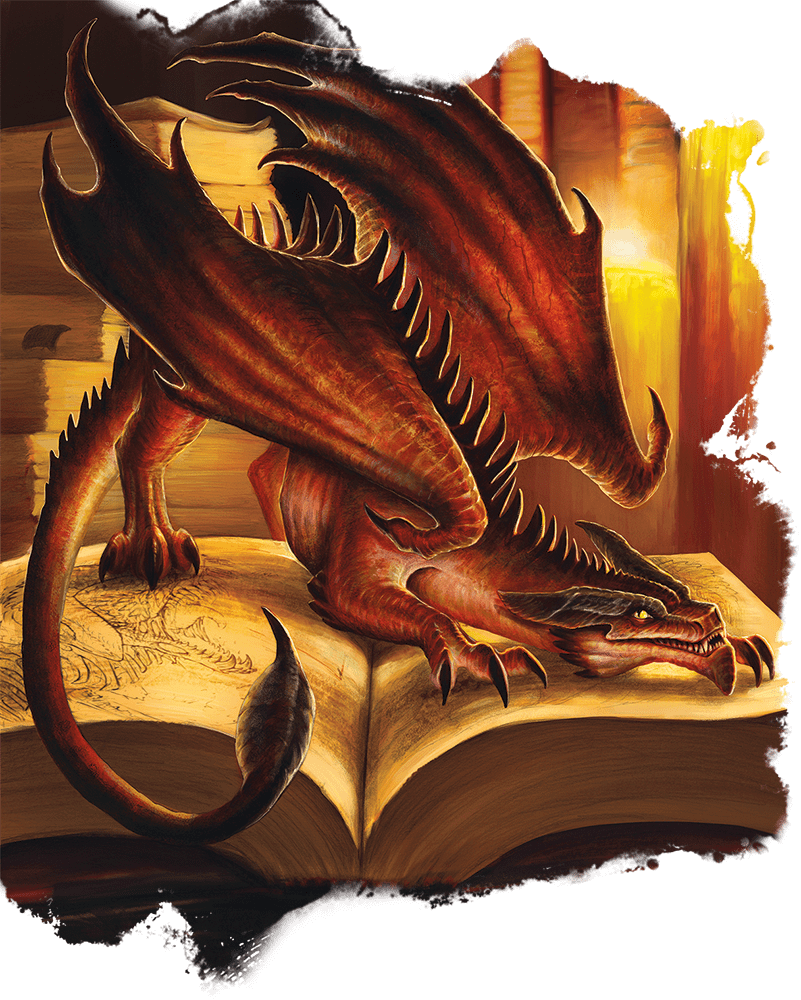
A pseudodragon, like the ones Liv creates for their games.
Liv: I do have a list of magical pets that people can choose from. Now we're up to 40 magical pets. And I was like, “It'd be really cool if we got drawings of these and full descriptions,” and so I might reach out to some of my artist friends and see if they can put together some drawings for me of what these little pets are going to look like, because they're all homebrews.
Jaclyn: So cool. I would definitely use those in my games because my players always want to adopt pets.
Liv: They also have little abilities with them too, because they were really cute to have, but then I couldn't do anything and it was really, really hard to like “I need to remember to train five pets every session to do this one thing.” So now I'm kind of putting abilities with them too, so they have a bonus reaction or passive – two of those – that they can train with their player to do. Kind of like Pokemon-esque that we’ve developed here! But that’s a project this year as well.
Jaclyn: What are some of the abilities that the pets have and what are some of the things your players have done with these pets in game?
Liv: So abilities are rather new, but we've had pets for a while. I have some players who have little pseudodragons that can be held in your hands. We actually just had an initial session with a few of them this quarter where they often just add flavor text to a character or to what's happening. And so we had two characters, two dragons who were fighting over a stool. And that was so funny for the characters for so long. Like they just want to describe what their pets are doing. I have a character who uses her pseudodragon as almost like part of her spellcasting. So when she shoots a fireball, she actually creates a little flame, and her pseudodragon consumes it and then lets out a fire attack, which is really cute. It's adorable. We have an Inkweaver Raven, which can write letters for you and transport them. I have a character whose [pet] will send letters to her husband about how the journey is going, and so she'll write this letter to me, and then her raven will transport them and she'll get letters back.
DMing Is Actually Just Project Management
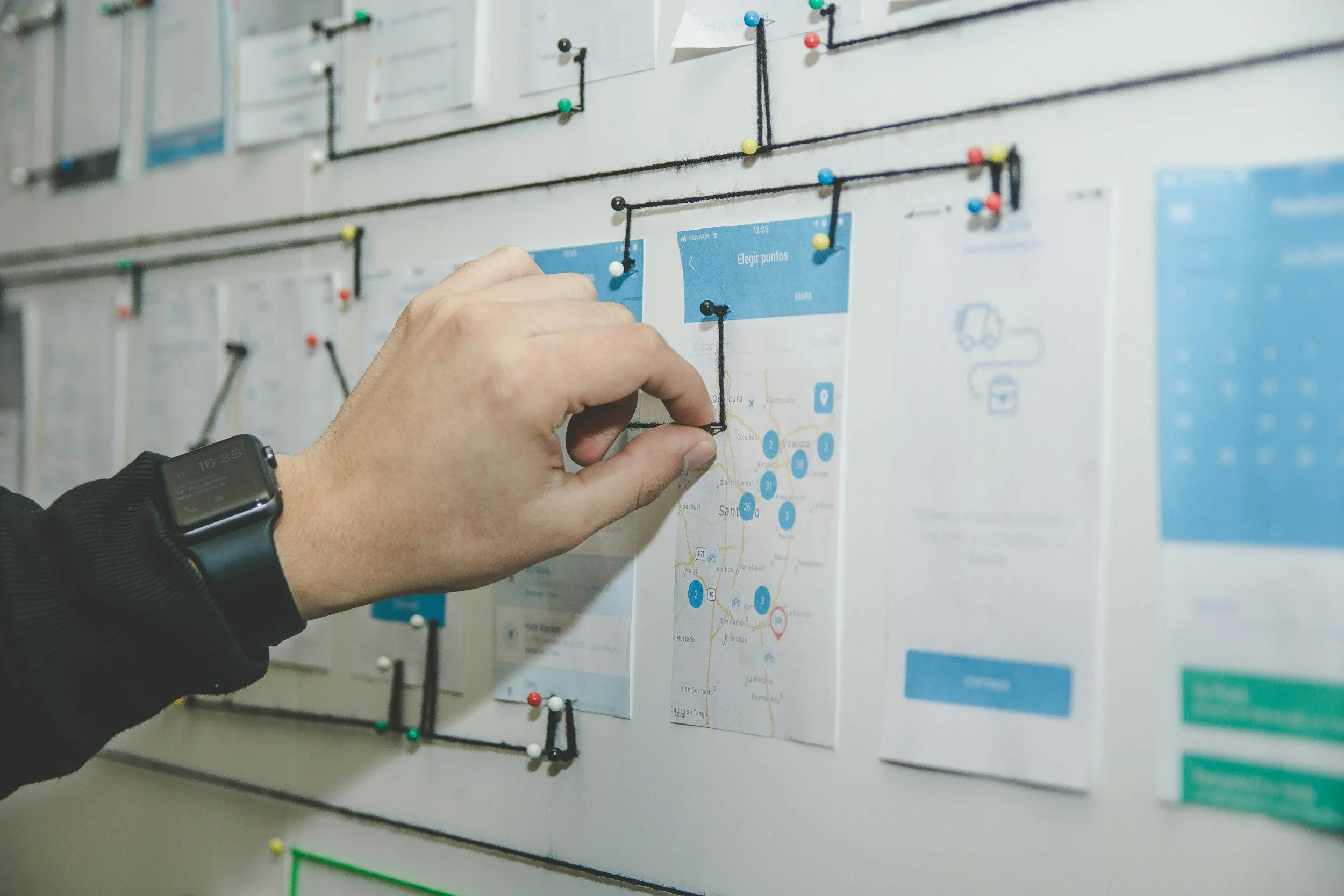
From story beats to monster statblocks to player preferences, there’s a lot to keep track of as a Dungeon Master!
Jaclyn: What other skills other than classroom management from outside of Young Dragonslayers do you bring into being a GM? Particularly I'm curious if anything about your career in improving health has done that. Or any of your other experiences!
Liv: It's strange when I talk to people about this. A lot of people, when I talk to them about being a GM for kids, it’s like “Oh, so you just play games with kids all the time, and it's easy.” And it's not. It's really fun. I will say; it's chaotic, but then like a level of project management that comes into this. I run four sessions a week. We do that for at least 12-week quarters, which we play ten sessions out of, and there's a lot of things to organize. It's very similar to a classroom; I kind of think of my players almost as students. Each student, I have attendance. I know their lines and veils. I know their characters. I know their wants, their needs. And so within that and within building a story for all these different compartmentalized groups, there is a level of I must know throughout the week “I have my Wednesday groups coming up. Here's what I need to prep in time for that, and here's who I need to reach out to in time to make sure everything's ready and have a cohesive game for those kiddos on Wednesday.” So there's a lot of project-manager skills I've picked up from my– not just as a teacher, but as a research educator and, as you know, Master's in public health. There's also this interesting intersection with public health overall. We're not addressing physical health here, but we are addressing an aspect of mental health for sure. And so we do play with kids who might be more anxious, who might have different conditions they are coming in with. And I think that being really cognizant of that in the space and being able to adjust and adapt for those things is very important as well.
The Value of D&D Campaigns Over One Shots
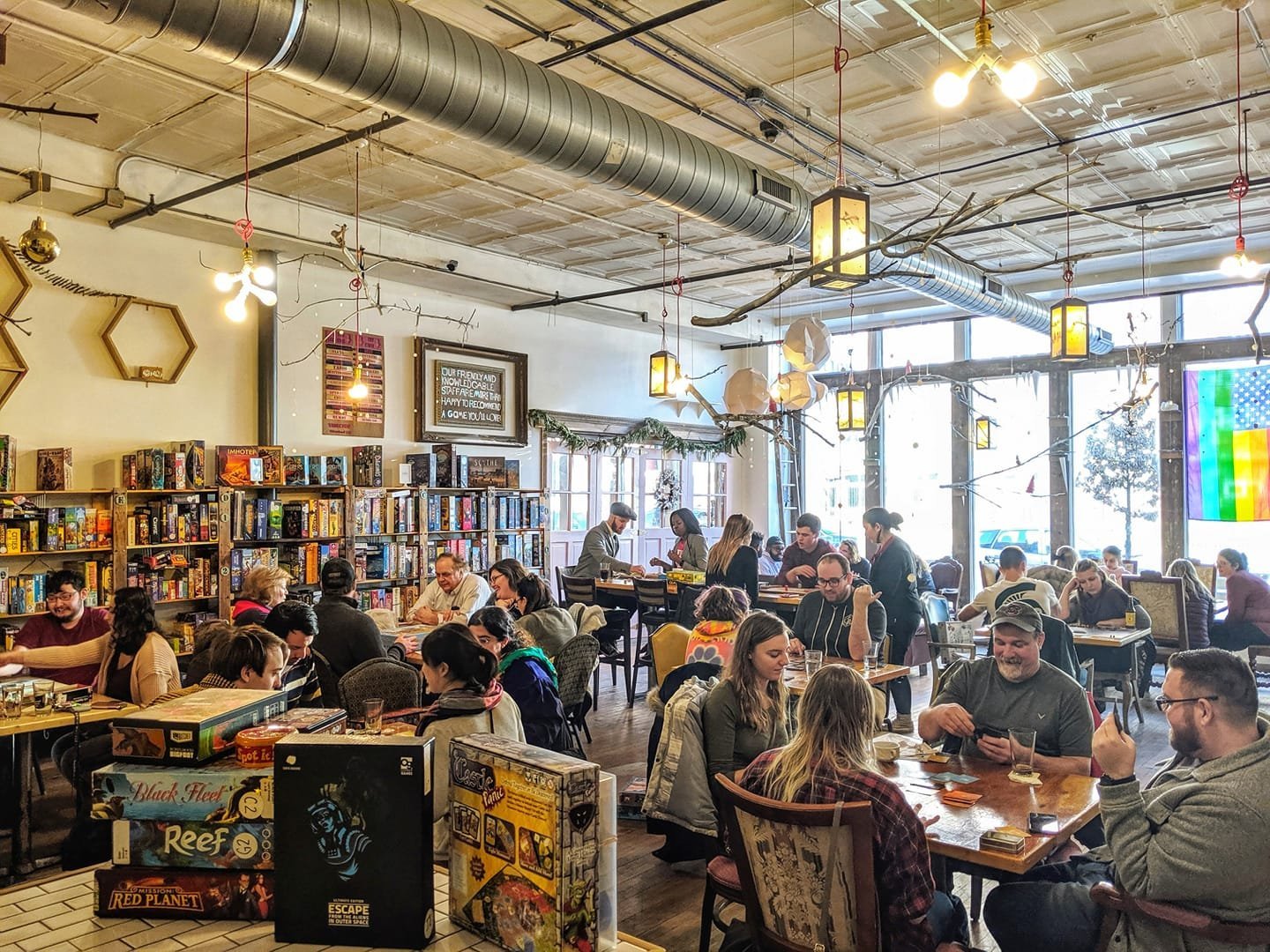
The Tabletop Board Game Cafe, where Liv runs one-shots.
Jaclyn: You mentioned that you run games in the local space at the Tabletop [board game] cafe in Cleveland. How do those experiences (and experiences running home games) differ from Young Dragonslayers? What would you say are some of the advantages to someone choosing to participate in a Young Dragonslayers game versus going to their local game store or going to their library?
Liv: I think the biggest thing is you want a story that is continuous. I run one shots for Tabletop. We don't run many campaigns, and at the end of the day, there's good connections that are made there. It's a really great space to be in. But whoever is going to be my table will change every time. I have a few regulars who come, but I never really know who's going to show up. And so I run one shots because that story has to ever change depending on who's going to be there. Young Dragonslayers is really fascinating because you join into a group for a quarter, and we sit down and we say, “Hey, what do you want this story to look like? Let's be collaborative in this space; let's talk about it.” And then over those ten weeks of play, we create a story together. We follow through with character lines. We have that development. You'll meet really cool NPCs that you can follow back up with. It’s almost like you're building this community with your group in Young Dragonslayers of your 4 to 6 kiddos, but then you're also building this world together that you share and that shared experience together. And I think that's really cool. Something I actually do for my kiddos at the beginning (I'm starting it for this year for all of my kiddos, but, I've previously done it with my higher-level or older kiddos in the past years) is each quarter, we build a map. So I tell them, “These are the different things on the map. Tell me about them.” So for my younger kids, they have little prompts they answer for me about “This lighthouse's curse, what has been said?” or, you know, “This city has a king. Are they good or bad?” For my older, high-level kiddos, they get a plain map and I go, “These are the regions. Now tell me what's in those regions,” because they love to just build from scratch. And so I think that's something that we don't get to do in the Tabletop [Board Game] Cafe space, because everyone is in, out, and ever-changing. But that's what that space is built for. Young Dragonslayers is where you can really lay down roots and create something with people that lasts.
What It’s Like At Young Dragonslayers
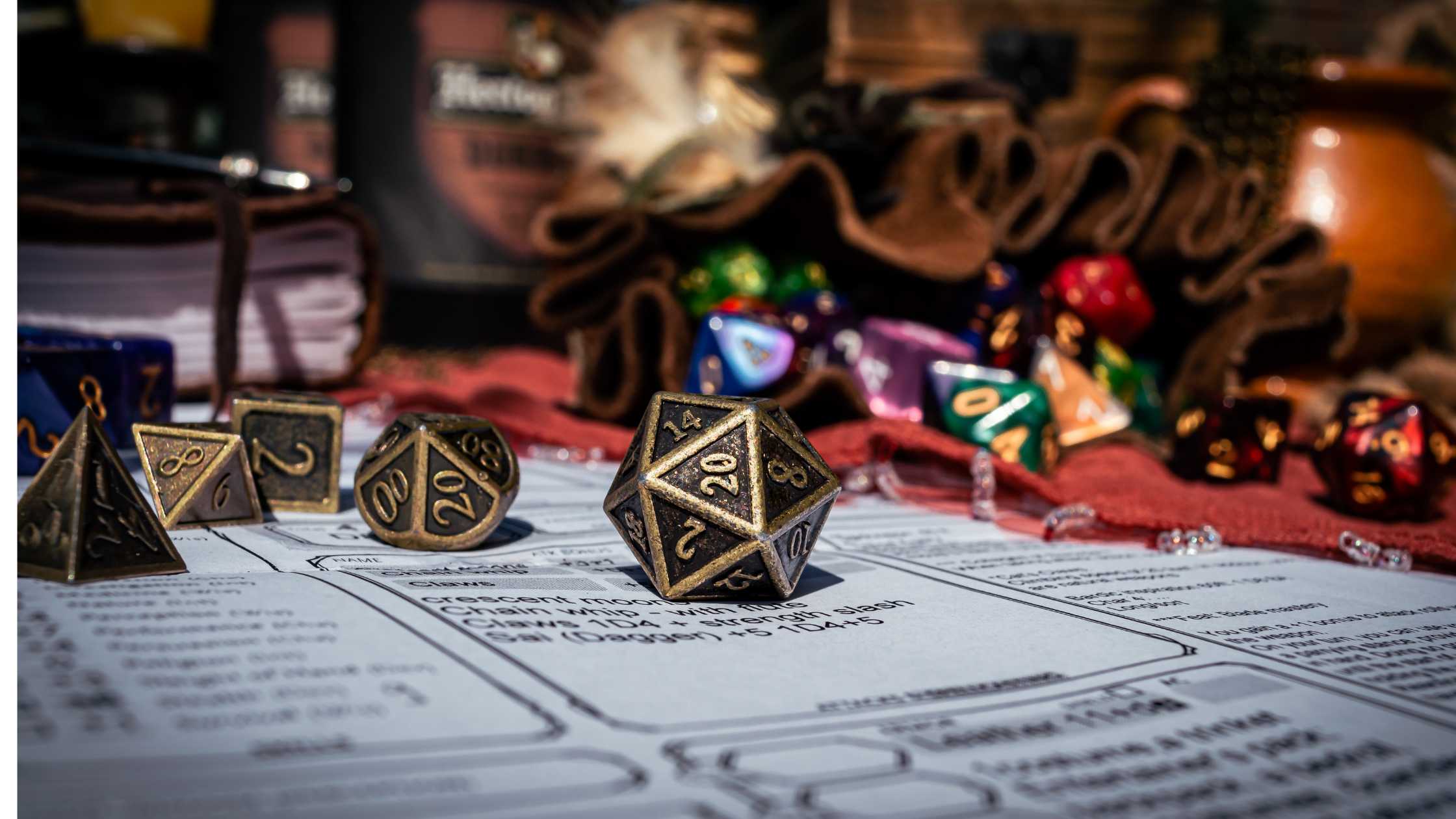
Young players come up with some of the most creative solutions in DND games.
Jaclyn: What are some things that your players will do in your games that you're like, “No adult player would ever do this”?
Liv: I actually think that the fun about Dungeons & Dragons is just how much you get to play with your inner child and just explore and be goofy sometimes. I think adults definitely tend towards more serious games, and so kids can be goofier, but I think people would also be really surprised at how creative kids can get with their solutions. In fact, I like to say we play Dungeons & Dragons very “loosely” in our group. Because I think that, you know, it's fun to roll a die and see what happens, but that shouldn't be the only thing that we are tied to in the game. I think some parents would be really impressed with their kids when they are given an impossible puzzle, a room they can't get out of, or a beast that is impossible to slay, and the crazy things they will come up with to get out of situations: to slay the beast, to become best friends with the beast, things like that. I think kids might have maybe more out-of-the-box thinking in terms of that than adults do, but they can be just as goofy.
Jaclyn: If any of them are watching – your players or your players’ parents, or even prospective players or parents – is there anything that you would like to say to them about Young Dragonslayers, about these games?
Liv: I think that my time with Young Dragonslayers for the past two-and-a-half years has been some of the best D&D that I have ever played. So I'd like to just thank them for being amazing players, for challenging me as a DM, even those times I'm like, “Oh my goodness, what are we doing right now?” And I would just encourage them to keep being creative and having fun in their game, because really, [they are] the highlights of my week, my Mondays and Wednesdays. I just enjoy the time I spent with them so much. And so thank you to them!
What Is GM Liv Up To?
Jaclyn: That's beautiful. Is there anything else you'd want to share about you and the stuff that you do, where people can find you, things that we haven't got to over the course of the interview?
Liv: I don't have a very big social-media presence. But, with one of our fellow Young Dragonslayers GMs, Jesse, we are starting a podcast that should come out midway through this year. It's called the Forever GMs podcast. It's a roundtable talking with professionals in gaming across all different kinds of game (so not just Dungeons & Dragons, but different TTRPGs: Call of Cthulhu, For the Queen, Dungeon World, all of those different systems) about how we create games for a professional audience, what that what that looks like, and how you can even start to make games yourself. So please do tune in!
Thanks to you all for reading to the end of this interview with GM Liv! If you’d like to find out more about what Young Dragonslayers’ games are about, you can get more info and sign up for the waitlist below. If you’re a Game Master yourself, check out Jesse and Liv’s podcast when it’s live (link to Jesse’s web site below),