DC Bradshaw On Little But Fierce
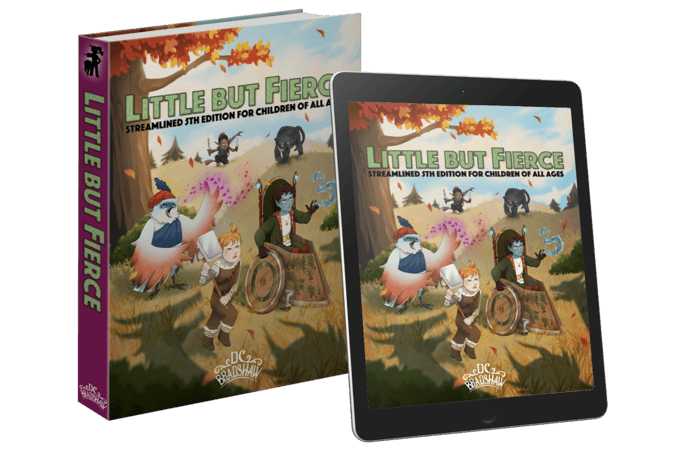
Many people – including us – recommend starting to play D&D between ages 8 and 10 at the youngest. But there are kids younger than that who want to play, whether they grow up in gamer families, hear stories about fantasy adventurers, or see older peers engaging with the game. Enter Little But Fierce, an inclusive family-friendly rewrite of Dungeons & Dragons’ rules by teacher and RPG writer DC Bradshaw. We got to chat with him about the game, how it was made, and the inspiration behind it – as well as something near and dear to our hearts: the importance of accessibility and inclusion in roleplaying games. You can watch the full interview above or read the following excerpt:
What is Little But Fierce?
Jaclyn: Hi, I'm Jaclyn from Young Dragonslayers, and today we have DC Bradshaw, an educator, writer, game designer, and a dad, and a beloved member of the TTRPG community (particularly of the folks who like to run games for young players), and also the creator of D&D supplement Little But Fierce. We'll get to that in just a moment, but now I have to start with the boilerplate opening question; how were you first introduced to tabletop role-playing games?
DC Bradshaw: Okay, I'm not sure on this one, because there's a couple of things. I think the first thing was actually Hero Quest, which I think was a lot of people's first entry into that. It was either that or the Steve Jackson/Ian Livingston Fighting Fantasy books. I'm pretty sure Hero Quest just about came out first, but between those two, definitely into the fantasy board gaming, and then segwaying into a bit of role-playing along the way. That was definitely the kickoff.
Jaclyn Lewis: That's fantastic. I also spoke to Rich of Hatchling Games, and he also referenced some of the same pieces of media, the Fighting Fantasy books and those sorts of things. It gets a lot of people, apparently! So for the purposes of our viewers (I'm fairly familiar with the project), how would you describe Little But Fierce in your own words?
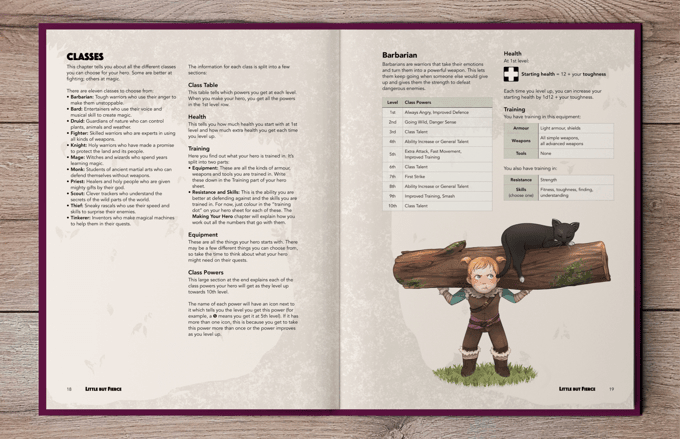
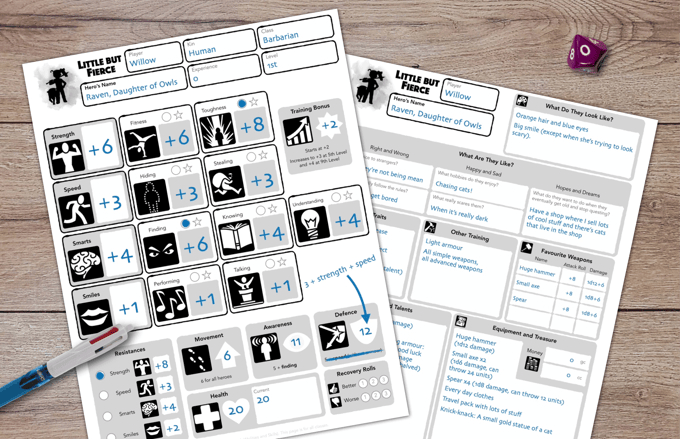
DC Bradshaw: Little But Fierce is a rewrite of 5th edition. So, not technically speaking a D&D supplement per se, but actually it's an independent game in its own right. It could be considered a stepping stone up to full chunky RPGs. But in my mind, it's a rewrite of D&D 5th Edition, designed to make it accessible for kids of all ages, ideally, kids 6 and up. But also, it's not narrowed down to just the younger audiences. It's generally designed to be more accessible; the rules are more streamlined, the language is simplified to get rid of some of that almost lawyer-esque nature to what you get with some rules – where it's got so many commas and parentheses in there, you forget where the sentence actually started! And also, just removing some of those things that would maybe make it less family-friendly. So we don't have things like explicit mentions of death, for example. I've removed some of those antiquated tropes that are still hanging around in a lot of RPGs nowadays that by any logical sense, should not be there anymore. So it's designed to be a more accessible, more family-friendly, more streamlined version of 5th edition.
How Did Little But Fierce Come To Be?
Jaclyn Lewis: What inspired you to make this in the first place?
DC Bradshaw: It was two reasons, really. You referenced Rich of Hatchlings Games earlier. I've been kind of hanging around in that [all-aged TTRPG] scene for a while. You know, I've met Rich, I've spoken an awful lot with Steph of Tabletop RPG Kids.* So I've always been interested in that sort of area.I’m something of a contradiction in this sense. I was a mathematics, computer science teacher who also did bits of drama, so I was kind of both ends of the kind of logical and creative spectrum. So, you know, RPGs are very much my thing, and it absolutely makes sense when you think of it like that! But actually, more specifically, where that really came to a head was, when my daughter was born. Because I was thinking, like, ‘Well, you know, she may want to have a go at this hobby that Daddy seems to love so much.’ And I thought, ‘Well, what would be the entry thing to that?’ For a D&D-type experience, what is the entryway into that? Is there an obvious thing to go to? And there are some games out there that have that sort of feel but maybe not explicitly the same sort of rules. There's things like No Thank You, Evil! which is a wonderful introduction to the whole concept of a role-playing game, but it's not very crunchy in terms of the rules and stuff like that. It's more about the kind of creative play for doing that. But I thought, actually, it's odd that there isn't a simplified version of 5th edition. You know, there are some bits and pieces out there that Wizards of the Coast have produced, but it’s more about thematically introducing kids to it, rather than actually the rules. And so one day I thought, well, I'll just take a crack at it. I'll see how it goes, and started writing…then I suddenly realized I'd actually written it, and it existed, and now I'm just adding to it, and adding to it, and adding to it.
*and another Game Master at Young Dragonslayers!
How To Introduce Tabletop RPGs to Kids
Jaclyn Lewis: For folks who are somewhat familiar with things like Dungeons & Dragons, or are curious, maybe parents of young kids, who are curious but unsure, what would you say to them about introducing tabletop RPGs to young kids? [What are] ways that you've seen them be beneficial in your own experience and other people's experience?
DC Bradshaw: Oh, good grief, there's an awful lot there. What I will say, shamelessly, I did, last year, I actually recorded a talk. It was a talk I did at Dragon Meet, and then I recorded a version of it on YouTube the following week. I call it, Gathering a Party and Venturing Forth, which was all the assumptions and things to consider along the way. For anyone wanting to start out, playing these sorts of games, with their kids, I think the fundamentals, first of all, is what are you hoping that they will get out of it? And what do they want to get out of it? You know, I think that those are absolutely critical, that you kind of meet in the middle of that one: why are we playing this game? Because, as a daily conversation with my 6-year-old goes, if you're introducing them to something new, you do kind of have to get it right, because otherwise – whether it's a film, a TV show, a new game, a choice of food – if the initial reaction is bad, getting them back on board is going to be tough. So, making sure you know from the get-go kind of what they want to get out of it, and probably tailoring it to their interests, I think is really, really important. I think there would undoubtedly be a risk of ‘Oh, I want to introduce my kid to gaming, so I want to run my kind of campaign for them, and just make it a bit more kiddie.’ It's like, no, no, no, choose something they like, and go from there. If they really like Spidey and His Amazing Friends, or Paw Patrol? Do a version of that! Because that gets them into what this is and what this can be….And start simple, really start simple is a really important thing. Don't chuck it in all at once, because there's a risk that you'll scare them off! So I'd say those are kind of fundamental things to start from. What do they want to get out of it? What are their interests? And start simple, I think, are absolute cornerstones on this one, because you can always build on it, but if you go too much, too soon, you will scare them off. And I think the other thing to remember about all of this is it is fundamentally about having fun.
Inclusive D&D For Kids
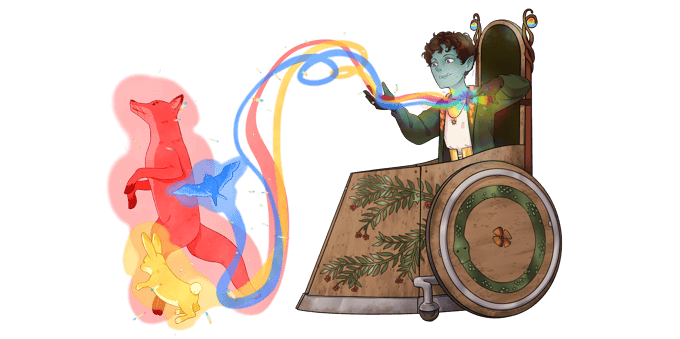
DC Bradshaw: Remember it's a safe space for play. I think that's an absolutely critical one….There is a wonderful educator, sadly no longer with us, called Ursa Ken Robinson, and he does a wonderful TED talk, called Do Schools Kill Creativity. It's well worth a watch or listen. And he quotes Picasso, as part of this,”All children are born artists. The trouble is to remain an artist as we grow up.” All kids have imaginations and don't have a problem playing make-believe and having fun, and don't worry too much about what other people think about it. And as adults, we get very – even the most extroverted people, they're extroverted within the parameters of which they are okay to be extroverted. If they love going out to clubs and love dancing, they'll do that, but if you said, ‘Do you want to do a bit of amateur dramatics?’ they might go, ‘Whoa, whoa, whoa, whoa, no, no,’ because they're extroverted within the confines of the things they are happy doing. So, the fundamental thing about role-playing games, with kids, with vulnerable people, with adults, it's all about a safe space for play, and never, ever forget that. And if you are the storyteller, the Dungeon Master, whatever you want to call them, your job is to facilitate that, to make sure everyone is having fun, and to make sure that you keep that, spoken or unspoken contract of trust. There will always be someone who thinks, ‘Oh, it'd be really cool to surprise them with this, and it'll jump scare them.’ But if you break that trust, fundamentally, something has gone wrong, and people will no longer be having fun.
Safe, Inclusive D&D Games For Tweens and Teens
DC is absolutely right. Tabletop roleplaying games like Dungeons & Dragons are a wonderful way to build friendships, practice new skills, and have fun, but players, especially young ones, thrive best as safe, inclusive gaming tables. Here at Young Dragonslayers, that’s what we do best. We’re a group of educators, therapists, and D&D nerds who run games full of immersive storytelling where tweens and teens can feel seen, supported, and part of a community. We create spaces where players of all backgrounds, genders, experience levels, and abilities feel like they belong and can connect to likeminded peers they might never meet in their own neighborhood. If you’re a parent of a tween or teen who might benefit from groups like this, you can learn more of what we’re about on our info page, and if you’re the parent of a younger child, you can check out Little But Fierce on their Kickstarter page!