Avatar: The Last Airbender DND Homebrew Roundup
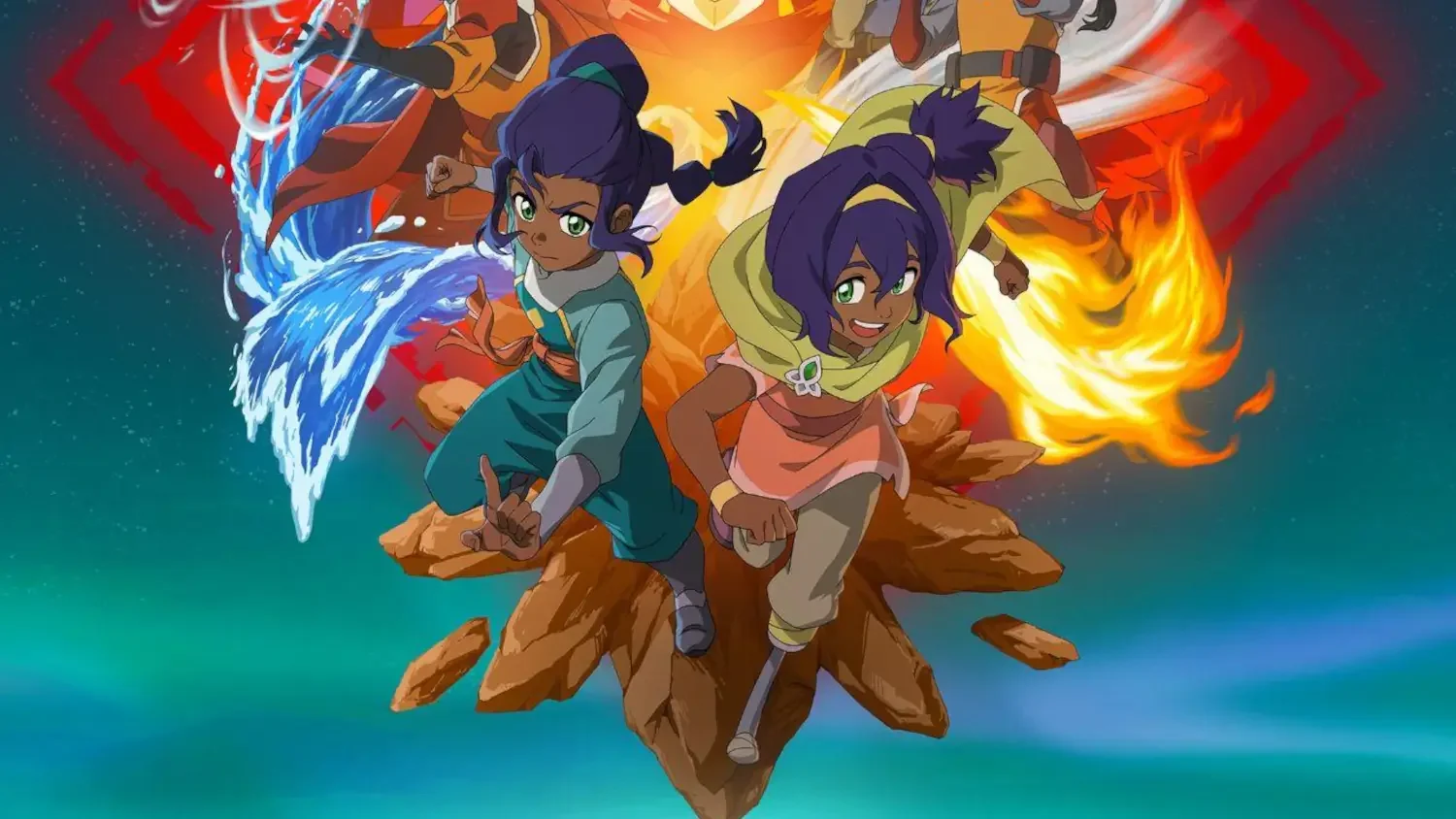
Here’s a collection of DND homebrew from the world of Avatar: The Last Airbender
After watching the Avatar Aang: The Last Airbender movie this summer, we’re getting ready for the release of Avatar: Seven Havens this month, and we’re excited! We love the world of Avatar: The Last Airbender and all the interesting characters, creatures, and complexities it contains. And as Dungeons & Dragons enthusiasts, that got us wondering about how to do an Avatar: The Last Airbender D&D game. We did a deep dive into the world of both fanmade and official Avatar tabletop RPG content, and we found so many different ways to bring the world of Avatar: The Last Airbender into your Dungeons & Dragons game.
Dungeons & Dragons Classes for Avatar: The Last Airbender
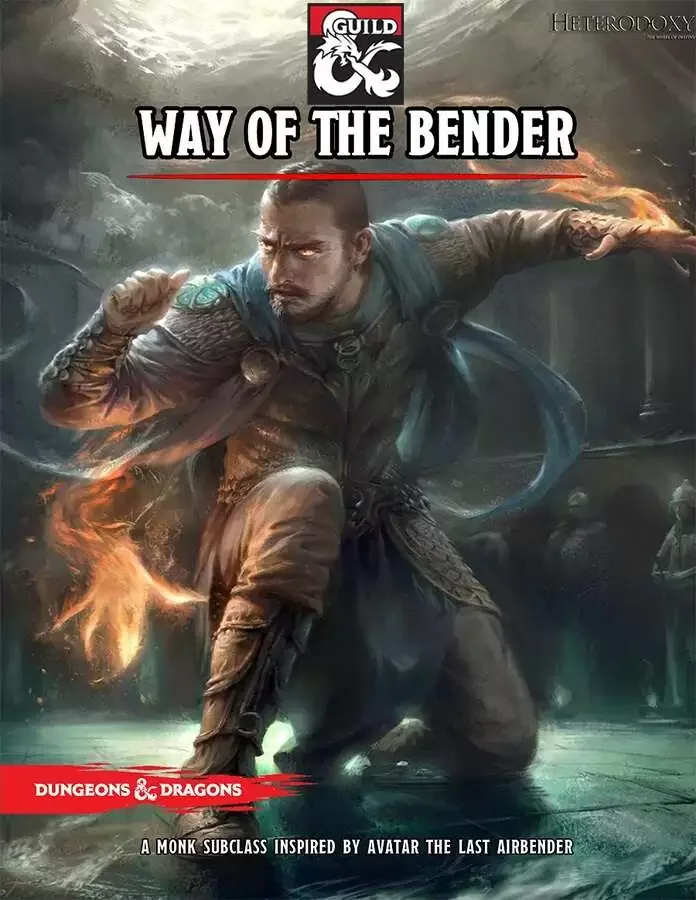
One neat Avatar: The Last Airbender DND class is the “Way of the Bender” monk subclass.
A D&D player watching Avatar may be wondering “What class would Zuko be in D&D?” “What D&D class would Katara be?” or even “How could I play an airbender in D&D?”. In terms of the official D&D rules, there’s one resounding answer to playing a bender, and that’s the Way of the Four Elements monk subclass. Like other monks, members of this subclass are deeply in tune with their own body, movements, and ki, much like benders in the world of Avatar. But the Way of the Four Elements monk brings it a step further, allowing characters to spend their “Ki Points,” usually reserved for physical monk abilities, on elemental spells like Fireball, Gust of Wind, or Wall of Stone, reflecting the four types of bending in Avatar. Way of the Four Elements monks also have abilities unique to this subclass, like Shape the Flowing River, Fist of Unbroken Air, or Fangs of the Fire Snake.
However, we also found a few Avatar: The Last Airbender homebrew classes you could bring to your Dungeon Master. There are several Avatar-themed variations on the Way of the Four Elements monk, including Mark Hulmes’ Way of the Elements, which trades spells for Elemental Stances, Iskierka’s Revised Way of the Four Elements, which lowers the Ki costs and rewards players for focusing on a single element, and Bella Rose’s Way of the Bender, which not only divides the class into the four elements but adds bending techniques from the world of Avatar, including lightning bending, blood bending, and metal bending. The D&D Wiki’s World of Avatar bender classes provide specific classes for waterbending, earthbending, airbending, and firebending. They also add in “Prestige Classes,” a mechanic from previous editions of D&D, which include chibender, bloodbender, plantbender, metalbender, tremorbender, combustionbender, lightningbender, and, of course, Avatar. The wiki also includes non-bender classes inspired by the world of Avatar, including the Ancestral Guardian Barbarian, The Bard of the Wilderness, and the Samurai Fighter.
Avatar: The Last Airbender D&D Homebrew Builds
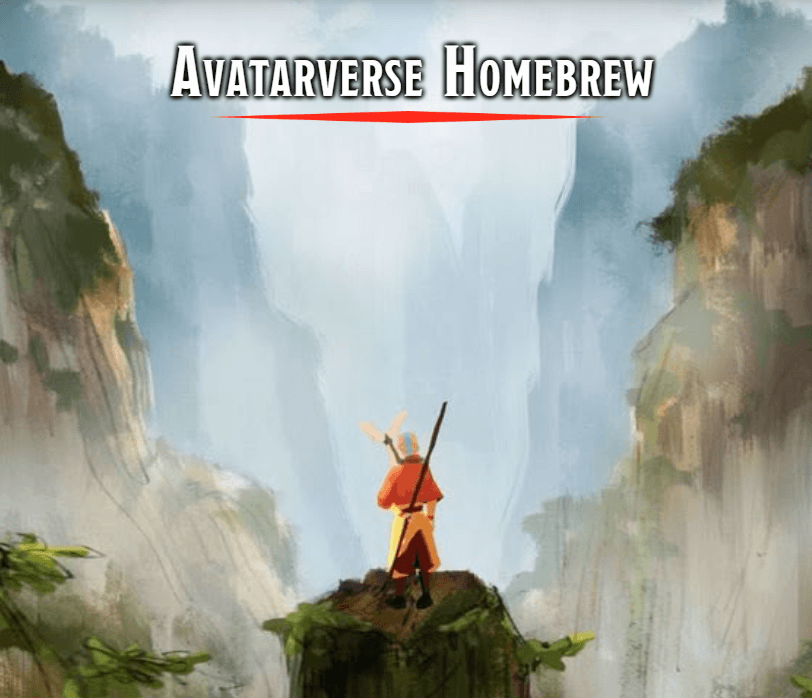
The Avatarverse Homebrew has a robust system for Avatar: The Last Airbender DND homebrew builds!
These homebrew Avatar: The Last Airbender D&D classes are great for adding into an existing campaign, but what if you wanted to play an entire one-shot or campaign in the setting of Avatar? Dwarves, elves, wizards, and other D&D-style characters don’t exactly fit in the canon. If you wanted to go all-in on Avatar character builds for your party, you could take a look at the Avatar 5E Conversion by stuntmantan on GMBinder. They have a variant of the Human species called Bender, which adds loads of elemental spells while allowing you to still choose a class like monk, fighter, or barbarian to suit your style of bending (along with bending-specific feats you can add to your character!). However, these character builds are not well-balanced with Dungeons & Dragons 5e, so we can only suggest them for a party entirely composed of benders (and a Dungeon Master who’s willing to be a bit creative with Challenge Ratings).
Our favorite Avatar: The Last Airbender D&D homebrew is definitely the Avatarverse Homebrew by Bulldozer56 on GMBinder. This totally revamped Dungeons & Dragons’ character creation to fit the world of Avatar, but balanced out the results so that an Avatarverse character could play in a party of official D&D 5e characters. The totally unique character building in the Avatarverse Hombrew switches out D&D 5e’s race and background (or D&D 5.5e’s species, ancestry, and background) for a Lineage. Your character can come from the Water Tribe, the Earth Kingdom, the Fire Nation, or the Air Nomads, each giving different hit points, proficiencies, and starting equipment. Then it switches out D&D’s classes for Fighting Styles: waterbender, earthbender, firebender, airbender, weaponsmaster, or tech-engineer. Each of these go wildly in depth and have their own unique Fighting techniques, which is perfect for a long campaign where characters will be leveling up and adding to their abilities.
Is Avatar Legends Like D&D?
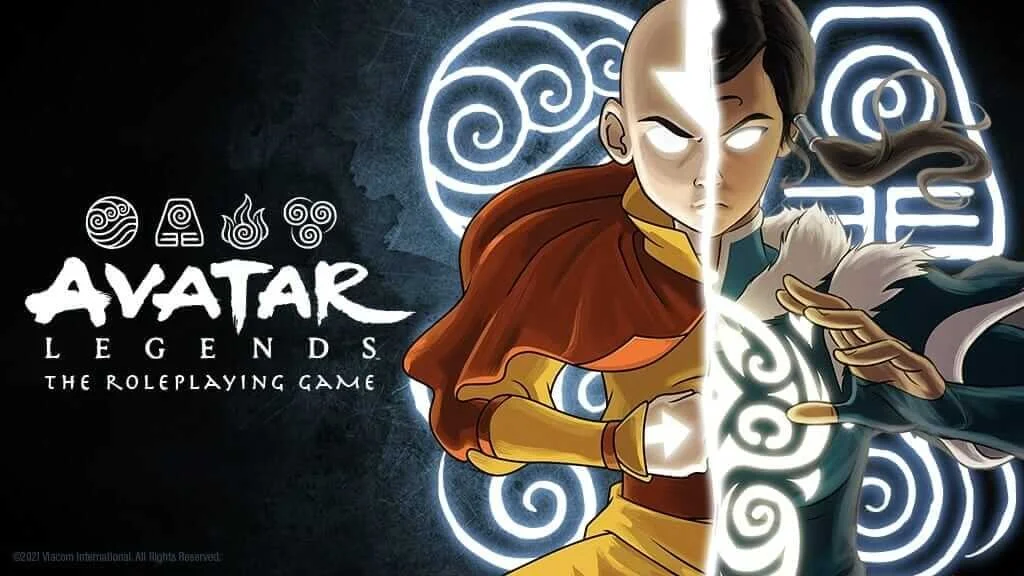
We think that the Avatar: The Last Airbender TTRPG is quite good! Here’s why.
The Avatarverse Homebrew is actually inspired by a different game: Avatar Legends: The Roleplaying Game. Both Avatar Legends and D&D are tabletop roleplaying games: there’s one Game Master running the show for players, who create their own characters with unique abilities who roll dice to decide how things play out. But the Avatar Legends RPG plays a little differently. Instead of building a character from a species, an ancestry, a background, and a class, you build a character from a playbook, which is like a character archetype, and by choosing among a bender, a non-bending martial artist (like Sokka), or a tech genius (like Asami). Rather than D&D’s abilities of Strength, Dexterity, Constitution, Wisdom, Intelligence, and Charisma, Avatar Lenends characters have the attributes of Creativity, Focus, Harmony, and Passion.
Rather than rolling a twenty-sided die, adding modifier(s), and comparing the result to the Difficulty Class set by the Game Master, like in D&D, Avatar Legends RPG players roll two six-sided dice, add the results together, add modifier(s), and comparing the result to a gradient; rather than simple success or failure, characters may be faced with a difficult choice: make a sacrifice for success, or instead fail. Avatar Legends also has a “balance track” to represent the characters pull between two different ideals, like independence and loyalty and a level-up mechanic that’s tied to open-ended questions and the presence of mentors rather than relying on experience points. For an experience that’s truest to the world and the story of Avatar, we recommend the Avatar Legends RPG over Dungeons & Dragons. However, using D&D homebrew can work better for those who prefer D&D or who want to incorporate elements (pardon the pun) of Avatar into an existing D&D campaign.
Avatar: The Last Airbender D&D One-Shot Ideas
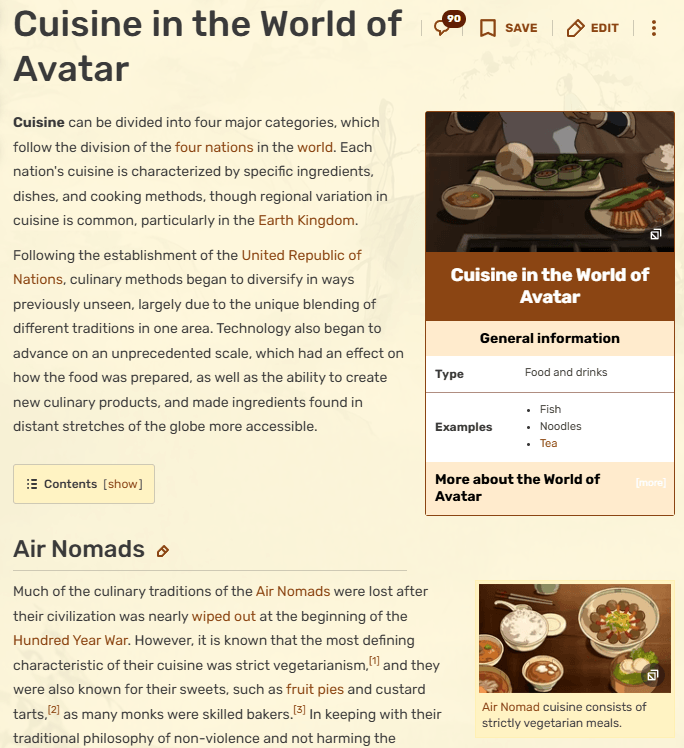
The Fandom wiki gives lots of great Avatar: The Last Airbender DND campaign ideas
Game Masters looking to create a one-shot or a campaign inspired by the world of Avatar: The Last Airbender have plenty of resources to choose from. A great place to get inspiration for pieces to bring into an Avatar: The Last Airbender D&D campaign is the Avatar Wiki on Fandom. The wiki pulls together all of the worldbuilding not only from the original show, but from comic books, shows, and movies set in the world. The wiki has an interactive map of the world (which is a huge help to Game Masters), a list of canonical NPCs that serve as a great cast of characters for a campaign, an overview of bending and its history, pertinent locations to set a one-shot, different organizations in the world that could come into play, and tons of miscellaneous worldbuilding, including history, fashion, cuisine, and fauna. Speaking of fauna, the D&D Wiki Avatar Supplement has a plethora of creatures from the world of Avatar already made into D&D statblocks, from the iconic flying bison, winged lemur, and lion turtle, to the less well-known, like the turtle duck, badger mole, and tiger seal.
Play Your Own Avatar: The Last Airbender D&D Campaign
We love a great pop-culture homebrew around these parts. We even shared some ideas for how to create your own D&D homebrew for Gravity Falls, Star Wars, and How to Train Your Dragon! All of these are inspired by our own D&D games, where we craft epic adventures based on our tween and teen players’ favorite fandoms, from Deltarune to Lord of the Rings. They’re 100% online, so you can play from wherever you are with nifty tools like virtual tabletops and character sheets to bring your stories to life. You can learn more about Young Dragonslayers games by clicking the button below – maybe we’ll see you in the Earth Kingdom!