The 10 Best Games For Kids’ Development - And Why They Work
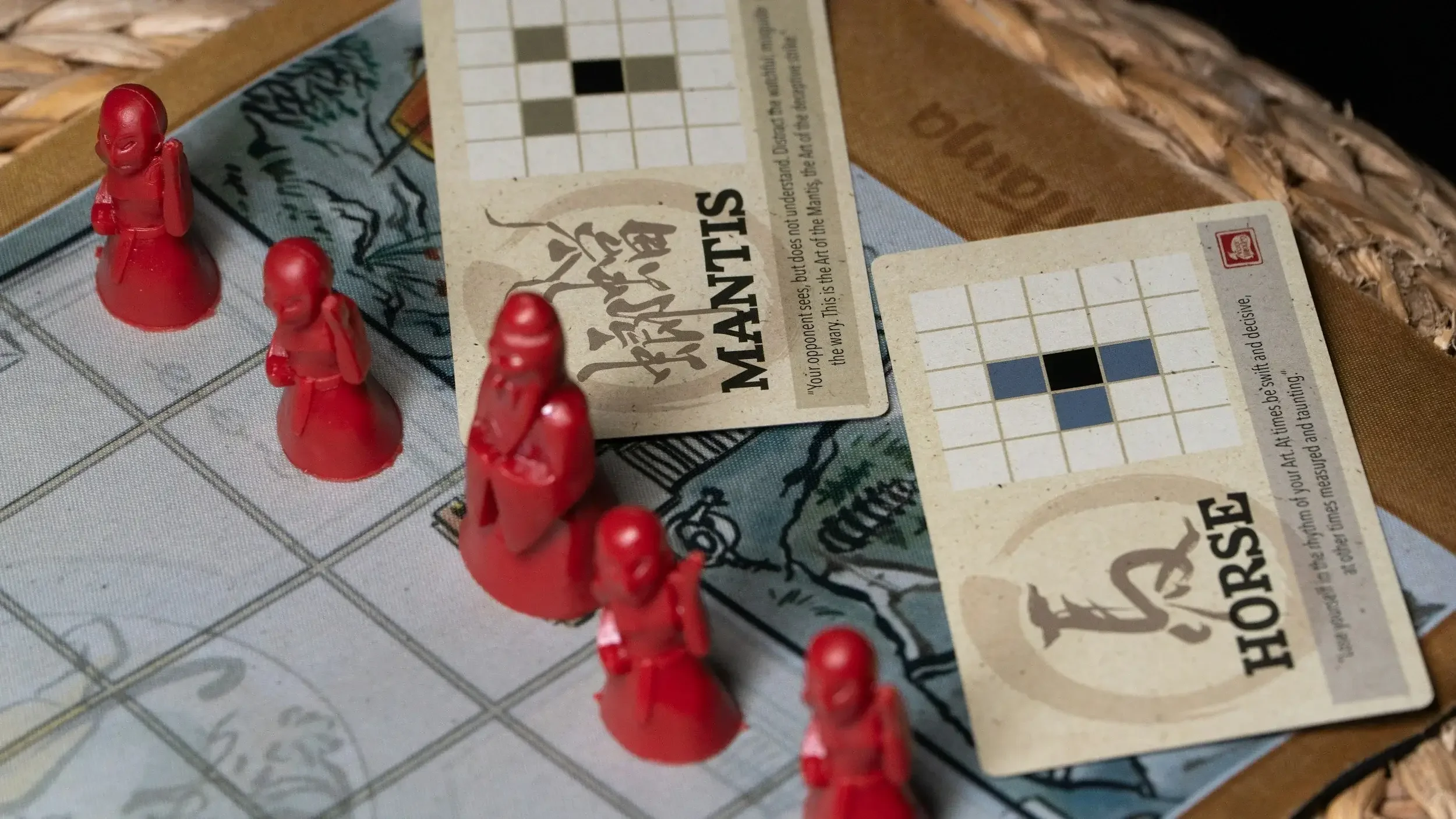
Our guide will help you find games for kids to build resilience and have fun, indoors or outdoors.
Many parents are clued in to the immense power of games. Games can teach information, connect players, and build skills like teamwork, impulse control, and self-regulation. And best of all, kids and teens actually want to play them! But we want the best for our kids, which leaves us with questions. What games are good for child development? What games do ADHD kids like? What are the best games for kids online? What games help kids calm down? The best games help kids to feel competent, pique their curiosity, connect them to their fellow players, and instill a sense of optimism. We looked to the work of Michelle "Michie" Leccese, a professor, play researcher, and founder of Roll for Healing to find the key components of the best games for kids and teens.
Why The Best Games for 10-12 Year Olds Aren’t Just About Entertainment
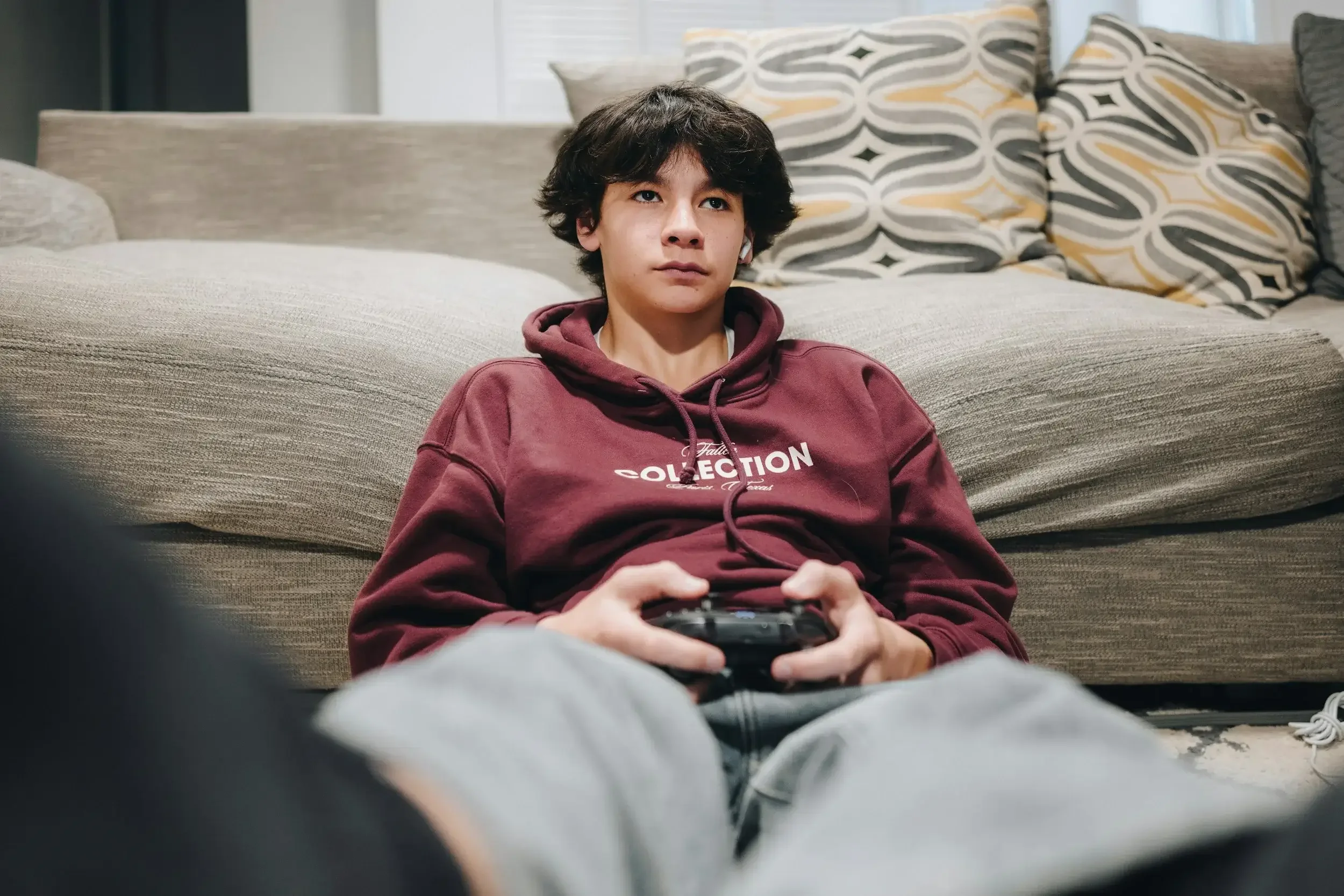
Lots of games for kids at home fill up time - but the best games help with child development.
As humans have taken a closer look at games, we’ve realized they do so much more than entertain people. Whole professional fields have grown for the use of play therapy, using games in education, social learning through play, and games to improve mental health, anxiety, and depression. Games can help kids actively learn information, practice social skills, connect with others, and work through difficulties. As Michie puts it, “People don’t simply describe games as fun. They describe them as places where they rebuilt confidence after failure, processed grief they couldn’t put into words, found communities that accepted them, or rediscovered parts of themselves they thought had been lost.” We’ve been running online tween and teen gaming groups for half a decade, and we’ve seen this happen for our young players, too. But how do games do this? What gives them this power?
How Games For Kids Help Build Confidence and Teamwork

Michie is heading up a research initiative to investigate how trauma recovery could be impacted by games, specifically tabletop roleplaying games, collaborative storytelling games popularized by Dungeons & Dragons (the very game we run here at Young Dragonslayers). She found 5 key elements of games that make them effective tools for healing and growth:
Games create opportunities for connection with others and ways to build relationships through play.
Games provide kids safety and predictability by crafting structured environments through game rules.
Games give young players agency to make decisions and handle the consequences without an adult stepping in.
Games provide immediate feedback for those decisions, turning failures into opportunities for learning.
Games give kids a sense of meaning by providing goals they’re invested in and want to achieve.
This all works because games aren’t static, like a book or a movie that can be passively read or watched. No game plays the same way twice. Each game is its own unique sandbox that brings kids together, builds a “living system” of rules for kids to experiment and play inside, and invites curiosity, adaptation, and perseverance — to play a game is to learn how to play it better. Within the bounds of the game, kids and teens live in what has termed the “Magic Circle”: a transient, shared world where they can try on different identities and create a shared fictional reality that gives them a safe place to face difficulties without the high stakes of real life.
Games To Help Kids Calm Down With Safety and Connection
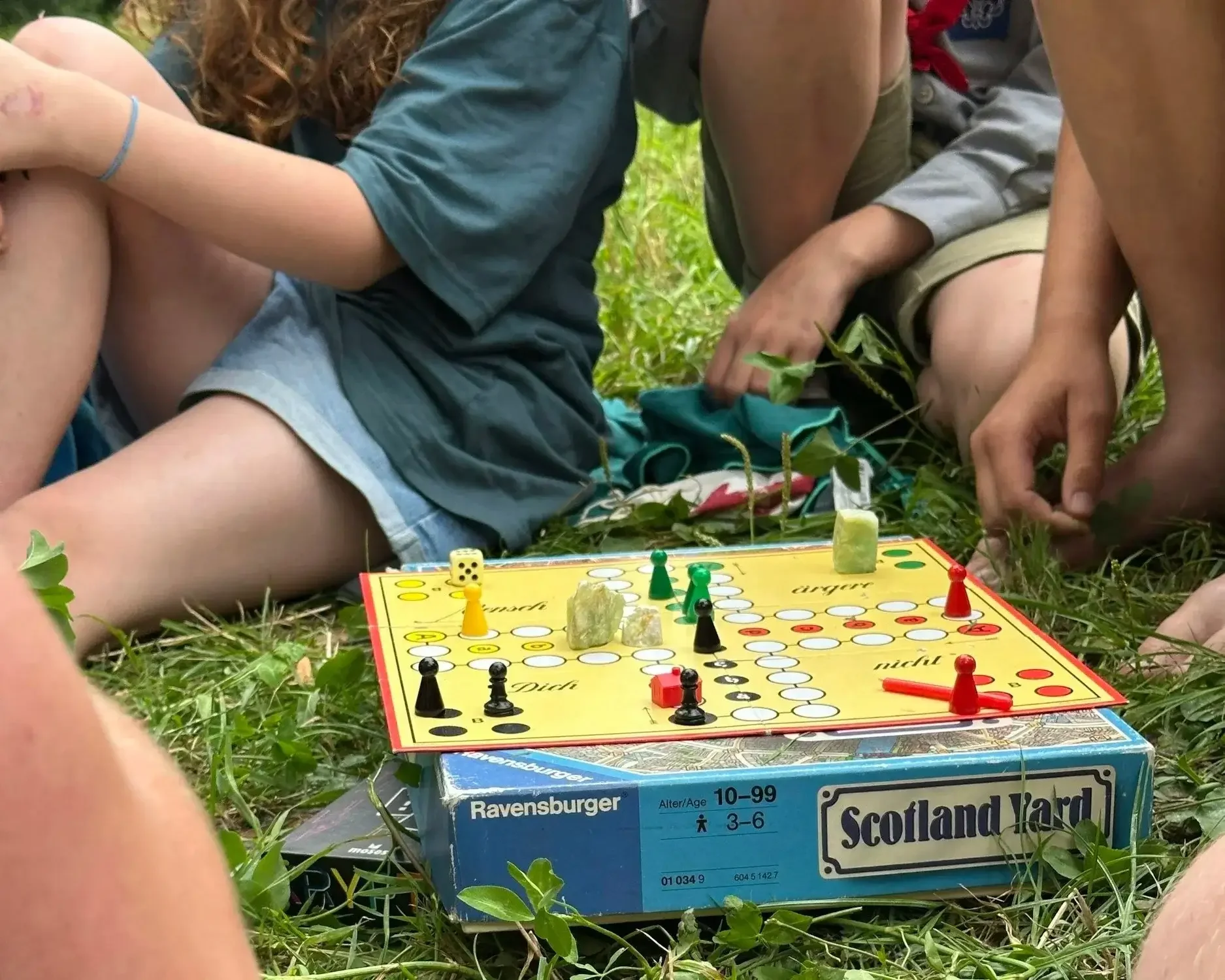
When kids feel safe and are connected to others, it’s easier for them to self-regulate, communicate needs, and calm down. It also builds a strong foundation for learning, creativity, and growth. Games naturally create safety and connection for kids. Remember, games exist in the “Magic Circle.” Players aren’t kids, they become a detective solving a case, a spy gathering intelligence, or a wizard fighting a dragon. This gives kids space to explore identity and rules to know exactly how the game plays (and where the bounds of the Magic Circle end). Because the structures of games are consistent, kids can try new strategies and ideas within that structure to learn what works and what doesn’t. If the dragon defeats you, you can go back and try again. And the risk was never high-stakes: rather than real-world relationships, grades, or rewards, the game is imaginary. And kids don’t have to take these risks alone. By playing alongside friends or family, discussing strategies, making deals, and working together in a shared play space, kids connect with others. Through the interactive elements of gameplay, kids build community. This is especially effective in collaborative play spaces, like puzzles, cooperative-style games, and tabletop roleplaying games, where kids can build trust, teamwork, and social skills.
Agency and Feedback in Games Help Kids with Impulse Control
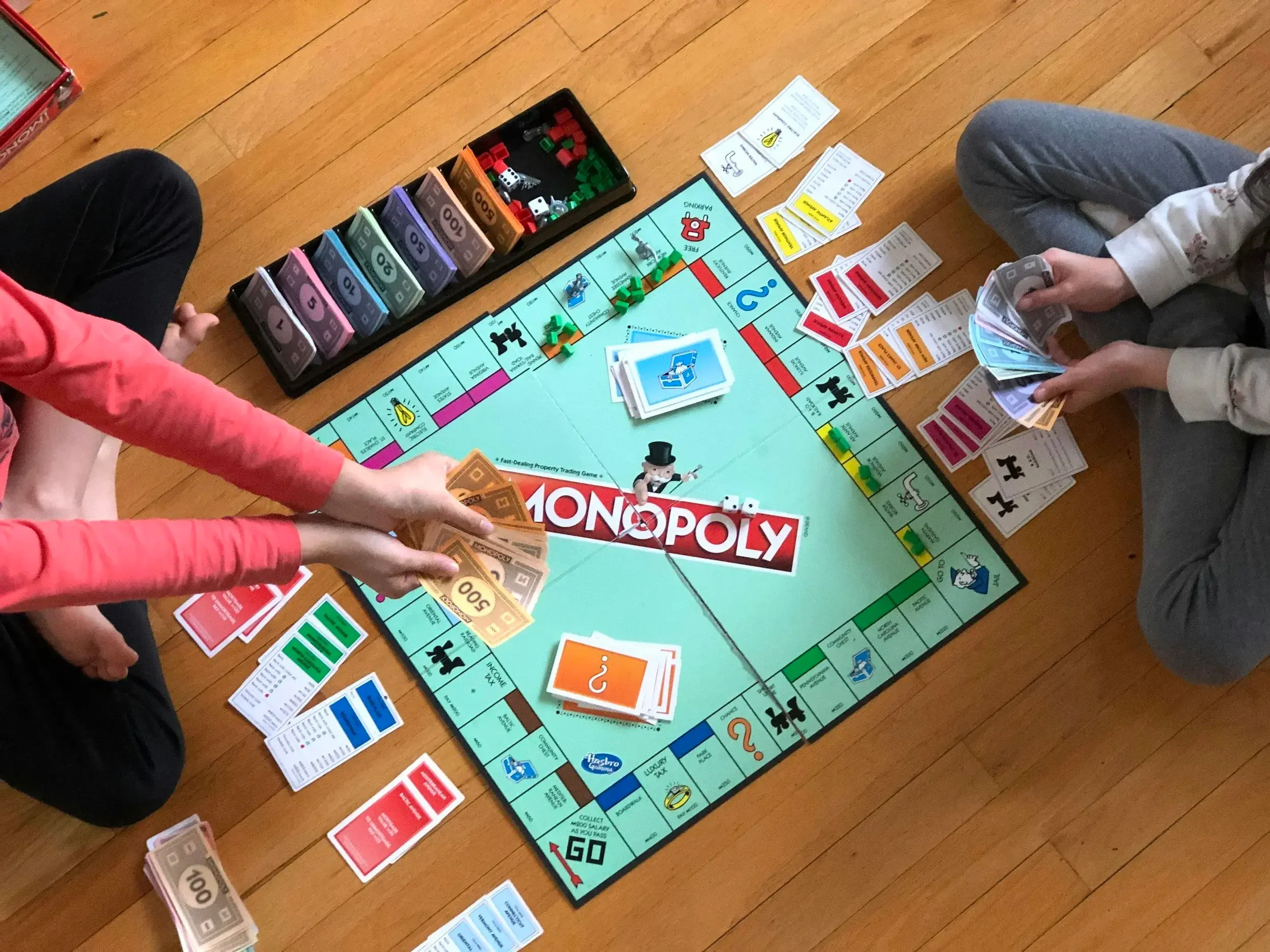
Indoor games for kids to build impulse control involve consequences for actions. If you already spent all your money on tiny properties, you won’t be able to afford Boardwalk!
A key part of kids' development is learning impulse control – whether it’s choosing what thoughts to share, deciding how to spend money, or staying consistent with commitments and time frames, no child is born with these skills. The most effective way for kids to develop them is if they are given agency, the freedom to make decisions, and feedback, the natural consequences of these decisions. But as parents, we don’t want our kids to have to learn “the hard way.” Within the bounds of a game, consequences are softer, teaching the lesson without a real-world impact. Games are built on agency: making choices is the key component of playing the game. Kids have power over what they do in the game. They make their own decisions: whether it’s spending a resource, attacking an enemy, rolling the dice. And he rules of the game itself give immediate feedback. Michie describes it as turning “failure into information.” Playing the game lets players learn what works, what doesn’t, and when it really would have been a better idea to hold onto those cards. This also builds resilience in kids, as they realize that one failure is never the end point, only a stepping stone on the journey of growth.
The Best Games for Teens Have Meaning

The best games for kids have meaning and motivation, even if it’s as simple as “solve the murder” in Clue.
None of this works if kids aren’t invested in the game. But they do, because games carry with them an inherent meaning. There are goals to point to, structures to build, information to find. Meaning is the last of the five key conditions Michie found. Put together, safety, agency, feedback, meaning, and connection are the elements of games that make them so powerful for kids, teens, and adults.
With all of this in mind, here are 10 of Young Dragonslayers’ favorite games. We’ve split them up first by type of game (puzzle, two-player, traditional board game, party game, and tabletop roleplaying game) and then by age (kids/tweens and teens).
Puzzle Games are especially good at building cognitive skills and cooperation. Our best puzzle game for kids is Laser Maze, where players maneuver mirrored “satellites” to guide the laser around obstacles to its destination. Our best puzzle game for teens is Exit, where players follow the clues to create their own “Escape Room” experience.
Party games develop camaraderie and lower stakes, especially those that are built for team play. Our best party game for kids is Taboo, where players try to guess the secret word based on the hints of their teammate. Our best party game for teens is Phantom Ink; it has a similar structure but several extra wrinkles – both teams share the same secret word!
Two-player games work well to build connection over a shared activity and failure tolerance for when things don’t go kids’ ways. Our best two-player game for kids is Chess, the classic board game of capturing pieces and manipulating opponents. Our best two-player game for teens is Ivion, a complex but rewarding skirmish game where players create their own card decks to suit their play style and strategy.
Traditional board games give kids lots of feedback on their choices and often have more inherently motivating meanings. Our best board game for kids is Here to Slay, where players gather a party of adventurers to be the first to defeat the monsters. Our best board game for teens is Root, where each player has a different goal as they fight for dominance of the forest.
Tabletop roleplaying games are the heart of Michie’s research (and the heart of what we do here at Young Dragonslayers). They build the strongest Magic Circle in the form of a shared world and build great opportunity for identity and exploration through playing a character. Our best tabletop roleplaying games for kids are the Polymorph games, where players quickly create characters with unique and creative strengths that come from their imagination, not from a rulebook. Our best tabletop roleplaying game for tweens and teens is Dungeons & Dragons, where players create an in-depth character and go off on epic adventures as a team.
Join Our Games for Teens Online
At Young Dragonslayers, we harness the power of Dungeons & Dragons to help tweens and teens grow, develop, and thrive. We handpick groups with similar schedules, play styles, ages, and experience levels to create the best possible gaming experience (and the most likely friendships). Our professional Dungeon Masters are experienced working with young people, coming from backgrounds like education, therapy, and nursing, and know the rules of the game inside and out. Find more about our games using the button below, or read more from Michie in her article about the power of games.