
How To Help Your Child Face Their Fears

Psychology has found one particularly effective way to help children face fears.
Lots of kids deal with strong fears ranging from social situations to animals, places, or people. And these fears can greatly limit kids' lives. They don’t yet have the higher-order thinking or self-reflection skills to examine these fears, so they simply avoid them and never engage in many parts that life has to offer. For example, if a kid is afraid of heights, then they won’t be able to go on roller coasters with friends, look out at beautiful views on top of buildings, or go on awe-inspiring hikes. What starts as avoiding a scary experience becomes missing out on meaningful parts of life and feeling isolated from shared experiences with friends and family. This kind of avoidance has actually been found to increase fear over time, further limiting kids’ lives in a cycle of fear and avoidance. To bypass this cycle, it’s critical to take children’s fears seriously and intervene early to give them the best chance to live a full, happy, and healthy life. Here’s what psychologists have found about how childhood fear works and what you can do to help your children face their fears.
Help A Child With Fear By Understanding How Childhood Fear Works

Helping a kid overcome fear starts by understanding how their brains work.
Fears in childhood are similar to adult fears, but they have a few key differences. Firstly, it’s well-known that the content of children’s fears often differs from adults’. This is primarily because adults’ brains are more developed, which pushes them towards more practical and logical fears, whereas kids’ less developed minds more easily attach onto more abstract or obscure fears.
More importantly, however, research shows that kids display more “generalization” in their fears. This means that for kids, fears in one domain, such as a fear of the dark, can more quickly extend to fears in other domains, such as fear of strangers. This is why early intervention is critical. One small fear may not seem like a big deal for children, but because of their young, flexible brain, fears can spread throughout their life very quickly and get out of control.
How to Help Kids Face Their Fears
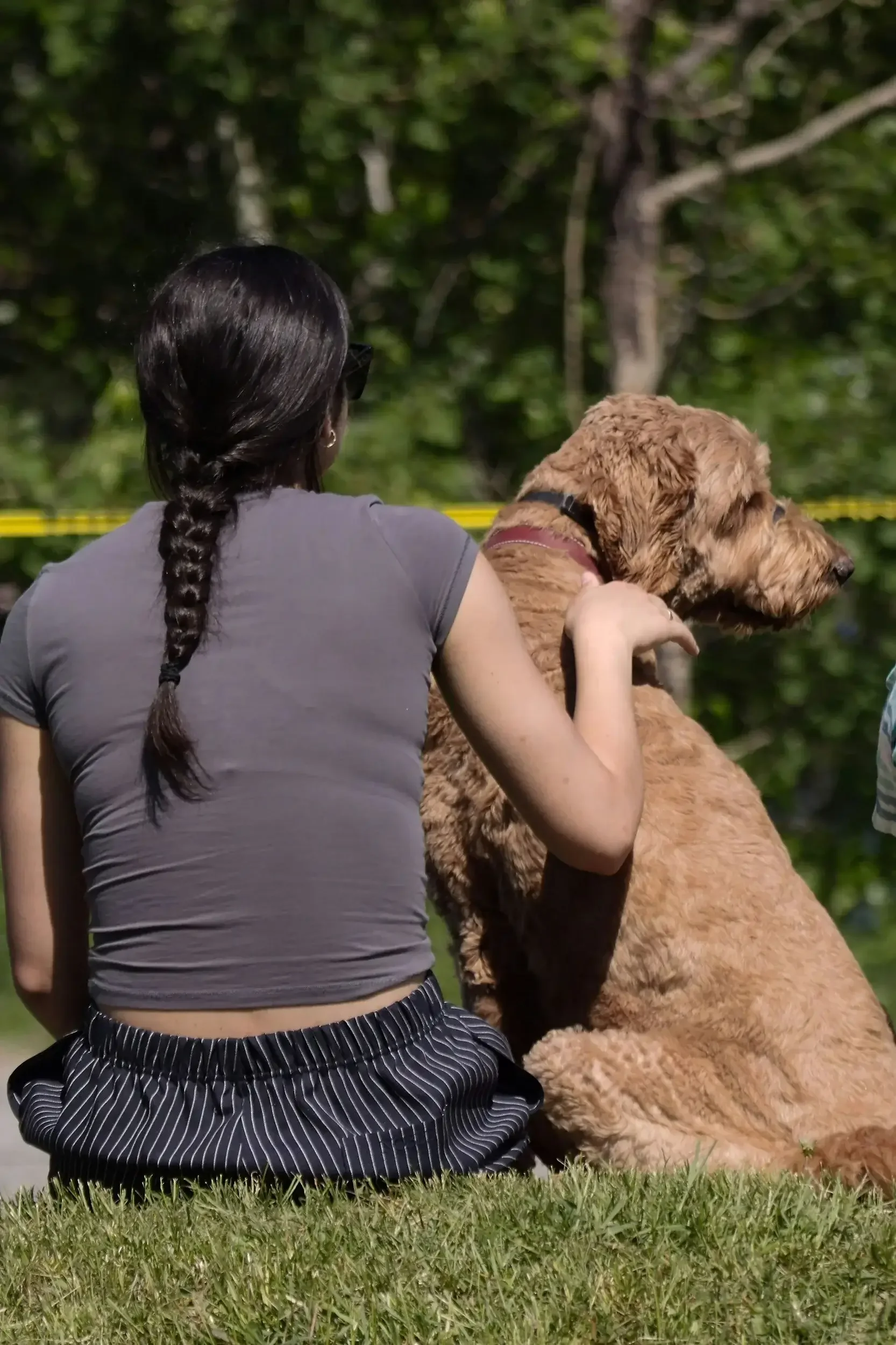
Parents wondering how to help a child overcome a fear of dogs can look to exposure-response prevention.
Luckily, psychologists have conducted lots of research on how to best deal with fears, and there is a clear answer: exposure-response prevention, also called ERP. ERP has been shown to effectively treat around 80% of all phobias in children. In addition to being much more effective than any other technique, it’s also faster and simpler.
ERP is built around showing a kid that they are brave instead of just telling them. In ERP, kids are gradually introduced to their fear, in a way that is comfortable and steady. This allows them to gradually get used to it, and extinguishes the fear association in their mind. This reduces the automatic fear reaction that children associate with the feared object or situation, allowing them to approach it comfortably. Kids will talk, think, or write about whatever it is that they are afraid of in incremental doses, which rewires neural pathways associated with fear. Through this process, they show themselves that they can handle fear, and that it does not need to control them. This brings healing from within, rewriting the child’s understanding of what they can and cannot do, and increasing their willingness to interact with the world. In this way, the child is teaching themself that they are stronger than fear, empowering them to conquer any future fear that comes their way.
Games To Help Your Child Overcome Fears and Worries

The natural rewards system of games help kids overcome fear by motivating them to face the things they’re afraid of.
One particularly effective method for conducting exposure-response prevention in kids is Dungeons & Dragons (D&D), a game in which they take on the role of heroes going on quests. In the game, kids have a strong opportunity to approach their feared situations and engage in ERP from the safety of the game. D&D is well-tailored to suit the needs of ERP, but it’s also fun, meaning kids will actually want to face their fears. Because the game is built around roleplay, kids will often roleplay scary experiences, allowing them to gradually be exposed to fear like in ERP. This exposure can be talking about what they are afraid of, being encouraged to think about it, or even acting out a situation that causes them fear. This gives them a safe environment to practice feeling and dealing with fear, enabling them to discover their innate capacity for courage.
Dungeons & Dragons is also social, with kids collaboratively working in groups to face challenges, solve puzzles, and take on enemies. This is massively helpful for ERP. Research has shown that reward mechanisms in the brain are enhanced when kids are with other kids. This has two main benefits. Firstly, this makes kids braver. Kids are much more confident and willing to face challenging situations when they are backed up by peers, making ERP much more comfortable in a collaborative environment. When one kid is facing a tough situation, their peers serve as a sort of “home base” to bring comfort, support, and confidence. Increases in reward mechanisms in the brain can also make ERP more effective. As children face challenges in ERP, this increased reward-seeking will help them realize how much the treatment is helping them. They will more deeply realize areas in their life that were lacking because of fear, and how important facing their fears is to live a happy and complete life.
Dungeons & Dragons also comes with in-game incentives for facing fears. Dungeon Masters, who facilitate the game experience, reward players that take risks and show courage with in-game currency, items, powers, or glory. “Gamifying” ERP comes with two primary benefits. Firstly, it draws kids' attention towards the benefits of ERP by rewarding them with things they value. Kids do not have the foresight that adults have, meaning that sometimes they don’t see the end benefits of facing their fears. By being rewarded with in-game prizes, kids are taught in their own language that it’s valuable to face their fears. This allows them to internalize its importance, even if they don’t understand the full picture yet.
Lastly, Dungeons & Dragons puts children in the situation of playing a character, rather than acting as themselves. This has strong benefits for ERP. Research shows that kids who are pretending to be a character show increased perseverance in the face of fear or frustration. So when kids are looking at the world through their character’s eyes, they’re more willing to do the challenging work of facing scary situations. Playing a character also gives the children a psychological distance from the fear that they are experiencing, allowing them to project it onto their character. This helps make distressing situations more tolerable and allow children to be more engaged in ERP practices.
We Can Help Your Child Face Fear With Social Support
We’ve been helping children overcome fear, build skills, and make friends for years in our safe online groups.
At Young Dragonslayers, we host therapeutic Dungeons & Dragons groups led by skilled adult facilitators. We run sessions with the goal of guiding social interactions and discussions to build friendships and develop skills through gaming. Because of our backgrounds in therapy and education, we’re dedicated to making sure every player finds the group that’s a perfect fit for them; we’ll assess their support needs, social skills, age, and gameplay preferences (some kids need to follow every rule, while others just want to blow up the dragon!) and create small groups matched with professional, experienced adults who are equipped to fit the needs of the group. While we’re not therapy, we help deliver the many naturally occurring therapeutic benefits of D&D, from facilitating exposure to growing social skills. If you’d like to meet with us to discuss participating in these groups, sign up for our waitlist and we’ll connect with you!