Meet the Dragons: GM Savanna
In the latest episode of Meet the Dragons, we take you behind the screen to meet Game Master Savanna – one of the kindest dragons you’ll ever meet! Savanna draws upon her experience as a school psychologist to create inclusive and affirming spaces for teen players. Their games also feature some of the most gloriously unique premises around. Whether her players are members of a traveling futuristic circus or house pets fighting crime, her sessions encourage players to step into the spotlight, take creative risks, and express themselves. Listen to Game Master Jaclyn talk with them about how they integrate their counseling training into D&D sessions, how they handle murder hobos, and more.
Starting Online with Fourth Edition
Jaclyn: Hello, this is Jaclyn from Young Dragonslayers for our Meet the Dragons series, where we interview the Game Masters behind the screen. Here is Savanna, one of our Game Masters who has a background as a school psychologist, is a fan of Star Wars, Lord of the Rings, Inheritance, and more. But I am getting a little ahead of myself. We'll talk more about fandoms later, but give us an overview of who you are outside of the world of Dungeons & Dragons. What kind of things do you do outside of Young Dragonslayers?
Savanna: My name is Savanna Breslin Fink. I go by she/they pronouns. My professional life is as a school psychologist. I'm currently finishing up my school psychologist program. I'm in my internship year in an inner-city school that I love dearly. It is part of my joy and one of the things that brings happiness in my life, so it takes up a huge chunk of my time, both working hours, but then also afterwards. But with that, outside of that piece, I am an avid gym-goer. I try to go at least five times a week. Then anytime, any kind of weather, except like when it's fully snowing outside, I also hike.
Jaclyn: But you also do tabletop role playing games. How did you get into them? I feel like everyone has a story of like one part of the game that really “got” you of like, “oh wait, you can do this?” Is there something like that for you? What was the story of how you got into tabletop?
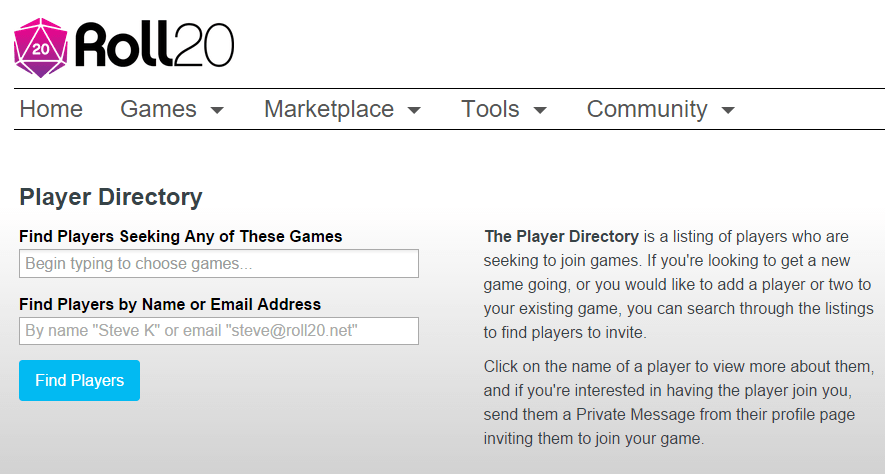
Savanna got her start with DND on the Player Directory of Roll20 - a brave choice!
Savanna: The true story is not as interesting as I want it to be. There's two iterations I would say of my journey into tabletop RPGs. There's the one where I was at the tail end of fourth edition and the beginning of fifth edition, so I've been playing since 2011.
Jaclyn: All right. Respect.
Savanna: So it's been a while. So the very first one I had was a Catfolk as it was referred to back then, now Tabaxi. And I was a rogue and had no idea how to build out a rogue in fourth edition. So all of my stats were just very off and I think she had – yep, she had a negative constitution, so her Hit Points were practically nothing. And at level 12 she would just die instantly every time we went into combat. So that was a great and wonderful time. But I was very inexperienced, and I was with a very inexperienced party that I found online.
Jaclyn: Whoa!
Savanna: I think it was one of those, it was like on Roll20, and it was one of those like, “people searching for games.” And, you know, you apply to be a player for it. For some reason they chose me – I don't know why and they did – and then that campaign, as many do, goes to the wayside because of schedules.
Jaclyn: Rest in peace.
Savanna: Rest in peace. I don't remember much from it, in honesty. I just remember spending most of my time just going down because I didn't know how to play the game. And the DM wasn't particularly invested in teaching new players and how to play the rules, which is something that I've, as a DM, have tried to rectify in my own style of like, I want to be very inclusive and in involving new players, I kind of prefer it in a strange way.
Using Therapy Tools in Dungeons & Dragons
Savanna uses the knowledge and techniques of psychology in her D&D games at Young Dragonslayers
Jaclyn: Are there ways that you use skills or theories from other areas of your life in your GMing?
Savanna: Yes. So there's the cycle therapy as well as humanistic therapy, which are kind of the building blocks for most of them. Carl Rogers is very much so, the “if you meet a person where they are at and approach them with empathy and unconditional positive regard and use probing questions, you can help them get at the heart of what they're experiencing and explore that.” So that's sort of like the basis of his theory. There's a lot more that goes into it, but that's like the basics of it. And Cycladic therapy is very much like how does the past influence you presently? Now, Adler was very much so. How does the present influence how you are now? He takes a little bit of Freud's theories about like the development piece, but he really, really wanted to focus on the present problems. So as a person who works in the city, in city schools, a lot of what I do is focusing on the kids current, present problems. Because they are often in traumatizing environments, so they're not dealing with past events; they're living those events now. So providing short, goal-oriented therapy is a really strong approach.
So I take that to my sessions but also apply it into D&D, because a lot of these kids are playing characters that are going through some sort of event right now at this moment, and I'm trying to get them to address it in not just the stereotypical “oh, I'm going to go beat it up.” So I will sometimes use – NPCs will often do probing questions. One of the phrases is acting “as if,” so what is your desired outcome? Let's explore that. So I will then have an NPC that's attached to the party that will then ask those probing questions so they can find a solution that isn't combat. Now, they go down the combat route. I don't mind that, but I want them to – I really want to create a space where they have creative storytelling and have a lot of control of the story that isn't “I'm going to hit this person really big for a lot of damage.” Maybe it's “I'm going to talk diplomacy with them,” or “I'm going to go investigate their house and get the guards on them,” or, “I'm going to find out their traumatic backstory so then I can trauma-bond with them.” To make a long story short, yes, I do use techniques in the session. I don't always name them, but I use a lot of them to kind of help shape the player's behaviors, to encourage them to be creative. I want them to be creative versus defaulting to the pattern that often you see in tabletop RPGs, which is, you know, I talk to them a little bit, I go into combat. I talked to them a little bit, I go into combat, I talked a little bit, I go into combat.
How This Impacts Games
This kind of “aggressive negotiations” isn’t always the answer
Jaclyn: Are there ways that you see players who are in your group for a long time grow in those ways that you're trying to help them with?
Savanna: I think in some regards, yes. The ones I can think of right now are more of my adult sessions. I haven't played with [Young Dragonslayers] groups too long. One of them is entering into their, I guess it's now their fourth term with me, so I haven't quite seen that whole growth, but a lot of them have. The group that's been with me longer has realized that they have to push me real hard to make for me to have the NPC act first. So as a result, they are a lot more willing to create interesting ways to either provoke an NPC to attack first or to find some other creative solving like strategy around it. They're much more willing to talk with NPCs now than they were at the beginning. And they're also much more willing to roleplay with each other and then, and then create a fun problem solving – I'm trying to think of it in an example that I can really pinpoint down. I was giving one of them something, a piece of their tragic backstory, and there was heightened emotions from that. And as a result, they wanted to go confront some NPCs. And one of the other players who has connections to these NPCs at the same time was learning something about their backstory. So then it became a solution of no longer “these people are going to gang up against NPC and this player.” It's “now the players are all ganging up against the NPC and really trying to push for questions.” And they took the time. I mean, we probably spent 30 minutes of them questioning these NPCs, and we never actually resulted in any sort of combat or “aggressive negotiations,” as some people would put it. It was a lot more of like, they're going to ask a lot more questions and explore options and figure out – so as as a result of those conversations, they took the information and have started to identify areas that they should explore the rest of the story. And some of that's going to lead them to areas they probably don't want to go. And then some of that’s going to lead to areas that they do want to go.
What About The Murder Hobos?

Some players just want to watch the world burn
Jaclyn: Are there other ways you deal with that sort of “murder hobo” style of gameplay?
Savanna: In the current campaign that I'm running for, there’s a kid who likes to throw fireballs and fire bolts around. He was in a room with the rest of the party full with a bunch of boxes, and he wanted to make sure that none of them were mimics, so he attacked them with Firebolt. But I just made sure to describe them ahead of time that these were old, very dry, rotted boxes all around. So they are very susceptible to fire. Fire went off and I rolled to see if the fire would spread. And naturally I had the DC very low, because they're a dry rotted wood. Wood like that will catch fire very quickly. So then the players had to deal with fire, smoke inhalation, I had to deal with all of that while I made sure that the character who set it off was the one who had to deal with it the most. I was like, “you're the one who's going to problem-solve the problem you got into!” So it's like, I'm okay with you doing the things that you want to do, but I'm going to make sure you also have to solve the problem you've created. You can't rely on your teammates to solve that problem. You have to be actively a part of that solution.
D&D For Building Friendships and Social Skills
There are so many social benefits to playing Dungeons & Dragons
Jaclyn: What stood out about [Young Dragonslayers]? Like, what made it seem like something you wanted to get involved in?
Savanna: One is I think that tabletop RPGs in general are such a good social group activity for everyone. I think it's a great way to gain access to social skills as well as just form lifelong friends. There’s the two brains of the idea – like my psych brain, which says this is a great opportunity to reflect and use and build social skills / conflict resolution /self-management or self-regulation aspects. As long as the environment is tailored for that. Obviously some groups aren't meant for that, but many are – especially if you're in a playgroup who are kind of all at the same goal of like, “I want to bring aspects of myself to the table,” and all the players are on board with that, and they want to bring aspects of that and explore what it means to be a human or, you know, a young adult or a queer person. Write me whatever you have, you want to explore that, and then through that, explore the challenges that they may have. So that's like my psych side. The other side is that this is a great time to have and meet friends and make friends and meet people. And I want to facilitate that or be a part of that facilitation. I want to be a part of that. Be able to create that space for kids to have what I had, which was some of my really long term friends I've met through D&D. Also a lot of my long-term friends who have met before D&D, we played D&D together (or other tabletop RPGs) and became closer because of that. So kind of marrying the two of like, “hey, let's do it with these kids!” Let's give these kids an opportunity to have what I had, especially since tabletop RPG as well are more popular since COVID.
Making Inclusive D&D Tables
Savanna: It's not the easiest to find play groups, even in person. A lot of high schools, for example, have D&D clubs, it's only D&D specific and it's often like only one subcategory of people. So very commonly it is still male dominated. That's not inherently a problem, but it is a barrier of entry for a lot of our queer folk, or for females or people who have intersectionality and both of those identities. It is a barrier of entry. It's also a barrier of entry for people of color whom, because it's there, they have a harder time. It's not – it's considered a white hobby. Not to get super into that right, but it's considered a white hobby, just socially. And I want that to change, because there is a lot of benefit to just being able to sit down and hang out with your friends and just talk about whatever. Like, you can make this game anything you want it to be! It doesn't have to be that high fantasy – it doesn't help that the game is itself very tailored around high fantasy. I'm looking at the books I have down here in my little shelf. Most of them are high fantasy. The most popular ones: D&D, that's high fantasy, I think. What is the next most popular? I guess Daggerheart is also very popular now. But that also is high fantasy. So a lot of it is in that realm. And high fantasy is not for everyone. Most of my friends are not high fantasy people. They're sci-fi.
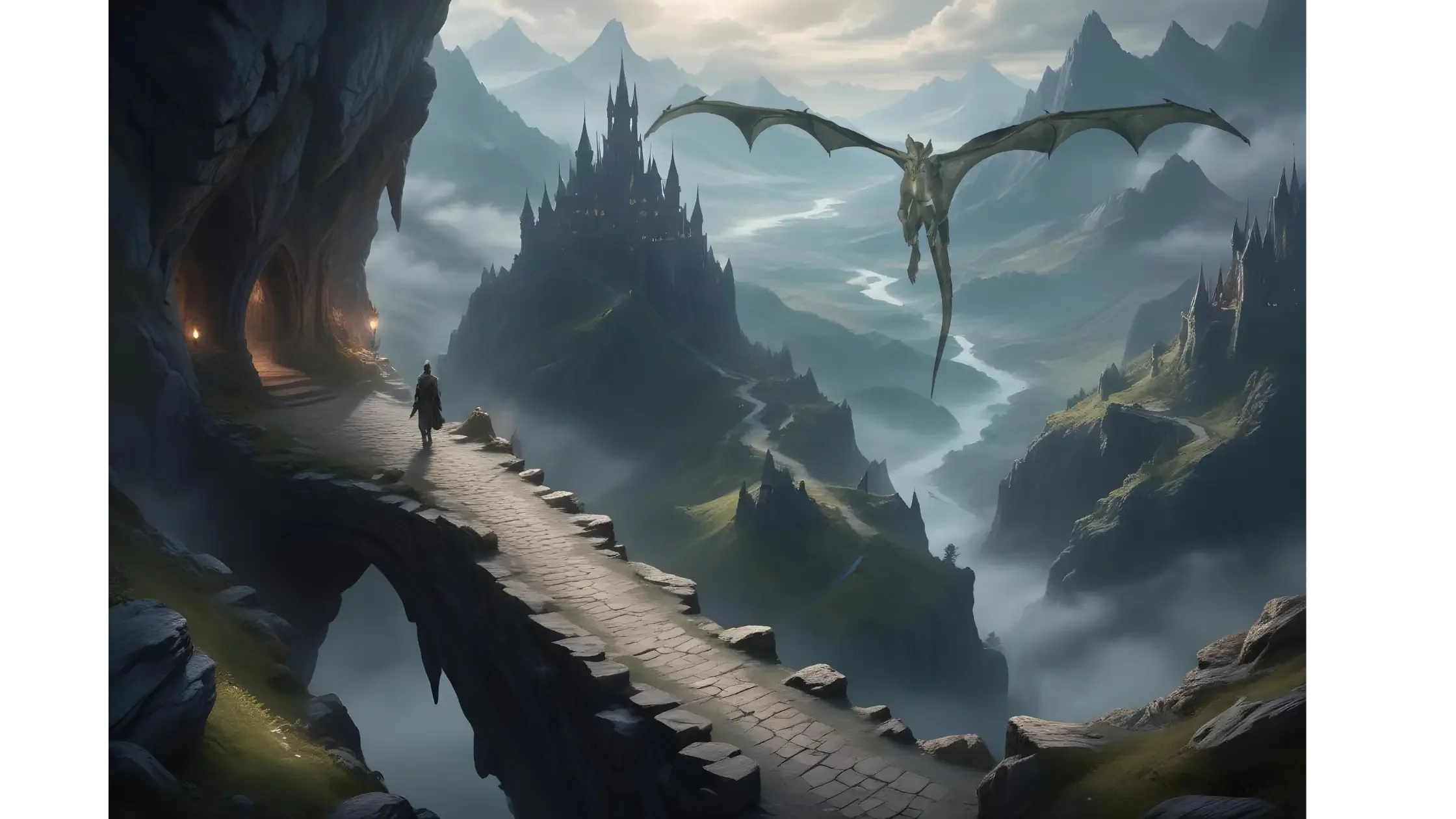
Not everyone is into high fantasy in their RPGs
Being able to be a DM and create that space for players and have that, give them that opportunity to meet new people from a variety of walks of life who have different perspectives and form friendships is a wonderful and amazing experience, and that's why I attached to this. It's also the messaging of Young Dragonslayers. It’s a very accepting space for different identities I think most of the people in my party are either a person of color, they're on some sort of spectrum (either it's the autism spectrum or they're part of the ADHD community, or they're a combination of both), or they're either supporting and/or part of the LGBTQ community and are exploring that serenity. So the messaging of that, creating a safe space and having an open environment was very important for me. And the fact that Young Dragonslayers just does that and has that core message built into it was a huge attraction, a pull for me.
Young Dragonslayers
Young Dragonslayers™ is an online social club for geek-minded kids and teens. Our players use the creativity and structure of Dungeons and Dragons to forge meaningful friendships through online gaming.
Jaclyn: If any of your players are watching, is there anything you'd like to say to them?
Savanna: Absolutely. Continue to try to break my games. That's all I want you to do.
Jaclyn: That's the perfect place to end!
Thanks to all for reading through this behind-the-scenes look at Game Master Savanna’s games! If you’re not a part of Young Dragonslayers and are curious about joining an inclusive, affirming Dungeons & Dragons group for tweens or teens, you can learn more below.