
D&D for Kids with Anxiety: Why Pretend Play Helps with Pressure
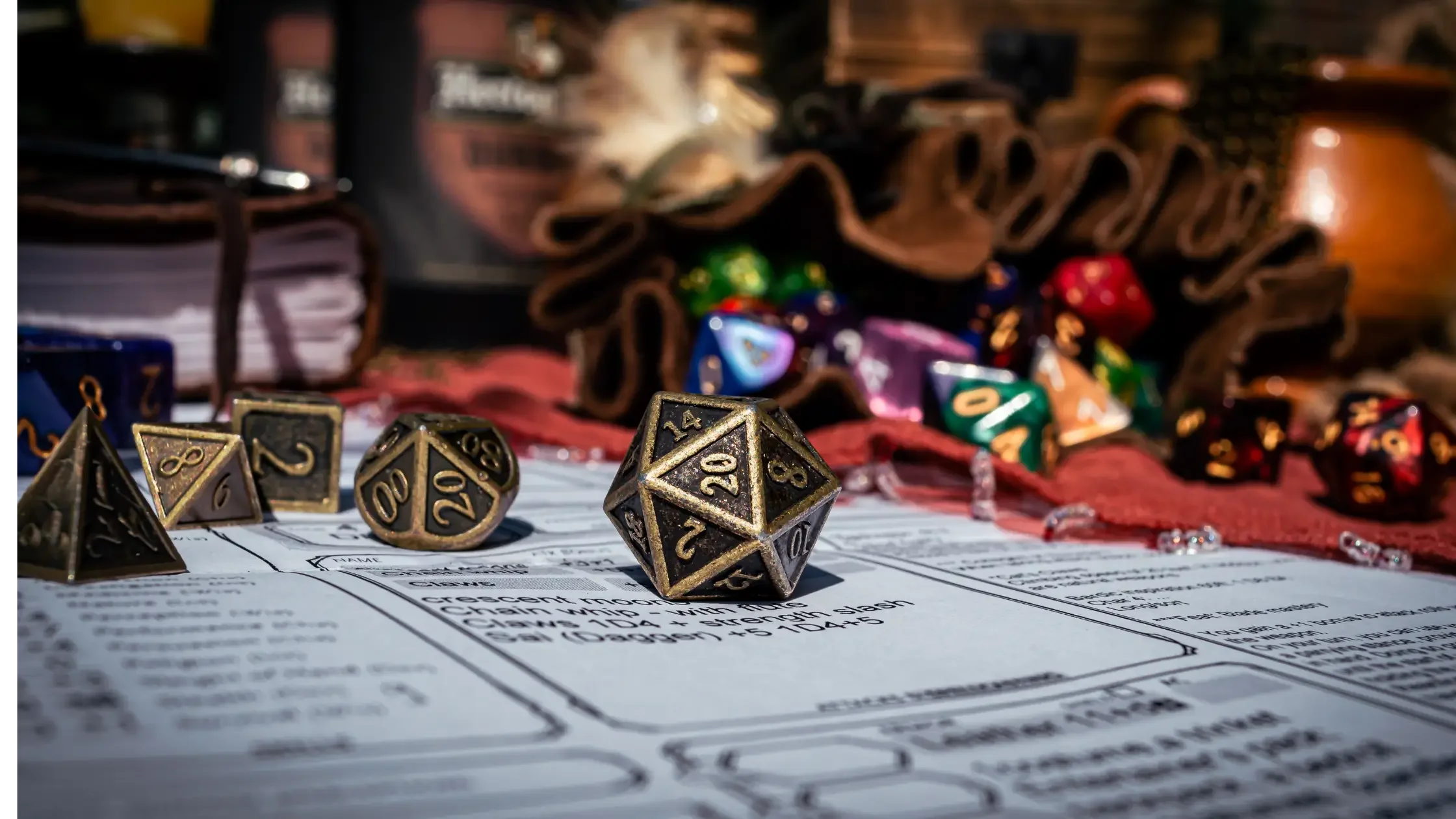
Roleplaying games like Dungeons & Dragons are some of the best activities to help children with anxiety.
Anxiety is at an all-time high among children; since the pandemic, over 1 in 5 kids have high, clinical-level anxiety. Many elements of the modern world only contribute to children’s anxiety. With phones reducing connection, schools becoming more competitive, and AI looming overhead as an existential threat, it is no surprise that kids struggle with worry and fear. While a child’s anxiety may seem small now, it can easily become severe, as anxiety has a tendency to grow stronger with time.
Because of this high risk of severe anxiety, intentionally getting kids involved in activities that can help with stress is a top priority for parents. Activities that are social, creative, and provide a sense of accomplishment or mastery of new skills have been proven to have mental health benefits for children. One activity that is fun, engaging, and empirically proven to reduce anxiety is playing the game Dungeons & Dragons. We’ve seen firsthand how our groups can help kids face their fears, come out of their shell, and leave worry behind, so we looked into the research to see how exactly D&D helps kids with anxiety.
How Does Anxiety Work?
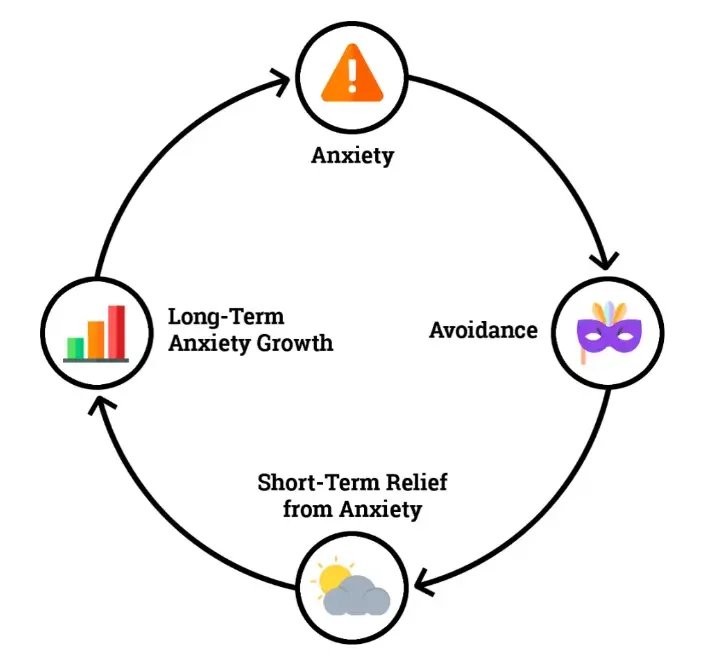
The root cause of child anxiety is an overactive amygdala combined with the avoidance cycle. [Image from the OCD and Anxiety Center]
Before understanding how D&D can help kids with anxiety, we need to understand what anxiety is and how it works. We all know what anxiety feels like, but what causes anxiety in the first place? To answer this, we need to learn about the brain and the nervous system. Anxiety is made in the danger-avoidance center of our brain, the amygdala. This is the part of our brain that tells us to run if a tiger is chasing us or to avoid a shadowy part of the woods. These structures are critical to keeping us safe and healthy.
An anxiety disorder occurs when this system is overactive. An anxious person’s brains are hyperactive to cues of danger and threats, leading the amygdala to flood them with anxiety, even when there is nothing there.. Because this anxiety is not in response to an appropriate threat, it leads to that stomach-churning fear with nowhere to point to.
This is especially problematic because this system not only identifies threats but helps us run away from them. Because of this faulty alarm, people with anxiety feel like they should always be running from a tiger that isn’t there! The constant alarms lead to excessive activation of the nervous system, often manifesting as jitters or other physical symptoms.
This motivation to act is the fuel that keeps anxiety burning. Our nervous system is pushing us to run away from the supposed “danger” that is causing our anxiety, but science tells us running away actually makes our anxiety stronger! Every time we avoid the cause of our anxiety, the anxiety is reduced in the short term but increased in the long term. The next time we feel anxiety, it will be slightly worse, pushing us to avoid more, making it worse the next time. In this way, anxiety builds and builds over time, reinforced by avoidance behaviors.
Exposure Treatment for Anxiety
So how do we treat anxiety? Well, as anxiety expert Martin Seif says, the active ingredient in anxiety treatment is exposure. The only way to break the never-ending cycle of avoidance is, well, to stop avoiding anxiety! Forcing yourself to sit with short-term discomfort is the best way to reduce long-term anxiety. By embracing anxiety, the mind and body undergo a process called habituation, where the sensation of anxiety is gradually diminished the longer it is experienced. Thus, the more we embrace anxiety, the easier it is to bear.
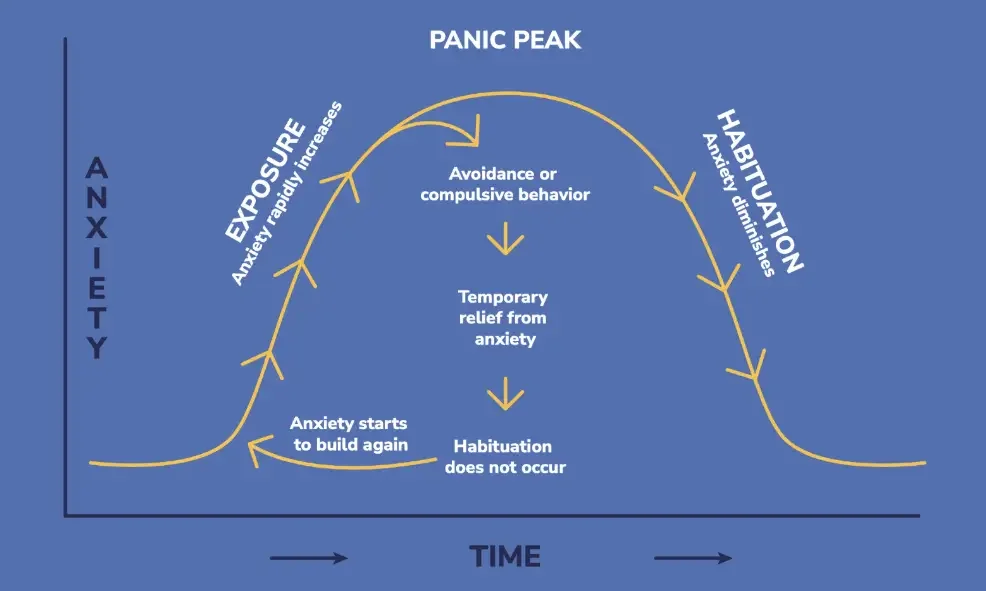
Helping a child overcome anxiety starts by leading them away from avoidance and towards habituation. [Image from Newport Institute]
This seems simple on paper, but those of us who have done exposure work know this can be very challenging and requires strong support, especially for children. The best approach for kids with anxiety is to give them a safe space with trusted people where they can gently approach their anxiety. This process is the most important part of anxiety treatment. Without the opportunity and support to face and experience anxiety, anxiety will continue to get worse as the cycle continues.
We have found that Dungeons & Dragons offers a wonderful opportunity for safe, appropriate, and effective exposure. The dice rolls and chaos of D&D make it chock-full of uncertainty. We know that the brain releases anxiety signals in response to uncertainty, but continuing to play breaks the cycle of avoidance. In D&D, players take on a host of dangerous enemies, precarious traps, and perplexing puzzles that simulate true danger. Because the narrative structure of the game encourages strong engagement in these situations, children’s minds and bodies react similarly to how they actually would in dangerous situations. This built-in anxiety allows children to practice feeling, understanding, and getting used to anxiety, often without even noticing.
Because this all takes place in the fictional world of a game, the exposure can easily stop. If a child cannot tolerate the amount of anxiety they’re experiencing, they can easily take a step back from the game and return to the real world. Once the child has calmed down (potentially aided by a kind Game Master), they can return to the game. Children are motivated to come back to the game simply because it is fun, and this fun environment makes exposure work much easier.
Addressing Anxiety with Cognitive Defusion
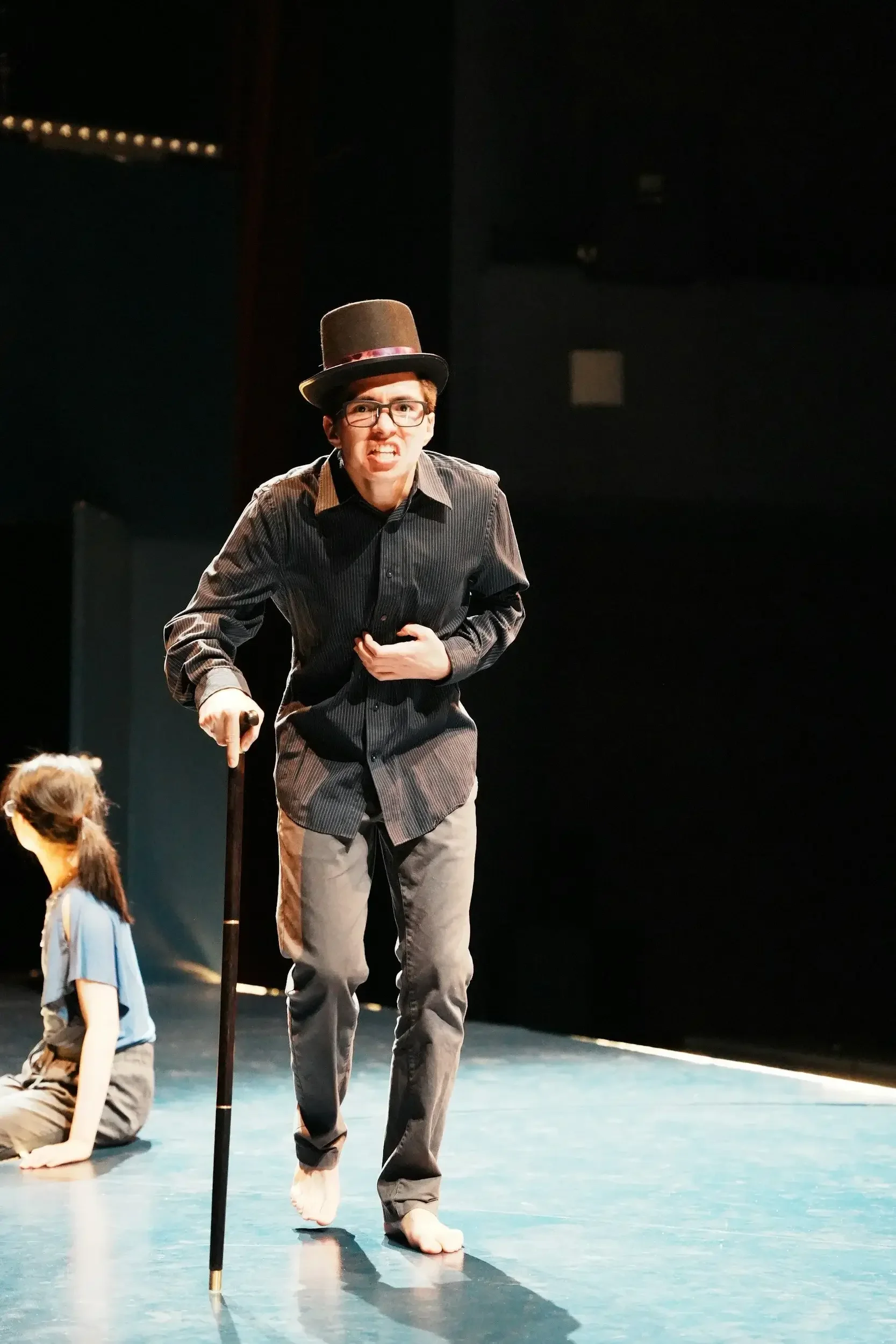
Playing a character is a great activity to help a child with anxiety through cognitive defusion.
Though exposure is the most important part of anxiety treatment, other processes can also make anxiety easier to cope with. Acceptance and Commitment Therapy teaches a skill called cognitive defusion. Cognitive defusion occurs when someone separates the thoughts that they are experiencing from who they are as a person. Many people with anxiety feel that anxiety is simply a part of who they are, that it controls their life, and will never go away – often entirely subconsciously. This blending of self with emotion causes people to feel like there is no way forward and simply defer to their anxiety. With cognitive defusion, they can realize that they are simply feeling anxiety, but that anxiety is not intrinsic to who they are. Anxiety is just an emotion, the same as happiness, sadness, or anger; we do not have to let it define us or control our lives. Practicing cognitive defusion allows people the chance to separate themselves from anxiety and unlock their true self.
Dungeons & Dragons actually has a built in mechanism that forces players to practice cognitive defusion. Everyone plays a character! Acting as a character is hugely therapeutic (for a full article on the therapeutic benefits of playing a character, click here). The natural separation between the player and the character allows kids to separate themselves from their emotions. As children play out their character’s emotions and gradually return to their real self, they practice the skill of noticing, understanding, and releasing their own emotionals. This allows them to remain more flexible in their anxiety, ensuring that it does not control their life. Because the game requires playing a character, kids can practice this skill without even knowing, learning to deal with anxiety while having fun playing a game they enjoy.
Social Support Helps with Anxiety

Social connections can help support a child with anxiety.
The last key part to dealing with anxiety is social support. Neuroscience shows that this is crucial to healing. Positive social interaction, especially through playing games, engages social safety signals within our nervous system. Remember, anxiety is an overactivation of the danger detection system of our brain. When we engage our social safety system, these safety signals override anxiety’s danger activation and regulate the brain and nervous system. This allows children to feel safe, confident, and connected, thus enabling them to more confidently and fully approach their exposure work.
Dungeons & Dragons is an inherently collaborative game that provides strong social support to players. Players work together, communicate with each other, and form close bonds that last. Because children play together, share stories, and delight in the narrative, they can become very close, allowing them to feel safe and comfortable and activating their social safety system. This can be massively beneficial for children, and we have seen firsthand how effective D&D can be in bringing people together. These strong social bonds nourish children’s brains and enable safety signals to calm them down.
How Can We Help Your Child with Anxiety?
At Young Dragonslayers, we host groups playing collaborative tabletop roleplaying games led by skilled adult facilitators. We run sessions with the goal of guiding social interactions and discussions to build friendships and develop skills through gaming. Because of our backgrounds in therapy and education, we’re dedicated to making sure every player finds the group that’s a perfect fit for them; we’ll assess their support needs, social skills, age, and gameplay preferences (some kids need to follow every rule, while others just want to blow up the dragon!) and create small groups matched with professional, experienced adults who are equipped to fit the needs of the group. Every kid is placed in a group that can maximize their potential to grow in a safe and supportive environment. If you’d like to meet with us to discuss participating in these groups, sign up for our waitlist and we’ll connect with you!
This article was developed in collaboration with Jalen Riad, Mental Health Contributor at Young Dragonslayers. Jalen is a psychology major at Davidson College with interests in OCD treatment and the therapeutic applications of tabletop roleplaying games.