How One Nerdy Couple Made Pathfinder Games for Kids
Mark and Linda’s work includes designing and running Pathfinder 2e for kids.
The day before Gen Con, America's largest tabletop gaming convention, is the much smaller “Trade Day”: a time for educators, librarians, therapists, and others to gather and discuss the place of games in their profession. It was that evening’s Demo Hall when I got pulled into the Battlezoo: Eldamon, a world where players befriend, train, battle, and evolve unique monsters. Come to find out it’s a supplement for Pathfinder, a tabletop RPG I had previously thought would be too complex for me to enjoy. But it played easily and smoothly in less than half an hour, thanks to a combination of clever materials and seamless explanations from an enthusiastic and open-minded Game Master.
That GM was Mark Seifter. He spent nearly a decade at Paizo designing products like Pathfinder 2E and is currently the designer of Roll for Combat’s Battlezoo. When I came by the Battlezoo booth to ask for an interview, I met Linda Zayas-Palmer, another Paizo veteran from the Organized Play division. She, too, had ventured away from Paizo to work on more cool, nerdy projects, and spoke excitedly to me about the ways she modified games for young players. Come to find out, these two were married – talk about a cool couple! Here’s what they had to share with me about their nerdy childhoods, their experience developing tabletop RPGs, modifying Pathfinder for kids, and why they think the medium is so good for bringing young people together.
Nerdy Kids and Nerdy Adults
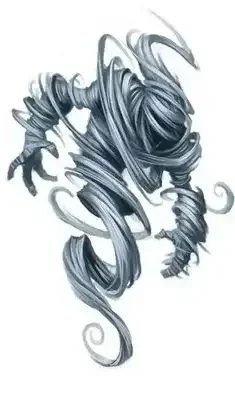
You should let your child play Pathfinder if they can solve the mystery of the dimensions of the Air Elemental’s whirlwind!
Linda and Mark actually met through playing tabletop RPGs, when Linda joined a campaign Mark was GMing for her roommate. “He just came over to talk about the game, and he’s like ‘Oh yeah, you know, we’re always welcoming new players. You want to play with us?’” said Linda. They started with Pathfinder but branched out to a variety of different systems with different players taking turns in the GM chair. Eventually, they found the Pathfinder Society, Paizo’s organized-play program. They started with just their friend group, then played at a few game stores, got connected, and made it out to conventions to play there. They told me stories of some of their nerdier interactions with the group, which, at one time, had three MIT Physics PhD students in it. Mark asked them to determine the dimensions of an air elemental based on their whirlwind ability, as it wasn’t listed. “They gave me the most Physics PhD answer which could possibly be given, which is ‘ Mark, you know our specialty is quantum mechanics, not fluid dynamics. We can't possibly tell you what the dimensions of this whirlwind would be!’” After we all had a good chuckle, Linda chimed in: “So, your question, too, if we play with nerds? The answer is yes.”
Mark and Linda have both been self-professed nerds, gaming and otherwise, since they were children. “I’ve been playing, really, since I was a lot younger,” said Mark, “I always liked the fantasy genre, and I played a lot of video-game RPGs when I was in early elementary school… I was kind of a forever GM when I was younger, but eventually I was able to start playing as well later on.” Linda’s love of RPGs started with her family. “My dad played a lot of the older tabletop RPGs, and so, when I was a kid and we were driving somewhere in a car, he would often tell these stories: ‘You find yourself in this dungeon deep beneath the Earth, and you’re exploring,’ that sort of thing,” said Linda, “I was really big into video games. And, definitely even nowadays, when I play video games, I’m all about having the completionist spreadsheets to make sure that I check off every aspect of the games.”
That mathematical interest isn’t just a hobby. “I’m a huge math nerd,” said Linda, “I got into school for it. It’s just the way I enjoy approaching games.” Linda’s being a bit humble here. Her mathematical aptitude optimized the experience of many of Paizo’s games. Linda took to the very kinds of spreadsheets she used for her completionist video-game runs to analyze gaming probabilities. She trained many of Paizo’s team in the actual probabilities of dice rolls for more complex calculations like group checks. “I would have my spreadsheets, and I'd be like, ‘You know, here's the math: If you want to look at it; here's the probability,’ talking about how powerful it is to roll twice and take the higher, or to, like, roll twice and take the lower. Those mechanics are pretty strong, so when you think about when something is very mathematically impactful how can you use that to create the experience that you want to create?” She brought her expertise to tabletop gaming: the perfect combination of math and storytelling.
When Can Kids Start Playing Pathfinder?
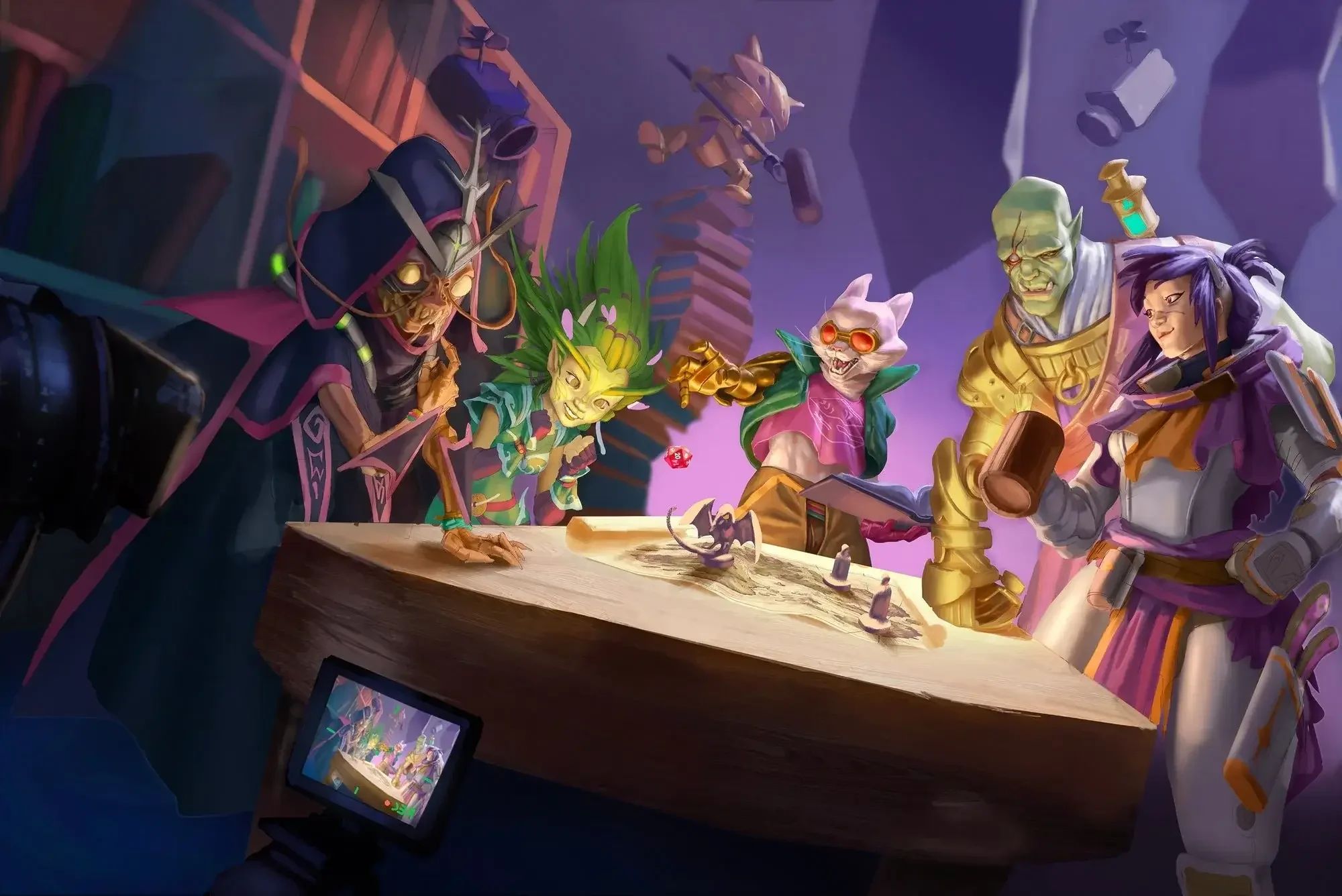
Playing Pathfinder with a child is totally possible, with some clever modifications. [Image courtesy of PaizoCon]
Another part of Linda’s role at Paizo was running games at PaizoCon. She had lots of freedom for what kinds of games she could run, so she tried running some games for players 10 and under. “I just used the [Pathfinder] Beginner Box as kind of like a chassis for it, pulled out all the rules that you didn’t need, and had simplified character sheets for everybody that just listed the things they’d actually used.” One such modification she called the “Case of the Disappearing Wizard.” In it, everyone plays the familiar of a wizard that has gone missing. Linda printed out pictures of all the different types of familiars for players to choose from, created visual character sheets with the skills that would be relevant during the adventure, and reoriented her table to be ready for a younger audience.
“I find that one thing about running games with kids is that kids are very creative, and they hesitate less than adults, in proposing new ideas that are out of the box,” said Linda, “I kind of see it as a spectrum. The kids are the most creative, and then the new players will say something out of the box, and then when people get too experienced, it's almost like they have to teach themselves again how to innovate.” Linda recommends that veteran Game Masters and players alike let go of preconceived notions of play and lean into that innovation. “If you haven’t told the players exactly the way that something is, then it isn’t decided yet. It’s not locked in stone,” she says. She tells the story of how young players at that table came up with the idea that a trickster raven was responsible for capturing the wizard. So she came up with a trickster raven’s riddle for them to solve. “There's absolutely nothing stopping you from deciding ‘Oh, you're so smart, that's exactly right,’ and running with that idea,” said Linda, “Because then they feel awesome, right? And you can do that with adults, too, but with kids especially – oh man, they feel so happy about it.”
Developing Eldamon, A Pathfinder Adventure for Kids and Adults
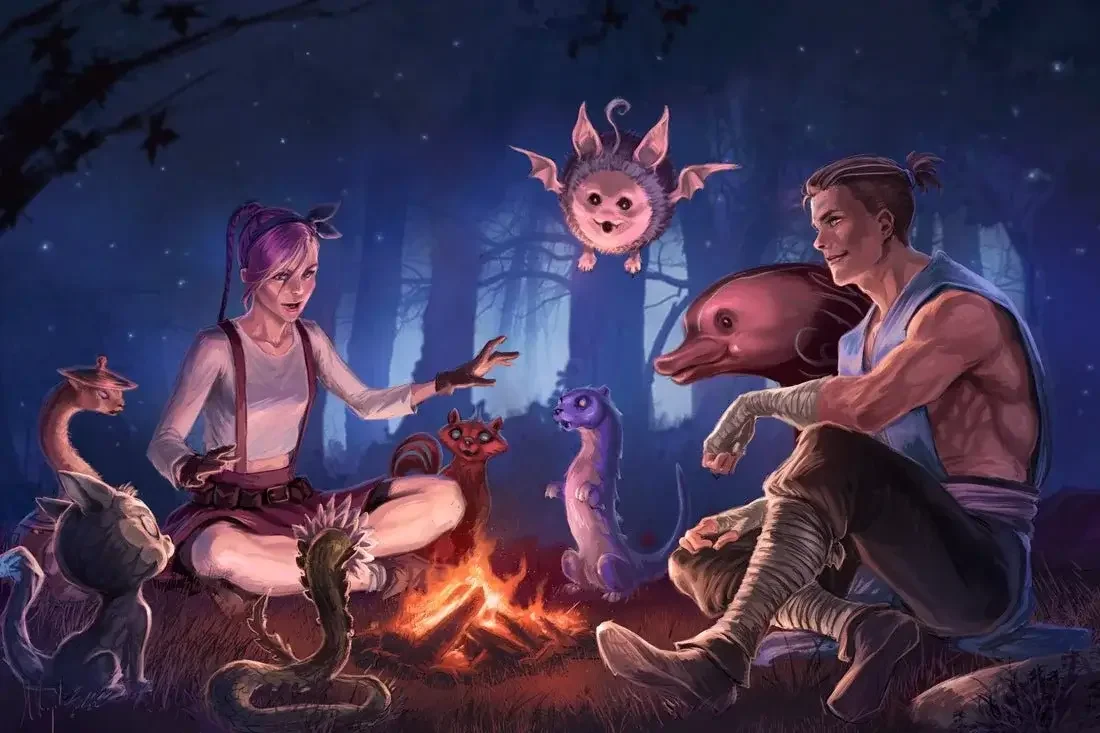
Lots of age groups play Pathfinder, and the Eldamon supplement is perfect for the Pokemon fans among them.
As their careers developed, the couple left Paizo. Linda became her own boss as a freelancer, working on projects like a Pathfinder version of PaleoGames’ scientifically accurate dinosaurs (a project so cool, it deserved a whole separate article). Mark joined the team at Roll for Combat, the tabletop publisher creating a series of supplements including Battlezoo: Eldamon, the game I had stumbled upon one fateful Trade Day. In Eldamon, players can befriend, train, battle, and evolve powerful magical creatures. As you can probably guess, it’s inspired by Pokemon and Digimon. “I played a lot of RPG and adventure-style games as a kid, some Pokemon,” said Mark, “I knew all 151 of the first-generation Pokemon, for sure!” Like Linda, he was able to put this childhood passion into game development.
“I wanted to have a game that was not about beating up monsters and shoving them into prison balls, but was instead about, befriending them and learning more about them,” said Mark. He points out that the Pokemon anime is ostensibly about becoming friends with Pokemon, but in the games themselves, players “make [Pokemon] fight each other until they have to go to the hospital.” He wanted to craft game rules and lore that fit the themes of friendship and learning. So he ditched the Pokeball conceit. But he also rethought the consequences of battles in an attempt to get at the cool factor without the darker subtext. “When I’m running for kids, the consequences of combat aren’t death. It’s like, you knock them out, or they’re ‘Team Rocket blasting off again.’ I’ll hit you next time!” said Mark. In the lore he created, Eldamon are beings of pure energy with the powers to phase in and out of realities. “99% of Eldamon cannot phase into our reality,” said Mark, “If they shoot a meteor swarm in an arena, no [people] can possibly be hit by it, because they’re not phased in.” Only the other Eldamon can be harmed, “and even then, they don’t have a physical being, so they’re just going to get tired,” said Mark, “Nobody’s really getting hurt from that!”
Socially Aware Pathfinder for Kids
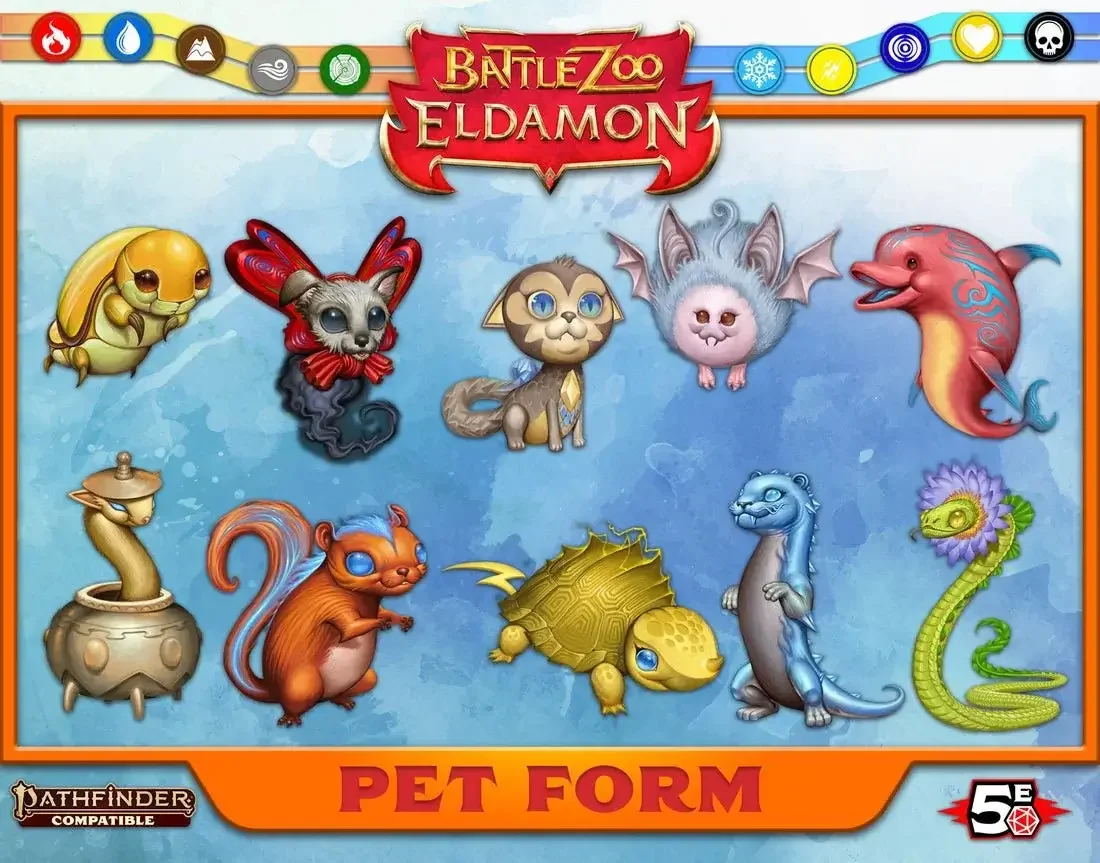
You should let your child play Pathfinder, if only to experience the adorableness that is the Eldamon TairoPoof (second from the right on the top row).
Much like with the way he rethought battles, Mark made it so that evolving an Eldamon went beyond just pumping a creature full of experience points until they grow claws. While Eldamon do have to be a certain level, they also need to reach an “evolution condition” before they evolve. “They’ll have some kind of dream or goal. Then if they meet that, they can evolve,” said Mark. “One is obsessed with collections, and you need to help them complete their collection. There’s one that’s searching the world for something very fluffy. The fluffiest floof that they can find. If you can find them the greatest fluffy thing, then they can evolve,” he laughs. But my favorite (and Linda’s, too) is TairoPoof, a little air bat. “[TairoPoof] has body-image issues about being scary and frightening people. They think people won’t like them because of their red eyes and their kind of creepy look. TairoPoof, like most Eldamon, has their Pet Form they always are in normally. Then when they go into a fight, they enter their Battle Form, which is more ferocious. But TarioPoof's Battle Form is, if anything, a little bit less ferocious-looking,” said Mark, “TarioPoof is kind of masking a little bit of themselves, code-switching to fit in and be less scary to other people. But if you can help TarioPoof learn to accept themselves and to understand that, you know, some people might be scared of them, but that it's not their fault, and that most people are going to be able to learn to love and accept them for who they are. Then they can get into their evolved form, which is bigger and way scary-looking. It's a part of them that they rejected at first. And once they can accept it, they can gain that strength.” This is the kind of stuff I love when running games: elements that lean into the thematic potential of tabletop RPGs to teach social skills, empathy building, and emotional awareness.
Creating Accessible Pathfinder Campaigns for Kids
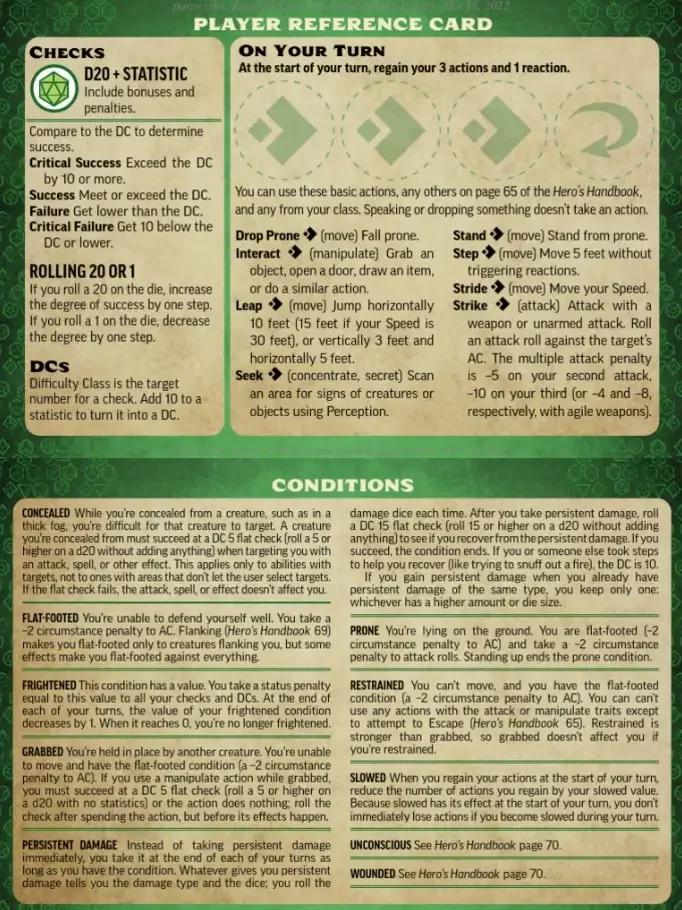
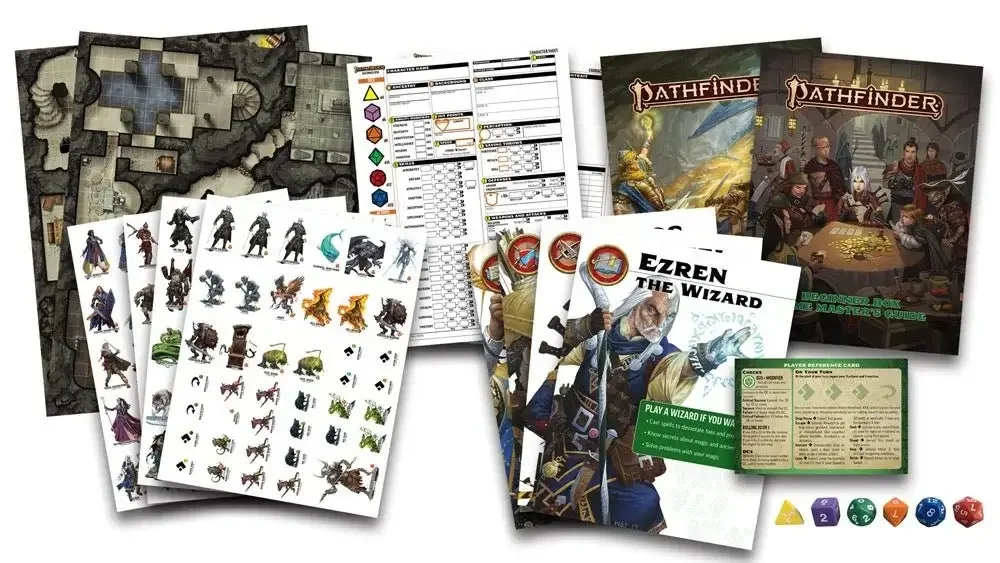
These cards were included alongside tokens in the Pathfinder 2E Beginner Box to help kids play Pathfinder (and to make things easier for others)!
The thematic elements were not the only things Eldamon changed to suit a younger audience; the materials and explanations for the game were modified as well. When I approached Mark’s table, I had never played Pathfinder in my life. But with only a few minutes of explanation, I was battling with the best of them. Mark had put all of my character’s abilities on yellow index cards; he instructed me to flip them over when they were used and flip them back when they refreshed at the end of my turn. This came from his work on Pathfinder’s 2E Beginner Box. “I looked through and found that if you have something that’s abstract or that requires tracking, a physical representation is best,” said Mark. That research led him to make a particular addition to the BeginnerBox. “They’re these cards with little circles to put [tokens representing] your actions and reactions. You can take them off as you spend them. At the start of your turn, you collect them and put them back on the little card. That was specifically for kids, too, because kids have a lot more trouble being like, ‘How many of my three actions have I used? How many are still left? Is that something I was thinking I was gonna do, or did I actually do it?’” said Mark, “For kids especially, it allows them to take mastery of what they’re doing.”
Families and Children Playing Pathfinder
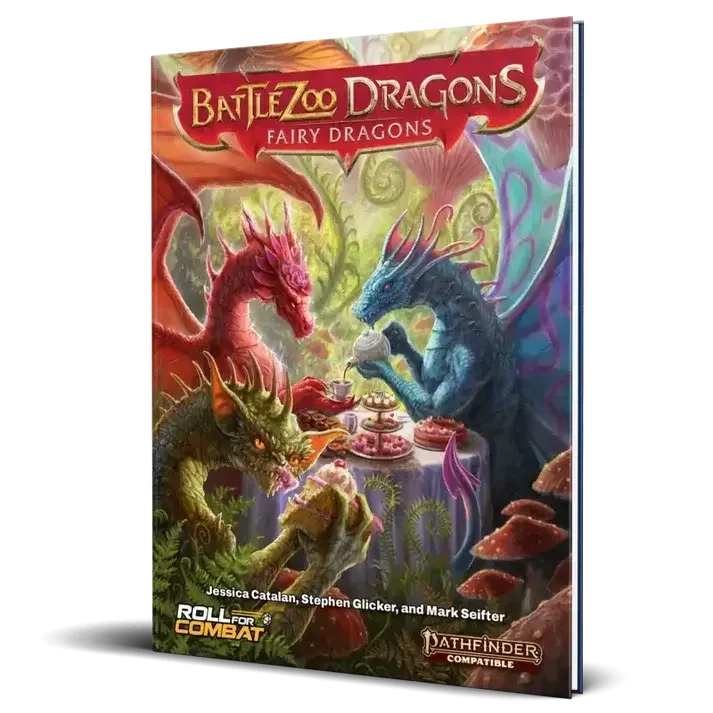
The Battlezoo: Fairy Dragons book was a great introduction to letting a child play Pathfinder.
Parents have used the Battlezoo books to play Pathfinder with their children…and they say it works really well. One parent in particular wasn’t sure his son would like the game, but tried reading the prologue of the story from the Fairy Dragon books. Mark calls it a “Through-the-Looking-Glass-style” story of a green dragon entering the fairy realm through a waterfall to find the hidden fairy dragons inside. The dad’s son wanted to know what happened next, so they decided together! Mark and Linda have found that these kinds of game materials are a great fit for nerdy kids. “I can definitely see how much detail is in all of the books being really compelling for young players, especially ones who are already kind suited for, like, ‘I want to find out all of the things, and the stats, and the lore!’ There's definitely a lot you could learn and memorize and find out about Eldamon. Can you remember what their personality is? What their evolution condition is? How you can help them? What is their element? What are their special abilities?” said Mark.
The couple agrees that tabletop RPGs can be a great benefit to kids. “Math teachers are trained to help people who may not click with math when it's just shown raw and exposed to them directly, to be able to experience and understand math in a context that makes sense to them,” explains Linda. For many young players, gaming is that context. “Games are one of the most fun ways to also learn a whole bunch of different skills, from communication and leadership skills, to math, to words and English. Honestly. I might not have gotten into MIT if it weren't for tabletop roleplaying games,” said Mark. “I really, truly think that these kinds of games are educational, and that they can really, really help kids.,” agrees Linda. “But I think that the friends that you make from games, too, is a really important aspect…if you give it a shot, you can make a lot of really great friends through gaming.”
If you’re the parent of a nerdy kid (self-professed or otherwise) and you think that tabletop RPGs could be a great way for them to learn communication and leadership skills, gain math and language proficiency, and grow meaningful friendships, Young Dragonslayers might be the place for them. We’re a group of tabletop RPG nerds experienced in working with kids, coming from professions like education, therapy, and nursing. We adapt these games to the cognitive, social, and emotional needs of young players – plus we like to add a sprinkle of their favorite fandoms for fun! If you’d like to learn more about our games (or if you’d like to check out Eldamon for yourself), click the buttons below: